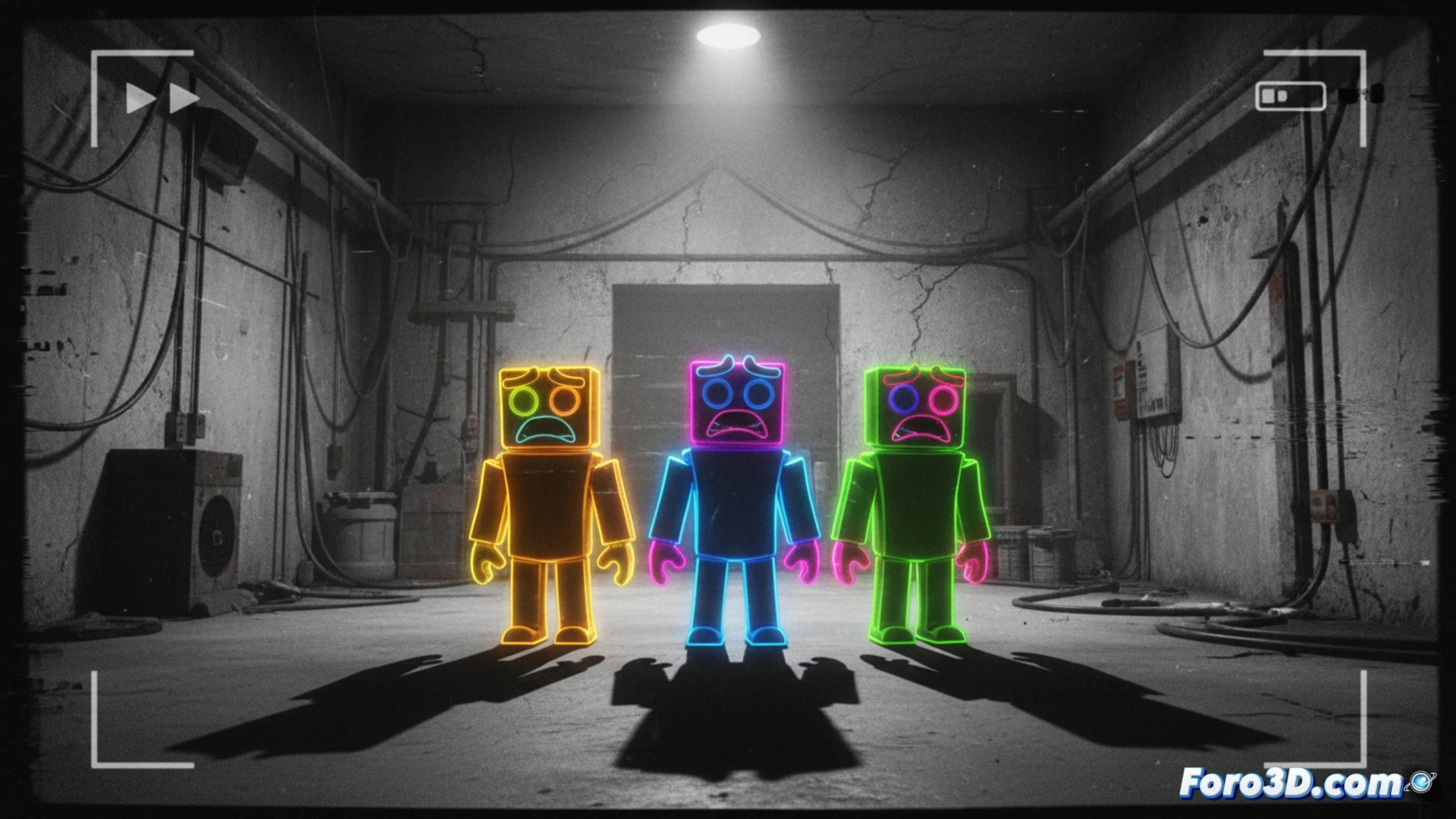
The Unity engine has proven to be a versatile canvas for risky artistic proposals. In the case of Content Warning, the decision to combine a found footage aesthetic with a monochromatic world and vibrant characters is not just a visual whim, but a statement of narrative intent. This article breaks down the technical pipeline behind this experience, from modeling in Blender to multiplayer synchronization with Photon, explaining how chromatic contrast becomes the primary tool for guiding the player's gaze.
Technical Pipeline: From Blender to Photon with Distortion Filters 🎨
The process begins in Blender, where Old World assets are modeled with a gray palette and low-resolution textures to simulate wear and tear. These models are exported in FBX format to Unity. Here lies the technical trick: the characters receive a separate material with saturated colors (reds, blues, or neon greens) that violently contrast with the environment. For the found footage aesthetic, a camera distortion filter (chromatic aberration and vignetting effect) is applied using a Post Processing Stack on the main camera. The networking layer is handled with Photon PUN, which synchronizes player positions and the activation of recording cameras (simulating the footage) in real time. The result is a visual loop where analog distortion clashes with the digital sharpness of color.
Color as a Narrative Design Tool 🎯
From a design perspective, chromatic contrast is not an ornament but a navigation guide. In a gray, homogeneous world, the player loses spatial reference, but the vibrant colors of the characters act as visual beacons. This forces the player to focus on social interaction (multiplayer) over the hostile environment. The found footage aesthetic reinforces this idea: the shaky camera and lens filters remind the user that they are recording a real experience, but the unreal color of the avatars whispers that it is all an artifice. It is a technical paradox that Unity resolves elegantly, demonstrating that visual limitation can be the most powerful narrative engine.
As a developer, what key factors should I consider when implementing a found footage effect in Unity for a multiplayer game without sacrificing performance or gameplay readability?
(PS: game jams are like weddings: everyone is happy, no one sleeps, and you end up crying)