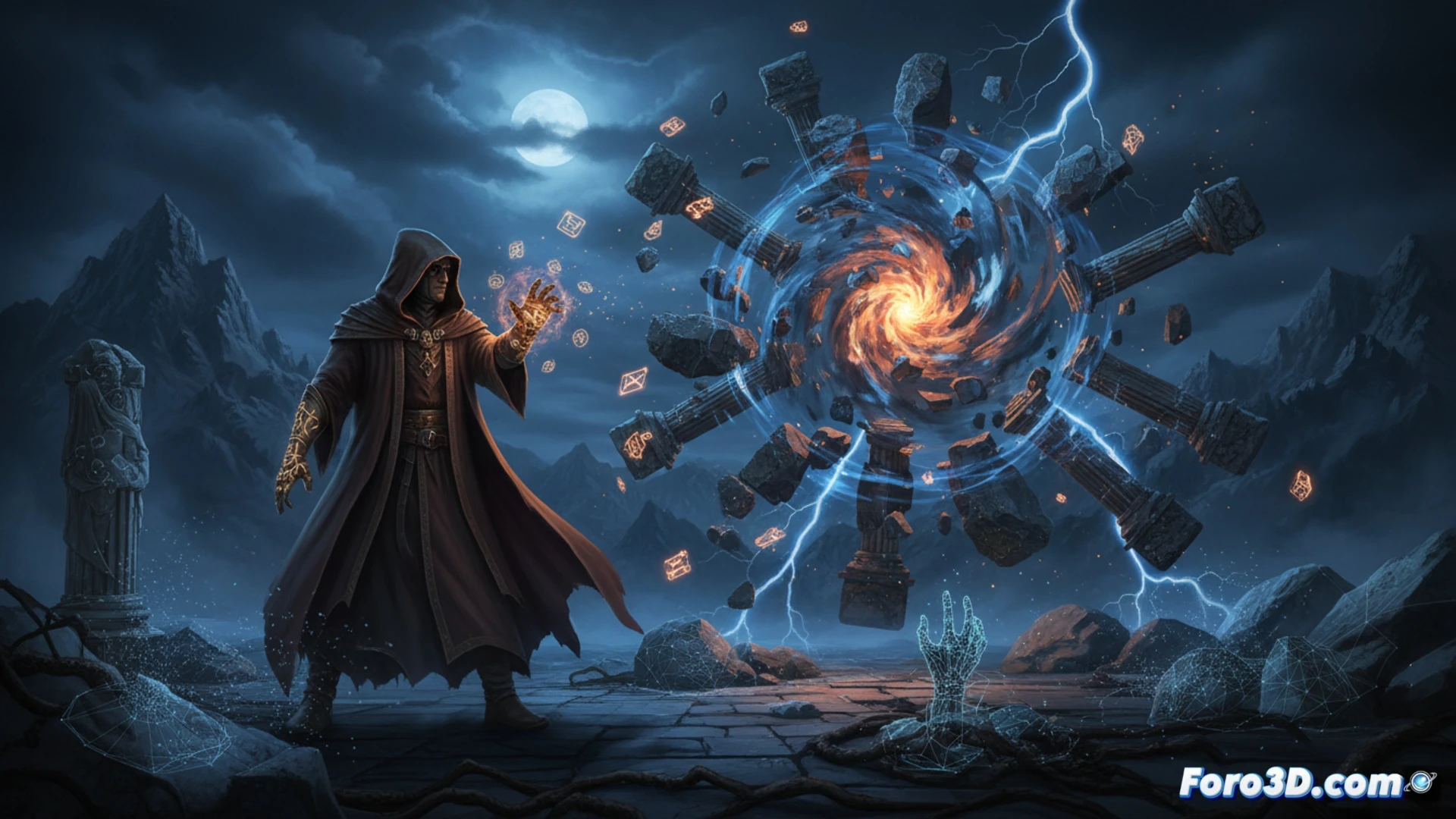
The launch of Witchfire on Steam has reignited the debate on how to combine photorealism with fantastical effects without sacrificing performance. Developed by The Astronauts, this dark fantasy shooter uses Unreal Engine 4 as its foundation and RealityCapture as its primary scanning tool. The result is a world that feels tangible, where every stone and root comes from real data, yet houses high-contrast visual magical explosions.
Technical Pipeline: From Scan to Real-Time Optimization 🛠️
The team captured high-resolution textures and meshes with RealityCapture, processing hundreds of photographs per asset. The critical step was polygon reduction and generating normal maps and ambient occlusion from the raw scans. In Unreal Engine 4, these assets were integrated using the physically based rendering (PBR) material system and combined with particles in Niagara for the spells. The technical key lies in separating the static global illumination of the scans (using baked lightmaps) from the dynamic lighting of the magical effects, preventing stylized particles from visually clashing with the realistic backgrounds. For indie developers, I recommend starting with small objects like rocks or logs, using a minimum of 40 photos per object, and employing the Instant Meshes polygon reduction plugin before importing into UE4.
Lessons for Indies: Realism Without Losing Artistic Identity 🎨
Witchfire demonstrates that photogrammetry is not an enemy of artistic style, but a solid foundation to build upon. The common mistake is trying to make everything realistic; the studio's success was reserving photorealism for the environments and letting spell effects use saturated colors and exaggerated shapes. If you're working on an indie project, prioritize scanning real-world elements with rich textures (bark, wet ground) and dedicate the performance budget to particles. A single well-optimized scanned asset can give more personality to a level than ten hand-modeled ones.
By using photogrammetry for the environment models in Witchfire, how did The Astronauts manage to integrate spell effects, such as flashes or moving textures, in a believable way without breaking the realistic lighting of the captured world?
(PS: game jams are like weddings: everyone is happy, nobody sleeps, and you end up crying)