Last month, a bioethanol distillery in the Midwest was the scene of a vapor explosion that devastated the fermentation hall. The blast wave tore off roofs and deformed steel tanks. With no direct witnesses or operational CCTV systems, the forensic team turned to impact photogrammetry to reconstruct the incident. The objective: to determine the exact mass of vaporized ethanol and locate the static ignition source that triggered the catastrophe.
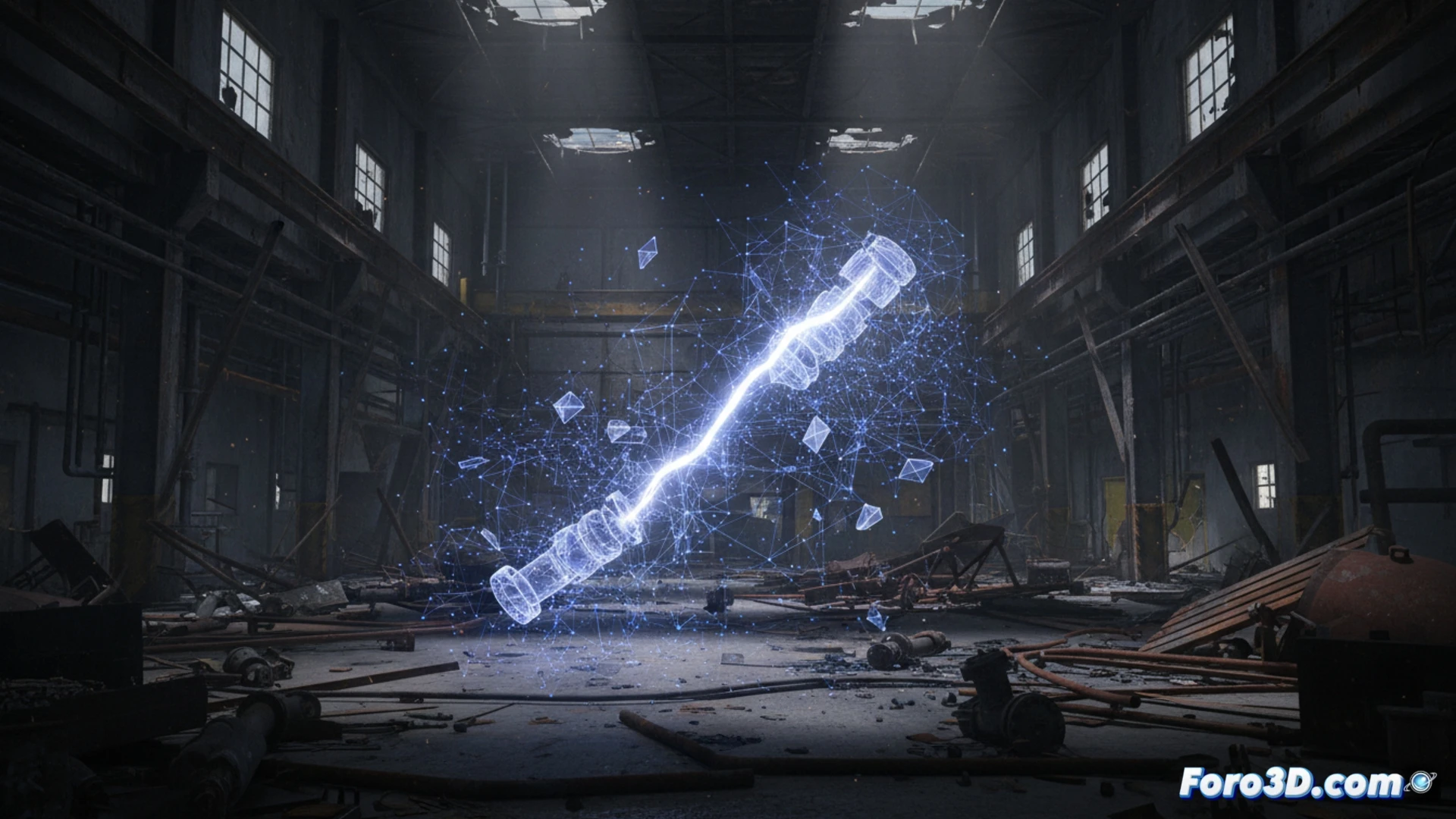
3D Reconstruction and Fluid Dynamics: The Technical Workflow 🔧
The process began with the mass capture of site images, processed in RealityCapture to generate a high-density point cloud. Using PC-Rect, deformations in the tank panels were rectified, allowing calculation of the maximum internal pressure before rupture. This data was input into Ansys to simulate the dispersion of the ethanol vapor cloud. Simultaneously, the trajectory of metal fragments was modeled in Blender, acting as ballistic witnesses. The correlation between the calculated pressure and debris distribution allowed narrowing the vapor mass to between 450 and 520 kilograms. The static spark was located on a poorly grounded polyethylene flange, 12 meters from the tank, where the vapor concentration reached the lower explosive limit.
Safety Lessons for the Biofuel Industry ⚠️
This case demonstrates that impact photogrammetry serves not only for fault attribution but also as a prevention tool. The simulation revealed that the tank's emergency venting was undersized for vapor flow rates generated by yeast overheating. Implementing nitrogen inertization systems on flanges and installing static vapor flow sensors would have prevented the catastrophe. NFPA 69 and 77 standards should be updated to include these forensic analyses as a mandatory part of safety audits in distilleries.
As forensic photogrammetry allowed identifying the ignition source in the bioethanol explosion, what implications does this technique have for preventing future catastrophes in similar industrial facilities?
(PS: Simulating catastrophes is fun until the computer melts down and you are the catastrophe.)