On the remote plains of Laos, thousands of megalithic stone jars lie scattered across a landscape that defies archaeological understanding. Known as the Plain of Jars, this site contains vessels up to three meters tall, whose original funerary or ritual purpose remains a mystery. However, digital archaeology has found in photogrammetry and 3D modeling the key tools to approach this enigma without disturbing the terrain.
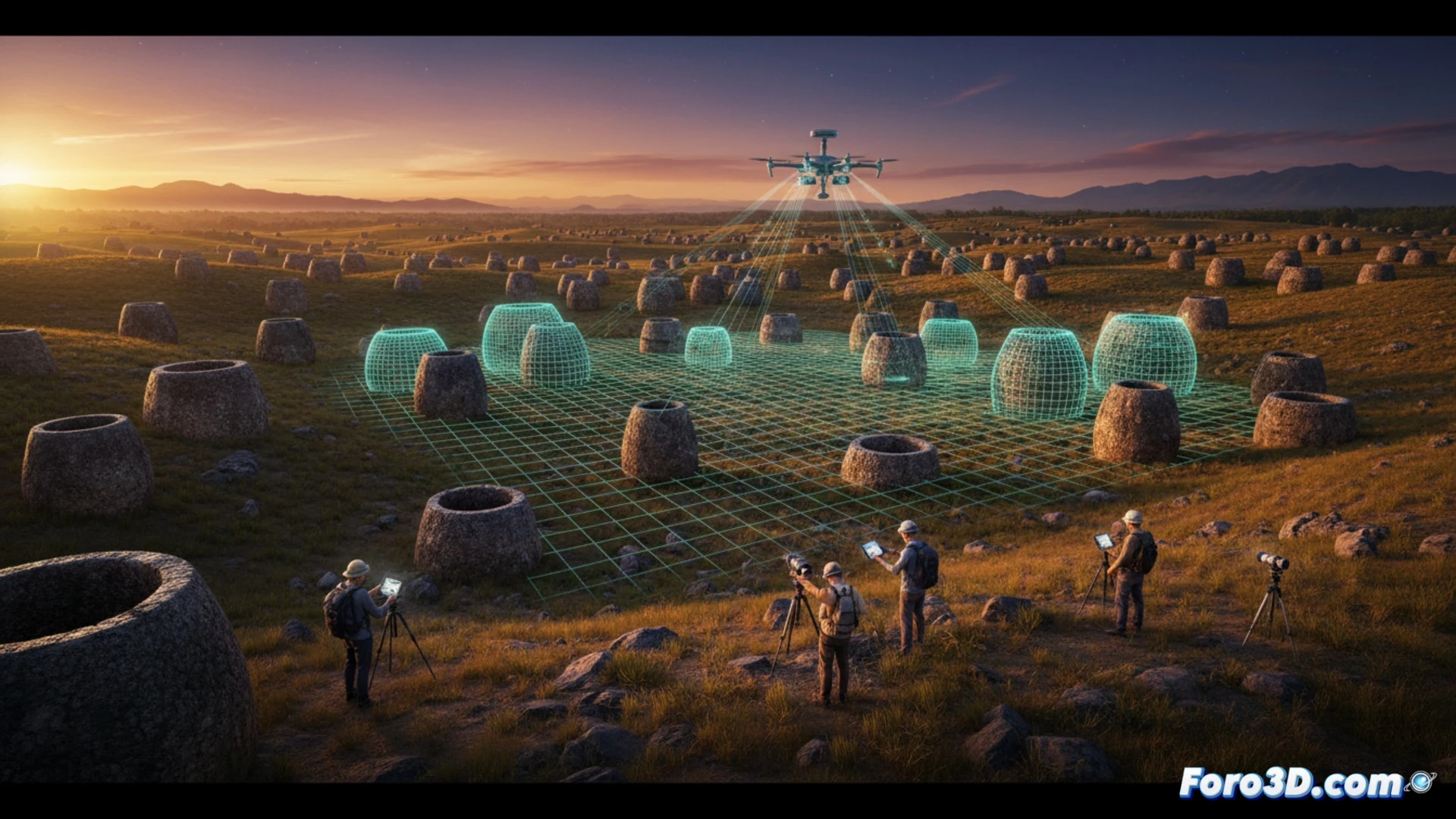
Megalithic digitization with photogrammetry 🏺
The fragility of the site and the impossibility of moving the jars make photogrammetry the ideal technique for their study. By capturing hundreds of images from multiple angles, researchers generate high-resolution point clouds and polygonal meshes. These 3D models allow analysis of wear, tool marks, and astronomical orientations without physical contact. Additionally, the virtual reconstruction of the original landscape helps contextualize the arrangement of the vessels, revealing patterns that could indicate their use as ossuaries or ritual altars. Digital comparison with other megaliths, such as Stonehenge or the Iberian dolmens, suggests parallels in the social and ceremonial engineering of these lost cultures.
Preserving the enigma for the future 🔍
Beyond solving the origin of the jars, 3D digitization acts as insurance against degradation caused by weather or tourism. Each model is an immutable file that allows future generations of archaeologists to explore the site from anywhere in the world. While technology cannot yet answer whether these vessels held bodies or were used for offerings, it does ensure that the mystery remains intact, ready to be deciphered when new digital tools allow it.
How can 3D photogrammetry reveal hidden details in the megalithic jars of the Plain of Jars that are not visible to the naked eye or with traditional excavation methods?
(PS: If you dig at a site and find a USB, don't plug it in: it could be malware from the Romans.)