Forza Horizon 6 lands in Japan and turns the country into a giant circuit with no speed limits. From the neon lights of Tokyo to the tight curves of Mount Fuji, every corner is designed for players to floor it. Arcade physics once again take center stage, allowing impossible drifts and gravity-defying jumps. The series maintains its essence: speed, spectacle, and a touch of controlled chaos.
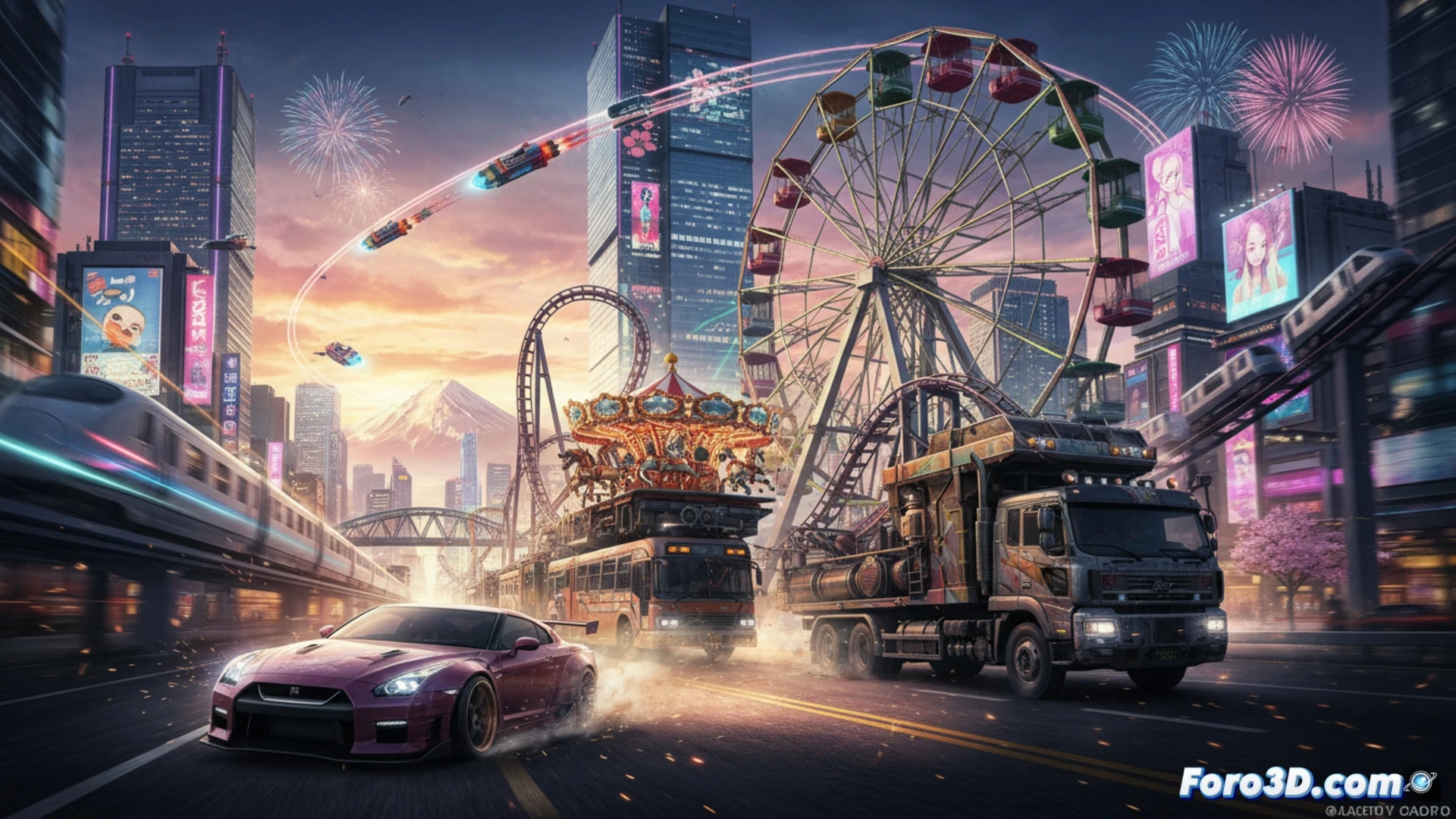
The graphics engine and AI behind the Japanese festival 🏎️
Playground Games has fine-tuned its graphics engine to recreate a vibrant and detailed Japan, with dynamic weather changes that affect driving. The AI of rivals has been refined: they now respond better to racing lines and make more human-like mistakes, though they remain predictable on long straights. The open world loads seamlessly, and Tokyo's nighttime lighting is technically solid, with real-time reflections on wet asphalt.
Drifting like a kamikaze: physics that defy logic 🌪️
The game's physics allow a Nissan GT-R to drift 200 meters without losing speed, something a Nissan engineer would describe as a miracle. Here, gravity is a suggestion and the asphalt seems coated in motor oil. If you try to imitate these stunts in real life, you'll end up in a tree or at a police station. Luckily, in Forza Horizon 6, the only danger is running out of gas.