The death of a base jumper during a wingsuit flight triggered a pioneering forensic investigation. The sudden collapse of the suit's wing pointed to a structural failure, not human error. To verify this, a technical pipeline was applied that combined high-resolution photogrammetry and textile simulation, successfully correlating the exact point of seam rupture with the accident dynamics.
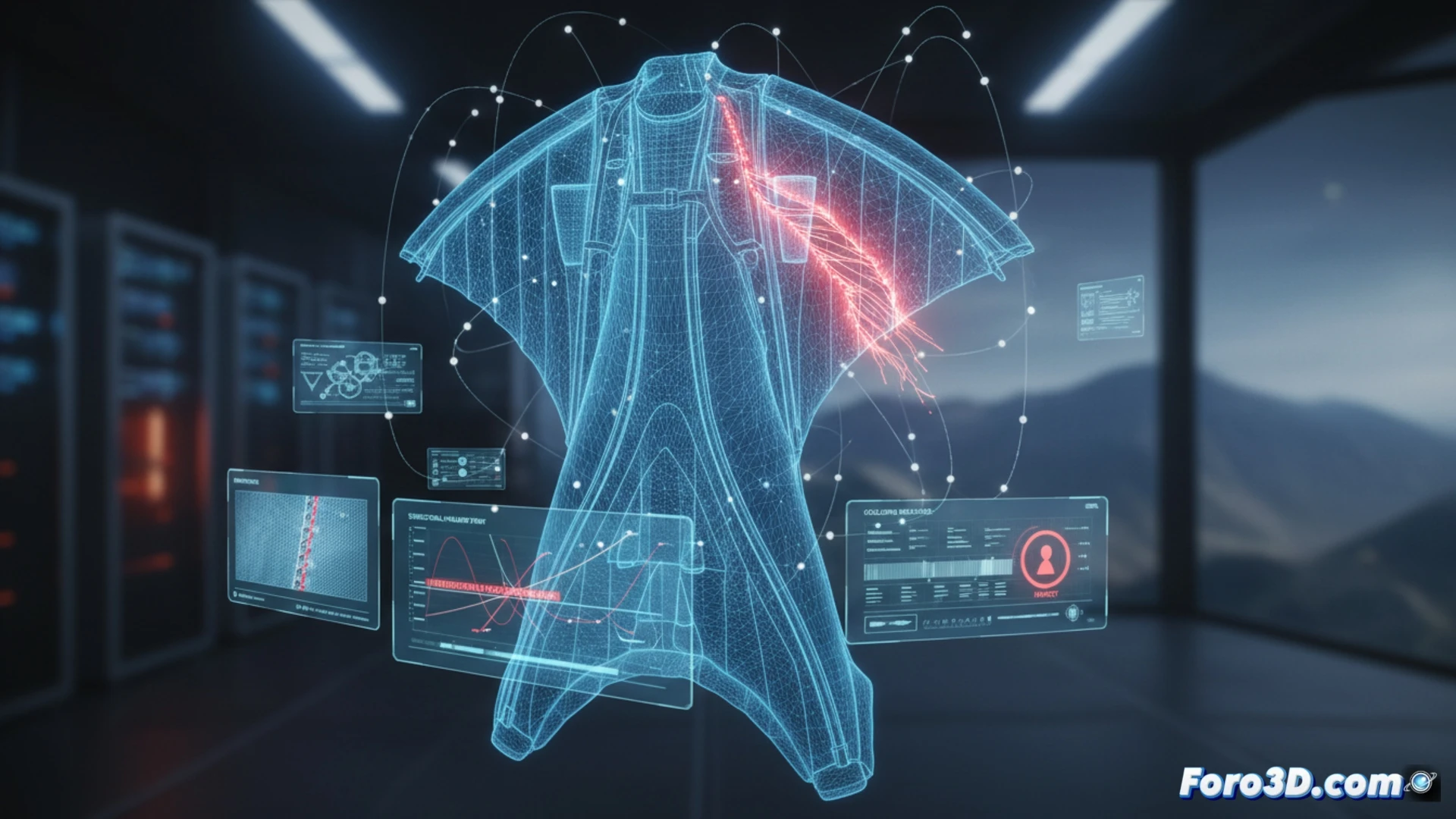
Forensic pipeline: from scanning to rupture simulation 🧵
The process began with capturing the suit using photogrammetry in Agisoft Metashape and RealityCapture, using a calibrated camera to obtain a mesh with submillimeter precision. The tension zones and damaged seams were identified. Subsequently, the geometry was imported into Marvelous Designer, where the physical properties of the fabric and the strength of the seams were recreated. The simulation reproduced the tear sequence, confirming that the seam gave way during the maneuver of maximum aerodynamic pressure. The forensic validation was based on the match between the simulated fracture patterns and the actual marks on the fabric.
Technical implications for accident investigation 🔍
This case demonstrates that integrating 3D tools such as Metashape and Marvelous Designer allows transforming a flight suit into a quantifiable piece of evidence. The key to success lay in calibrating the scan resolution and correctly parameterizing the textile materials. For future forensic analyses, it is recommended to document the pre-accident condition and perform simulations with multiple load variables, ensuring that the digital reconstruction is reproducible and legally admissible.
What were the most critical physical simulation and seam tension parameters that allowed differentiating between a catastrophic tear failure and a material overload collapse in the forensic reconstruction of this wingsuit accident?
(PS: In the forensic pipeline, the most important thing is not to mix the evidence with the reference models... or you'll end up with a ghost at the scene.)