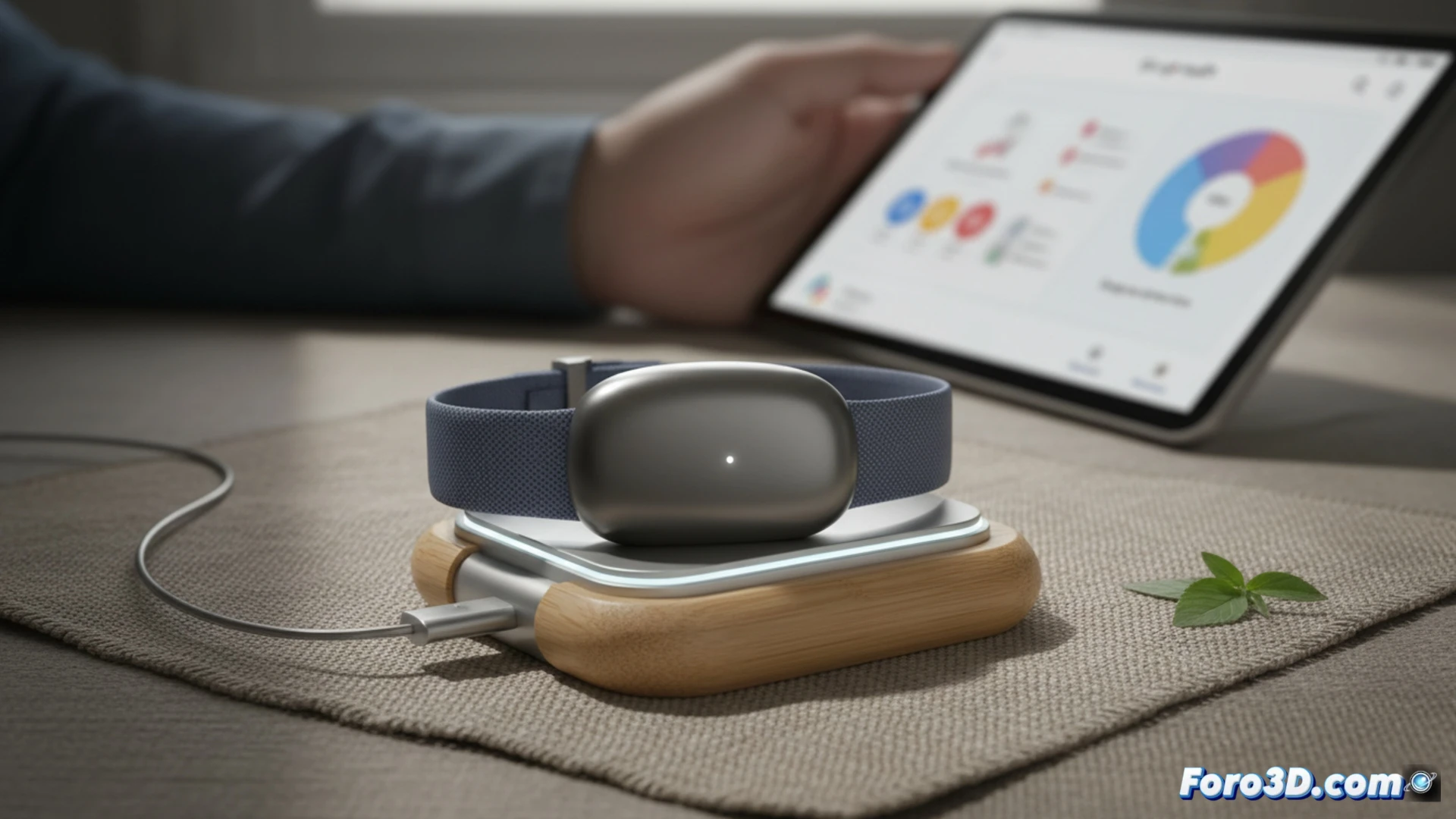
Google introduces the FitBit Air, a minimalist health tracker that does away with a screen to focus on the essentials. With a seven-day battery and sensors for heart rate, blood oxygen, temperature, and an accelerometer, this small device charges in 90 minutes, a pace that won't win any races. Its proposition isn't novel in hardware, but in software: the Google Health app unifies tracking. Ideal for those seeking discretion without notifications. 🎧
Google Health: the brain behind the sensor 🧠
The true breakthrough of the FitBit Air lies in the Google Health app, which centralizes health data from the Google ecosystem. The sensors collect metrics such as heart rate, SpO2, and temperature, but the lack of a screen forces you to check your phone to see real-time data during exercise. The app processes the information with algorithms that offer trends and patterns, though without notifications or alerts. It's a functional approach that prioritizes efficiency over immediacy.
Charge for 90 minutes to see your steps on your phone ⏳
The FitBit Air charges in 90 minutes, a time that in 2024 sounds like an excuse to stretch your legs. If you were hoping to see your heart rate on your wrist while running, forget it: you have to pull out your phone, like in 2015. At least the battery lasts seven days, so you can forget about the charger for a week. That said, when it's time to recharge, prepare a coffee or a nap, because the FitBit Air is in no hurry to come back to life.