Custom footwear is no longer a luxury but a direct solution. Fitasy has developed a process that starts with a mobile app: the user scans their foot, a 3D profile is generated, and the data goes to production without the need for molds, tools, or prior inventory. The campaign of Paralympic champion Stef Reid, who advocated for selling individual shoes, drove this technology. Reid demonstrated that designing for real needs opens paths that mass production ignores.
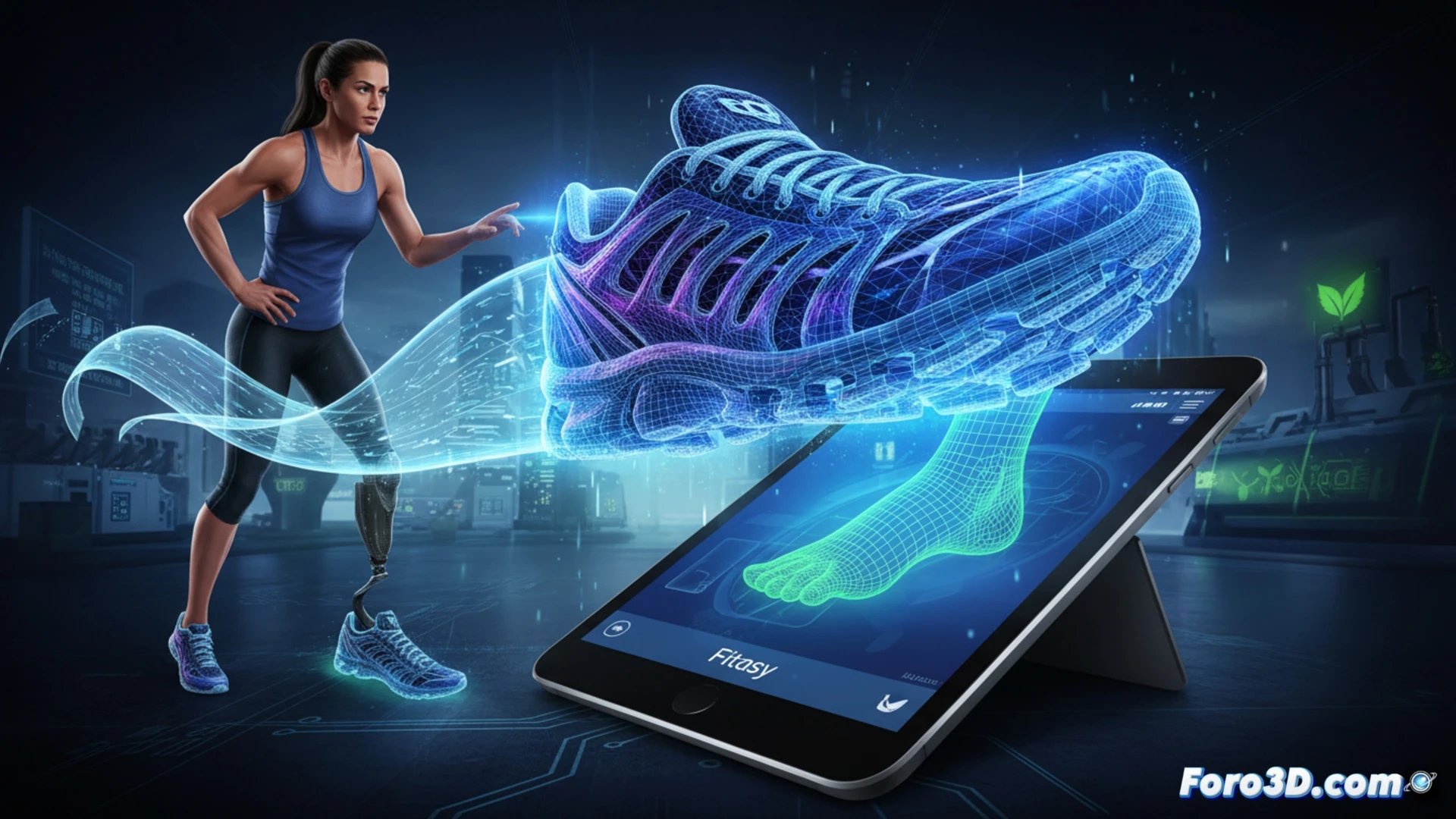
Scanner, data, and direct manufacturing: the stockless flow 👟
Fitasy's technology eliminates the traditional steps of prototyping and storage. The user registers their foot from home with the app, which captures over 20 3D reference points. That information is sent to an additive manufacturing system that prints the footwear layer by layer, adjusting the shape, density, and sole according to the footprint. There are no standard sizes or minimum batches. Each pair is produced on demand, reducing material waste and fixed costs associated with holding stock.
Goodbye to the orphaned left foot: when a shoe doesn't need a match 🦶
Stef Reid made it clear: if you have two feet of different sizes, buying a pair of shoes is an existential drama. Fitasy solves this by allowing you to order only the missing shoe, like a loose sock but with more technology. Now, instead of arguing with the salesperson about whether the left foot is half a size larger, you scan, pay, and receive footwear that won't make you limp on one side or wear two pairs of socks. The revolution fits, and nothing is left over or missing.