The return of Cyan Studios to the graphic adventure genre with Firmament is not only a tribute to Myst, but a technical demonstration of how Unreal Engine 4 can handle dense steampunk worlds. The key to the visual aspect lies in the combination of high-fidelity pre-calculated global illumination with specific dynamic effects, an approach that allows environmental puzzles to come to life without sacrificing real-time performance.
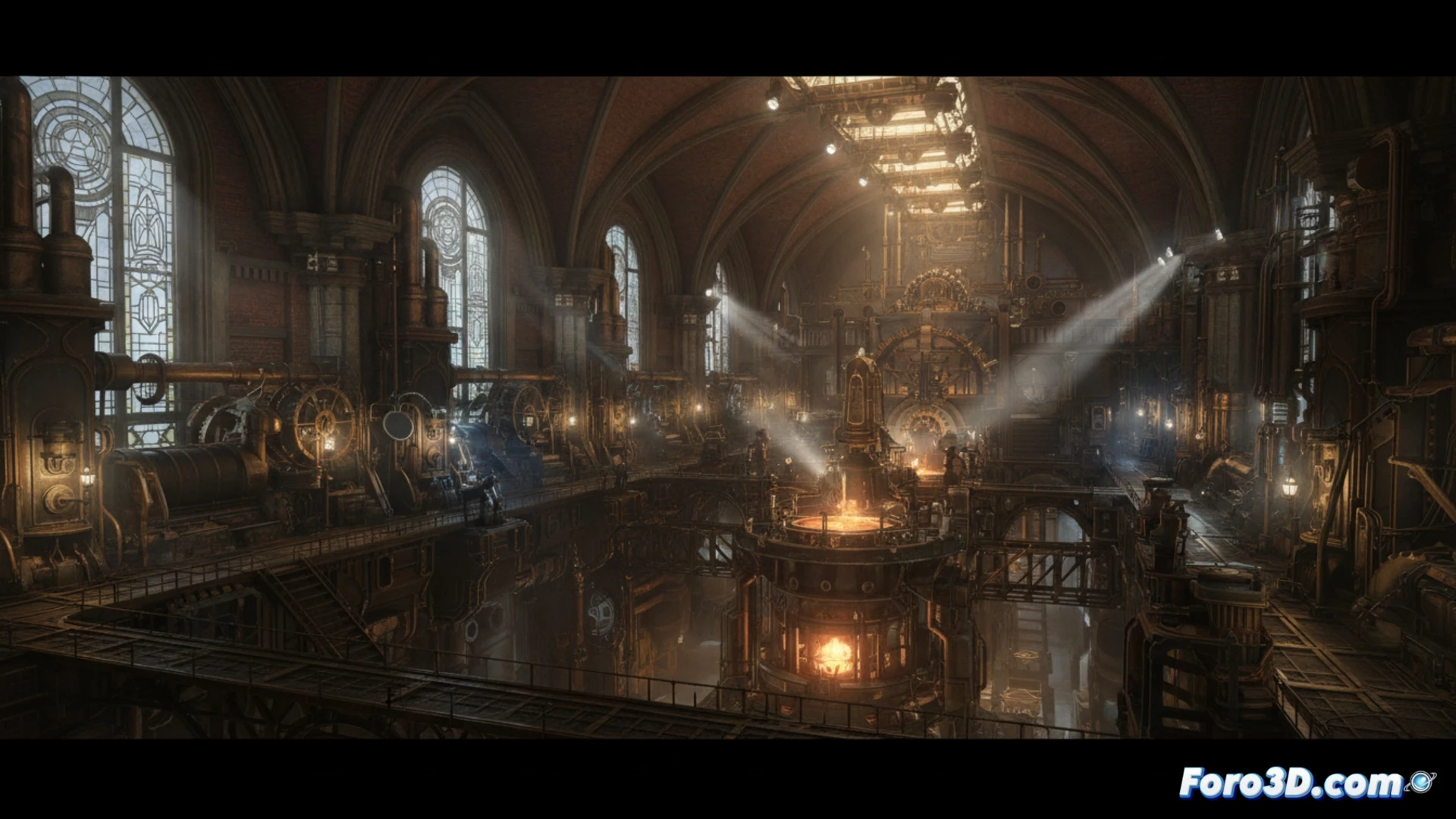
Technical Workflow: From Maya and Photoshop to Mixed Lighting 🛠️
Firmament's production pipeline relies on Autodesk Maya for modeling mechanical structures and gear architecture, while Adobe Photoshop is used for creating textures with a high level of dirty and metallic detail, characteristic of steampunk. The magic happens in Unreal Engine 4, where static global illumination (baked lighting) is applied using high-resolution lightmaps to simulate light bounces on copper and brass surfaces. However, for the puzzles, the engine activates dynamic lights and real-time shadows on interactive objects, creating a visual contrast that guides the player. This mixed lighting technique (Static + Stationary) allows puzzle-solving areas to stand out visually, while maintaining the rest of the scene with a pre-calculated cinematic quality that does not consume GPU resources.
Optimization and Art Direction as Gameplay Guide 🎨
Firmament's impeccable art direction is not just aesthetic; it is a level design tool. By maintaining a cool color palette in the static lighting and reserving warm, dynamic tones for activatable mechanisms, the developers ensure the player intuitively identifies puzzle elements without needing tutorials. Technically, this is achieved through the use of pre-calculated reflection cubemaps for metals and the implementation of materials with emissivity parameters that are activated via blueprints, optimizing draw calls and guaranteeing a smooth experience even on mid-range hardware.
What dynamic lighting techniques did Cyan Studios employ in Firmament to integrate the steampunk atmosphere with the Unreal Engine 4 engine, and how do these decisions affect gameplay in a graphic adventure environment?
(PS: 90% of development time is polishing, the other 90% is fixing bugs)