The evolution of humanoid robotics has taken a qualitative leap with Figure 02, the second-generation robot from Figure AI in collaboration with OpenAI. This automaton not only walks and manipulates objects; its true revolution lies in a multimodal AI system that integrates real-time visual processing with fluid verbal communication. For professionals in 3D modeling and simulation, this represents a paradigm shift: the robot is no longer a pre-programmed actor, but a cognitive agent capable of interpreting dynamic environments and conversing with human operators without appreciable latency.
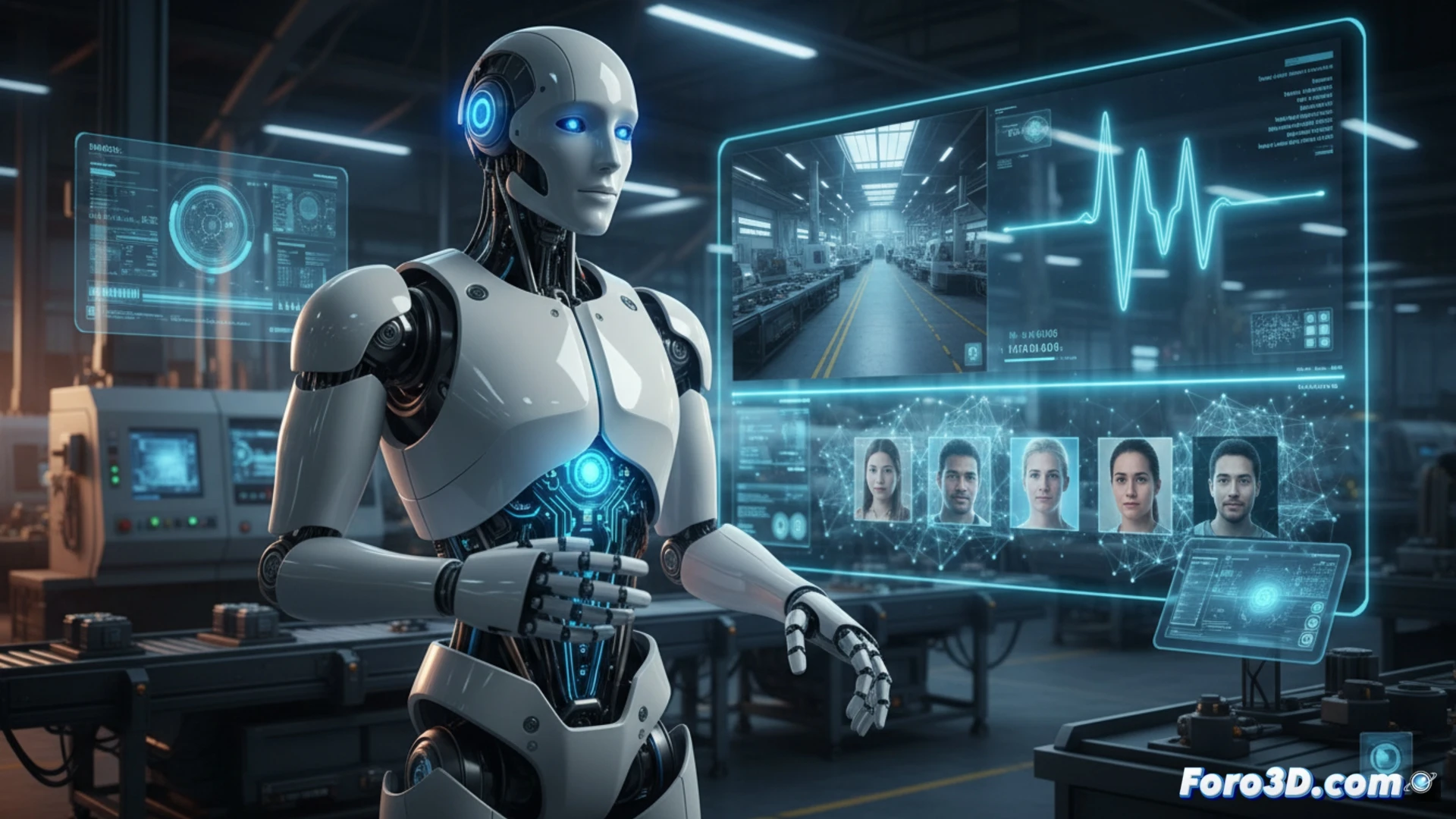
Technical Architecture: Computer Vision and Language Models 🤖
The technical core of Figure 02 lies in the fusion of two critical technologies. First, an advanced computer vision system that processes video streams at 60 FPS, allowing the robot to identify geometries, tools, and obstacles in manufacturing environments. Second, integrated large language models (LLMs) that translate voice commands into complex motor actions. This multimodal AI architecture allows the robot not only to see a part on a table, but to understand the verbal instruction pass me the component on the left and execute the maneuver without human intervention. In a digital twin or 3D simulation, replicating this interaction requires precise physics engines and embedded dialogue systems.
Implications for Industrial Automation in 3D Environments 🏭
The arrival of Figure 02 redefines the concept of human-robot collaboration in the industrial sector. By eliminating the need for intermediate screens or touch interfaces, the robot becomes another colleague on the assembly line. For developers of simulated 3D environments, this means designing scenarios where verbal communication and visual perception are input variables as important as inverse kinematics. Automation is no longer just about robotic arms executing trajectories, but about autonomous systems negotiating tasks in real time, a technical challenge that Figure 02 has begun to solve.
How does Figure 02's ability to process natural language and real-time vision transform its practical application in manufacturing and industrial automation environments?
(PS: Simulating robots is fun, until they decide not to follow your orders.)