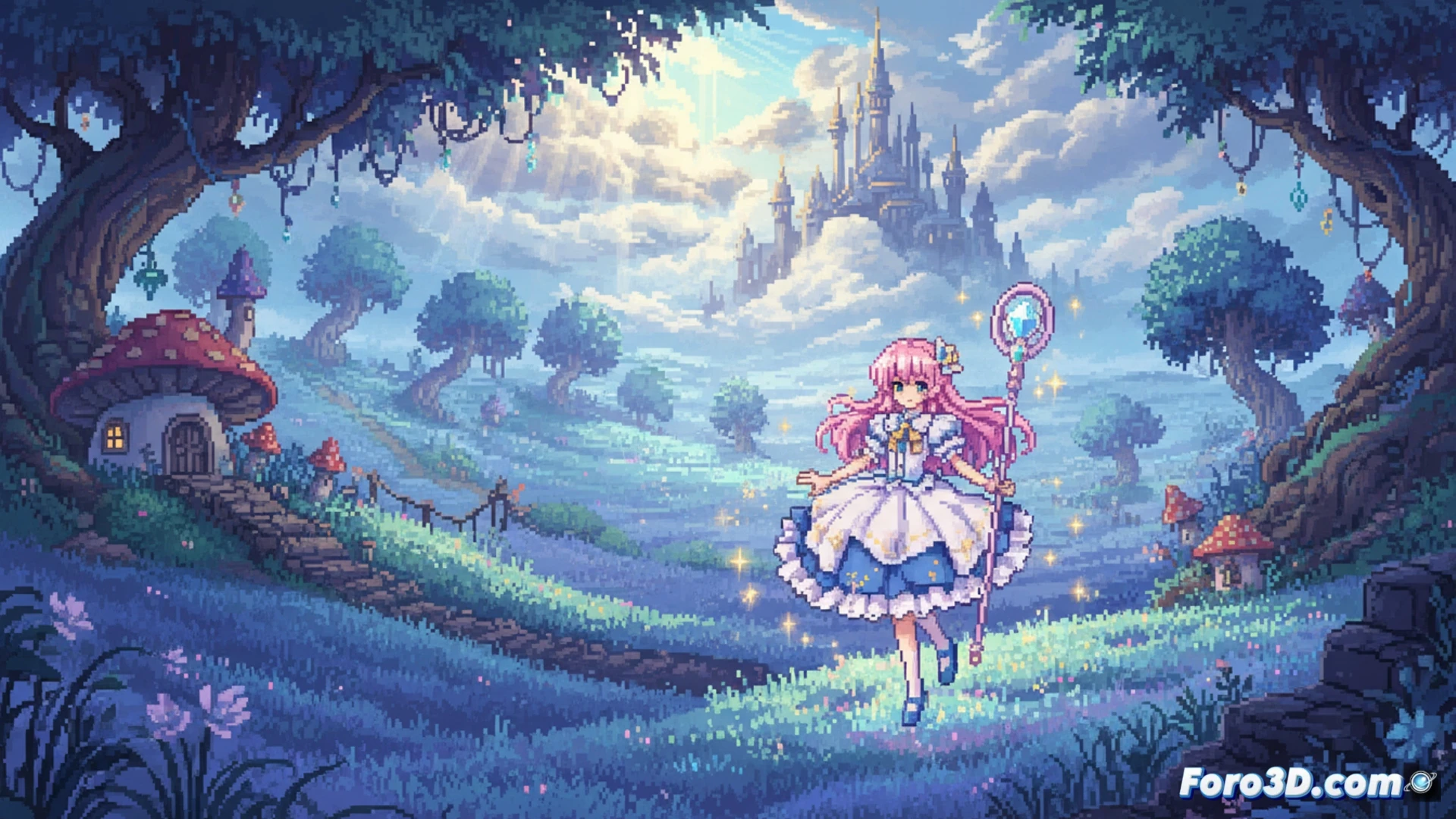
Fields of Mistria has captured the attention of the indie community for its faithful recreation of 90s anime, specifically the Magical Girl style of Sailor Moon. Developed in GameMaker, the game demonstrates that the quintessential 2D engine remains a powerful platform for achieving retro aesthetics without sacrificing detail. The key lies in a hybrid workflow between Aseprite for sprites and pixel art, and Photoshop for high-resolution character portraits, combining classic animation techniques with modern optimization.
Technical Pipeline: GameMaker, Aseprite, and Photoshop in Synergy 🌟
The technical foundation of Fields of Mistria lies in the integration of GameMaker Studio 2 with a carefully segmented asset pipeline. Environment and object sprites are created entirely in Aseprite, using limited palettes of 16 to 32 colors to maintain visual coherence and memory efficiency. However, character portraits, which require the expressiveness and detail characteristic of 90s anime, are painted in Photoshop at a higher resolution (512x512 pixels) and imported as separate textures. GameMaker handles this duality of scales seamlessly thanks to its Texture Pages system, allowing game sprites (32x32) and HQ portraits to coexist without affecting performance. Character animation is achieved through GameMaker's sprite system, but developers apply a color ramping trick in Aseprite to simulate the soft lighting of anime, avoiding banding and achieving chromatic transitions reminiscent of traditional paint cells.
Lessons for Indie Devs: How to Emulate Retro Magic 🎨
For developers looking to emulate this nostalgic style, the case of Fields of Mistria offers two practical lessons. First, don't be afraid to mix resolutions: use pure pixel art for gameplay and higher-detail assets for key moments like dialogues or cutscenes. Second, master palette limitation in Aseprite; a well-constructed palette with vibrant tones and saturated shadows is the essence of 90s anime. Finally, GameMaker allows applying simple shaders to emulate the glow or magical shine typical of the genre, but the Mistria team demonstrates that the best optimization is a solid base art that doesn't need heavy post-processing. The result is a game that runs smoothly on modest hardware while dazzling with its aesthetic.
What animation techniques and color palettes in Aseprite allow replicating the 90s anime aesthetic in Fields of Mistria, optimizing performance in GameMaker?
(PS: game jams are like weddings: everyone is happy, no one sleeps, and you end up crying)