With the release of Trails through Daybreak, Falcom demonstrates that a well-optimized proprietary engine can compete in detail and performance. The FDK (Falcom Developer Kit) enables much larger scenarios than in previous installments, doubling the density of visible objects without sacrificing smoothness. The key lies in its real-time shadow management and the treatment of reflections on metallic surfaces, a historical weak point of the series.
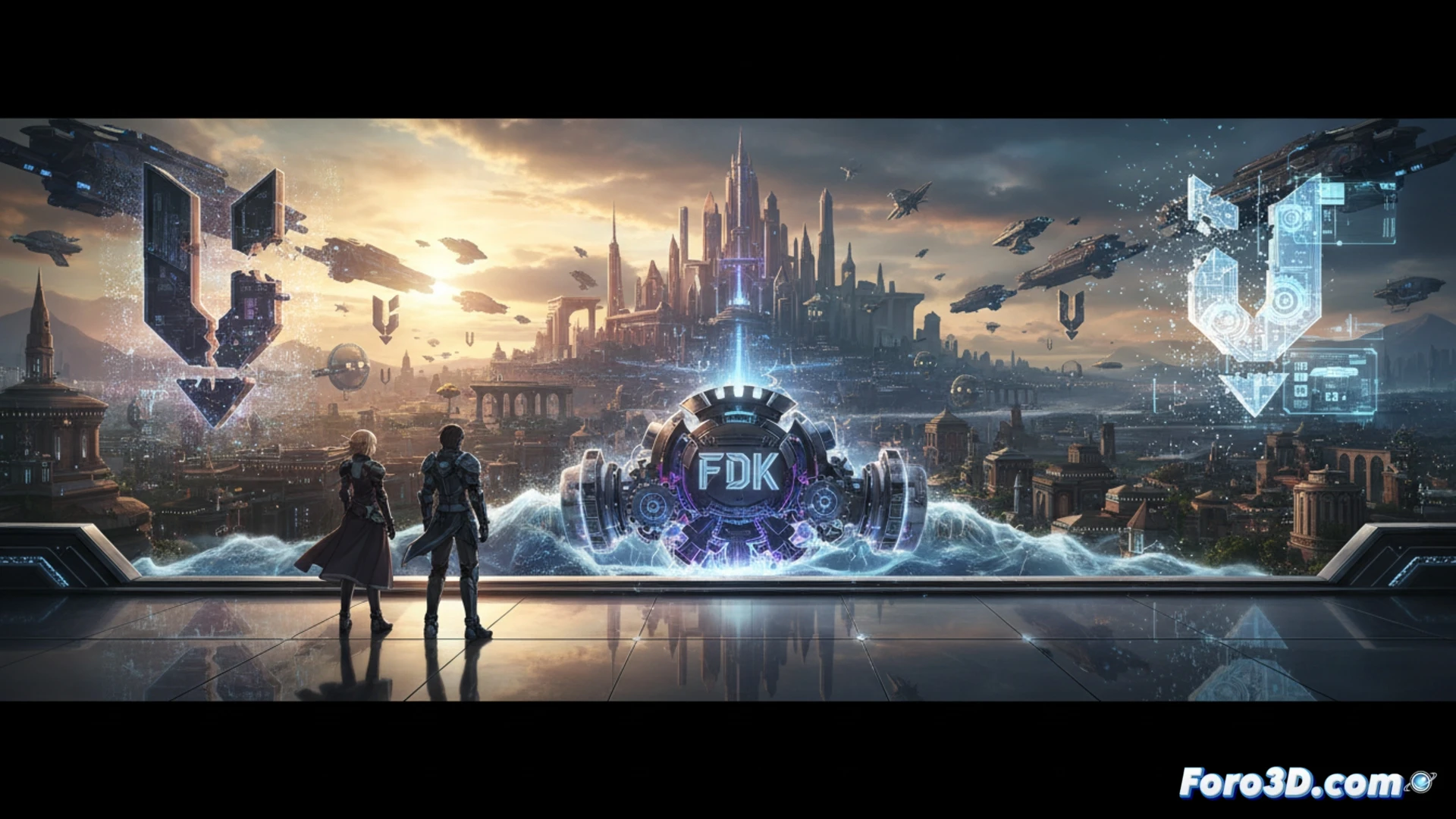
Dynamic shadow techniques and reflections in FDK 🎮
The FDK implements an adaptive cascaded shadow system that prioritizes resolution on objects close to the player, reducing the computational cost in the background of the scene. This allows urban scenes with dozens of NPCs to maintain sharp shadows without frame drops. For reflections, Falcom has developed a specific dynamic cubemap preprocessing for metals and glass, achieving realistic shine without resorting to full ray tracing techniques. Compared to Unreal Engine, which requires more resources for similar effects, the FDK offers more stable performance on modest hardware, ideal for a small studio looking to release on multiple platforms without a massive investment in licenses.
Strategic advantages of a proprietary engine versus commercial engines ⚙️
While Unity and Unreal offer universal tools, the FDK allows Falcom to control every line of code to specifically optimize their role-playing games. This avoids the overhead of unnecessary functions and reduces scenario loading times. The downside is the lack of external documentation and the reliance on an internal team of engineers. However, for a long-running franchise like Trails, this investment ensures visual consistency and a unique technical identity that no generic engine can replicate without equally costly customization work.
Considering that FDK is a closed engine developed internally by Falcom, what technical aspects of its optimization pipeline and resource management do you think could be replicated by independent studios looking to compete against commercial engines like Unreal or Unity without relying on their licenses?
(PS: game jams are like weddings: everyone is happy, no one sleeps, and you end up crying)