The occupational risk analysis by trade reveals that QA testers face a lethal combination of visual fatigue from screens, forced postures, and chronic stress from delivery deadlines. This professional profile, essential in software development, accumulates a growing incidence of musculoskeletal disorders and anxiety. From a visual epidemiology perspective, these factors are not isolated incidents but an occupational public health problem that demands data-based visualization and prevention.
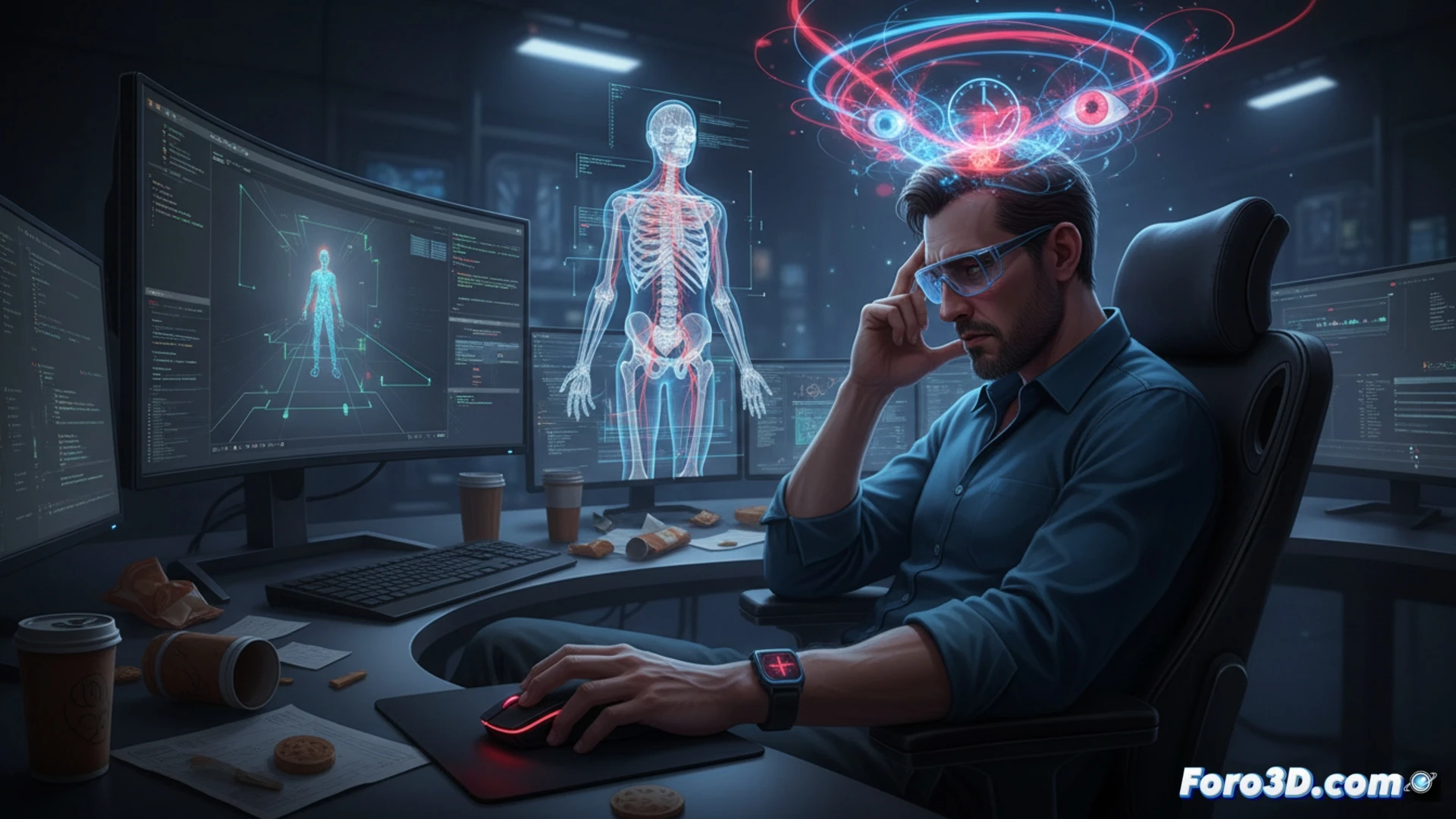
Prevalence and 3D mapping of risks in QA testers 🖥️
Epidemiological studies indicate that 78% of QA testers report severe visual fatigue, while 62% suffer from neck and shoulder discomfort due to forced postures. Sedentary behavior, combined with repetitive mouse and keyboard movements, increases the risk of musculoskeletal disorders by 45%. On the psychosocial level, stress from tight deadlines and anxiety over error reporting accuracy affect 54% of the sample. Using 3D heat maps, it can be visualized that the most affected areas are the cervical region, shoulders, and the dominant wrist, while interactive graphs show peaks of mental overexertion during regression phases.
From pain to data: how visual ergonomics saves careers 🛠️
The solution lies not only in active breaks but in workplace reengineering. 3D simulations of forced postures allow redesigning monitor height, chair angle, and screen distance to reduce visual fatigue by 30%. Incorporating blue light filters and movement reminder software decreases anxiety and sedentary behavior. Visual evidence demonstrates that prevention, based on epidemiological data, transforms a high-risk trade into a sustainable career.
What objective metrics of visual fatigue and chronic stress could be integrated into occupational health protocols for QA testers in 3D, and how could these predict long-term eye injuries?
(PS: at Foro3D we know that the only epidemic affecting us is the lack of polygons)