Researchers at IIT Guwahati subjected 3D-printed concrete walls to simulated cyclic loads to evaluate their fatigue under seismic conditions. The study, published in the Journal of Building Engineering, validated a design framework that predicts the behavior of these elements in high-risk zones. Three configurations were tested: plain mortar, ductile concrete, and concrete with integrated steel reinforcement, demonstrating that only the latter meets international safety standards.
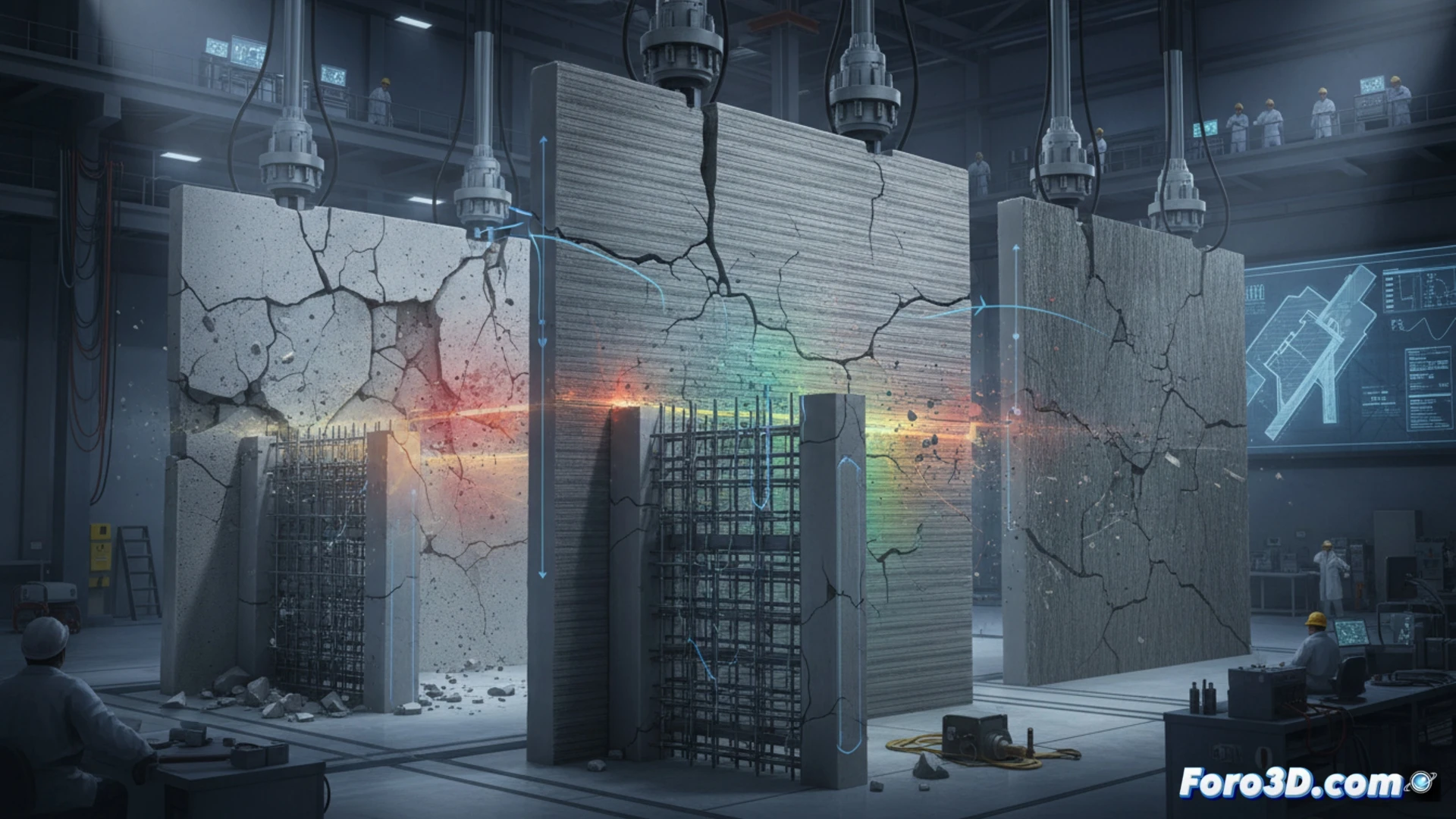
Fatigue simulation under cyclic loads 🏗️
The tests applied progressive lateral load cycles to mimic the effect of a real earthquake on full-scale walls. Plain mortar showed brittle failures after few cycles, while ductile concrete withstood more iterations but exhibited progressive degradation at the interlayer interface. In contrast, the wall with steel reinforcement integrated during printing dissipated energy stably for over 50 cycles without significant stiffness loss. Computer simulations, calibrated with this data, confirmed that metal reinforcement delays material fatigue and maintains structural integrity under extreme lateral displacements.
Towards a seismic code for 3D printing 🌍
The absence of specific regulations forces case-by-case approvals, hindering the adoption of this technology in seismic zones. This study demonstrates that a design framework based on cyclic fatigue can standardize the evaluation of printed walls. Ductile concrete with integrated steel not only exceeded India's requirements but also those of countries like Japan and the United States. The research lays the groundwork for future building codes to include fatigue parameters, accelerating the certification of 3D-printed buildings.
What structural validation methodologies were implemented at IIT Guwahati to simulate seismic fatigue in 3D-printed concrete walls, and how do they compare to traditional tests in terms of predictive accuracy?
(PS: Material fatigue is like yours after 10 hours of simulation.)