The ambitious Ocean Cleanup project suffered a significant technical setback when its floating barriers gave way to the sea. The main cause was a material fatigue failure, a cyclical phenomenon underestimated in the initial design. The break was not a sudden event, but the result of thousands of wave cycles that degraded the structure to the point of fracture. This case demonstrates the critical importance of correctly simulating fatigue in marine environments.
Modeling and simulation: OrcaFlex and Rhino in the spotlight 🌊
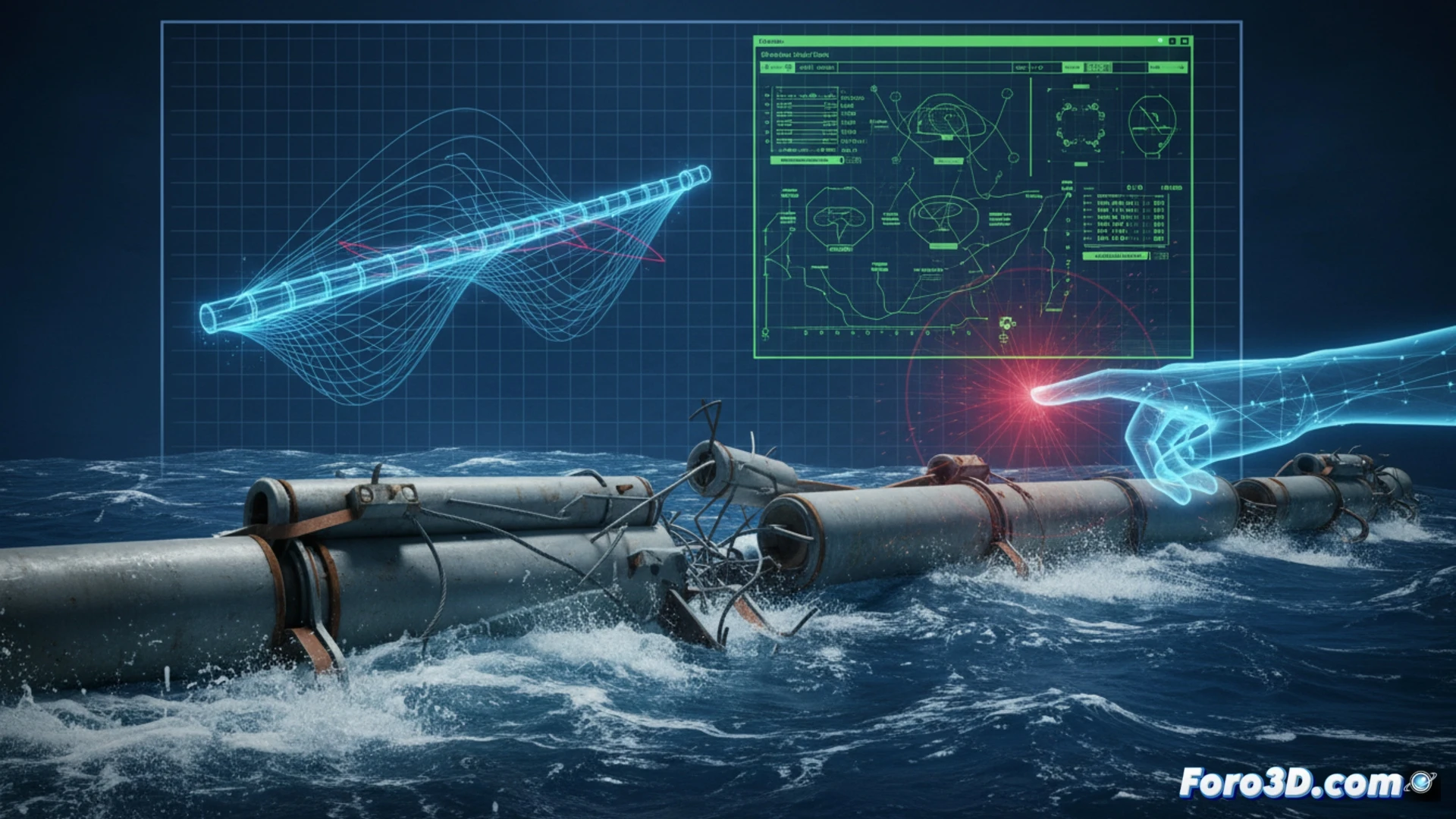
To analyze the original design, engineers turned to OrcaFlex, specialized software for marine system dynamics. This program allowed modeling the behavior of the barriers under cyclic loads, revealing that wave fatigue was concentrated at critical anchor points. Rhino, for its part, was used for the parametric design of the barrier geometries, but the initial simulations did not incorporate a realistic fatigue cycle. The error was not one of modeling, but of interpretation: the accumulated energy from low-height but high-frequency waves was underestimated. To document the failure, RealityCapture was used, creating a digital twin of the damaged structure that allowed experts to visualize microcracks and the progression of the fracture.
Lessons for ocean engineering ⚙️
The collapse of the floating barriers is a warning for any marine infrastructure project. Cyclic fatigue is not a minor detail; it is the determining factor in the service life of a structure. Designers must integrate multiaxial fatigue analysis into their workflows, using tools like OrcaFlex to validate every assumption. The lesson is clear: the ocean does not forgive simulation errors, and an accurate model is the only barrier against failure.
What wave cyclic load fatigue simulation criteria were omitted in the design of the Ocean Cleanup barriers that caused their premature structural failure?
(PS: Material fatigue is like yours after 10 hours of simulation.)