Waking up tired on a regular basis is not normal and can be a sign of fragmented sleep, rather than a lack of hours of rest. Although it is often recommended to sleep eight hours, sleep quality depends on how its phases are distributed, especially deep sleep, which is responsible for physical and immune restoration. When this cycle is repeatedly interrupted, fatigue and cognitive impairment occur, regardless of total time in bed.
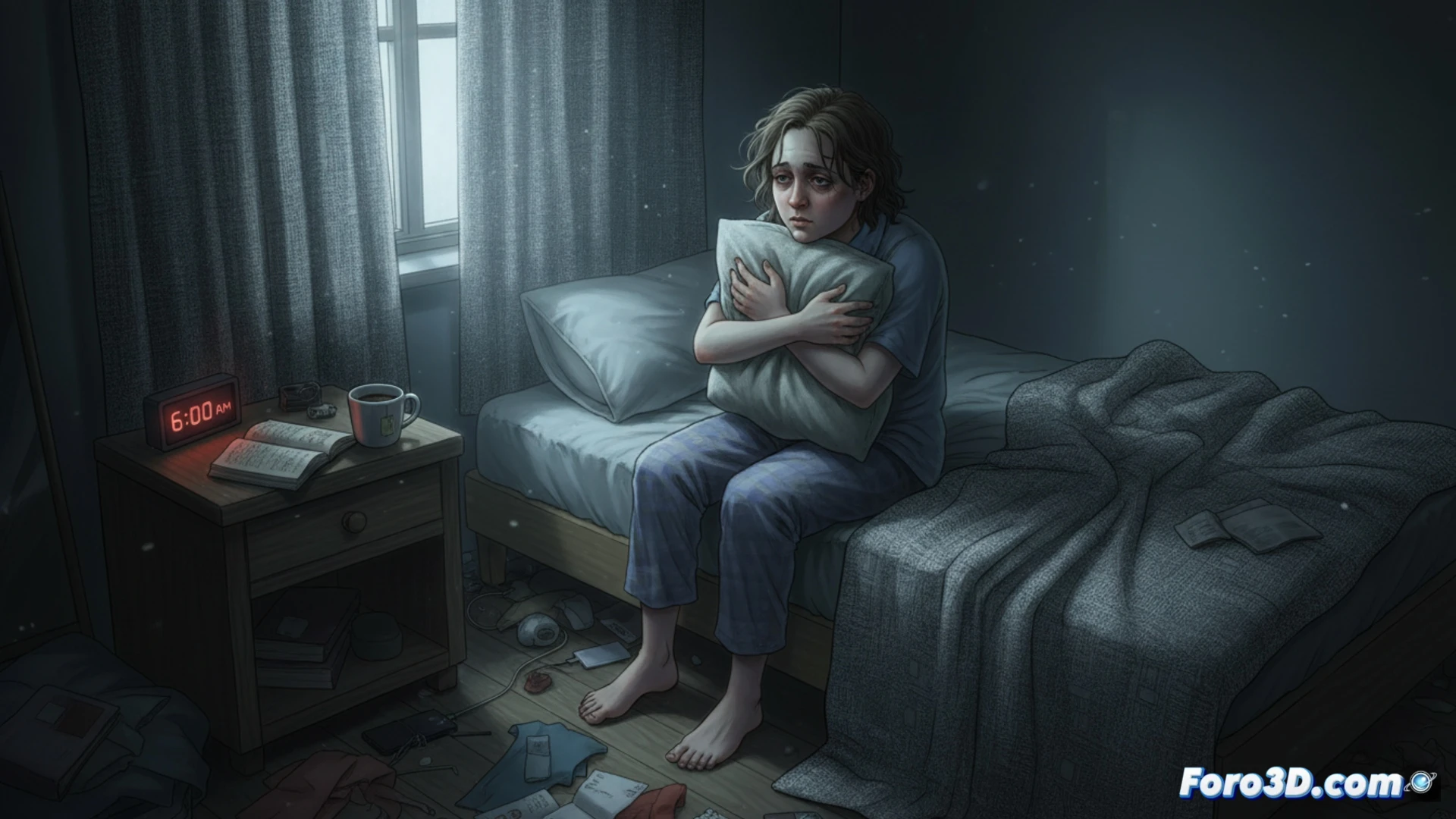
3D Visualization of Sleep Fragmentation: Apnea and Insomnia 🛌
To address this problem from the perspective of Public Health and Visual Epidemiology, we propose an interactive 3D infographic that models sleep phases (deep and REM) and how sleep apnea or insomnia fragments them. Apnea causes micro-awakenings due to oxygen drops, preventing deep sleep from being reached, while sustained insomnia hinders restorative rest. The tool would include incidence maps of these disorders by age and region, and visual simulations of the impact on physical and immune restoration, comparing restorative sleep versus fragmented sleep. This would allow identifying epidemiological patterns and educating about chronic fatigue.
Somnolence versus Fatigue: Keys to a Visual Diagnosis 🔍
It is important to distinguish between somnolence (biological need to sleep) and fatigue (lack of physical or mental energy). If fatigue persists upon waking, it may be due to medical causes such as anemia, hypothyroidism, depression, chronic stress, or side effects of medications. Science offers solutions to improve sleep continuity, and an interactive 3D infographic can be the ultimate tool to visualize this data, helping patients and professionals identify the origin of the problem before it affects public health.
It is possible that chronic morning fatigue, despite sleeping eight hours, is due to non-conscious micro-awakenings related to sleep quality, and if so, what visual biomarkers or indicators of eye fatigue could be used to detect sleep fragmentation in the practice of visual epidemiology?
(PS: the 3D incidence maps look so good that it almost feels good to be sick)