A Generation IV experimental sodium reactor suffered a catastrophic leak. 3D reconstruction using ultrasonic sensors revealed accelerated erosion-corrosion in pipe elbows, caused by the high velocity of the liquid metal. This material fatigue failure exposes the limits of current design and the need for advanced simulations to predict degradation before it occurs.
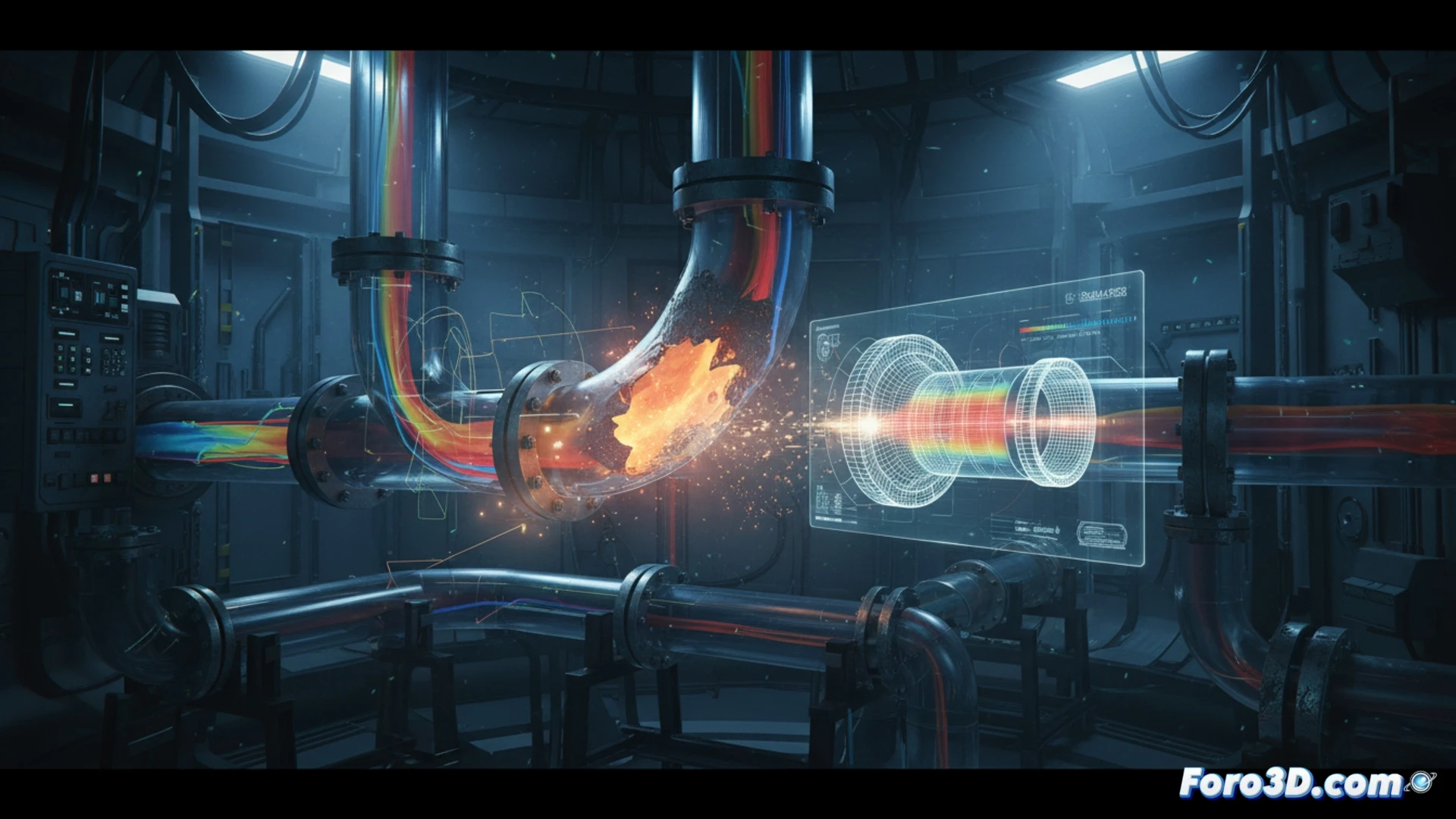
CFD simulation and CATIA modeling: Recreating erosion in elbows 🔬
To understand the failure mechanism, ANSYS Fluent was used to simulate the turbulent flow of liquid sodium through the pipe elbows. The CFD analysis identified zones of high shear and incipient cavitation, directly correlated with the erosion patterns detected by the ultrasonic sensors. Subsequently, the degraded geometry was modeled in CATIA, allowing a precise 3D reconstruction of the vessel. The comparison between the simulation and real data validated that fluid velocity accelerates material fatigue, removing layers of steel at critical points. This approach allows predicting the remaining useful life of similar components.
Lessons for Gen IV reactor design ⚠️
The collapse demonstrates that erosion-corrosion fatigue is a limiting factor in liquid metal reactors. The integration of CFD and 3D modeling not only identifies weak points but redefines design parameters: wall thicknesses, elbow radii of curvature, and maximum operating velocities. For the industry, the lesson is clear: without predictive simulation, the next leak might not be just experimental.
As a CFD engineer, what practical limitations did you encounter when integrating the ultrasonic sensor data into the 3D model to accurately capture crack initiation in the thermal fatigue of sodium?
(PS: Material fatigue is like yours after 10 hours of simulation.)