The integration of nature into skyscrapers presents a critical structural challenge when the roots of large trees exert biomechanical pressure against reinforced concrete. In a recent case, an urban vertical forest developed cracks in load-bearing beams, necessitating a forensic analysis using ground-penetrating radar and high-precision laser scanning. This article details how material fatigue simulation in SAP2000, fed by data from Leica Cyclone and Navisworks, determined whether the substrate container design was insufficient to withstand continuous stress.
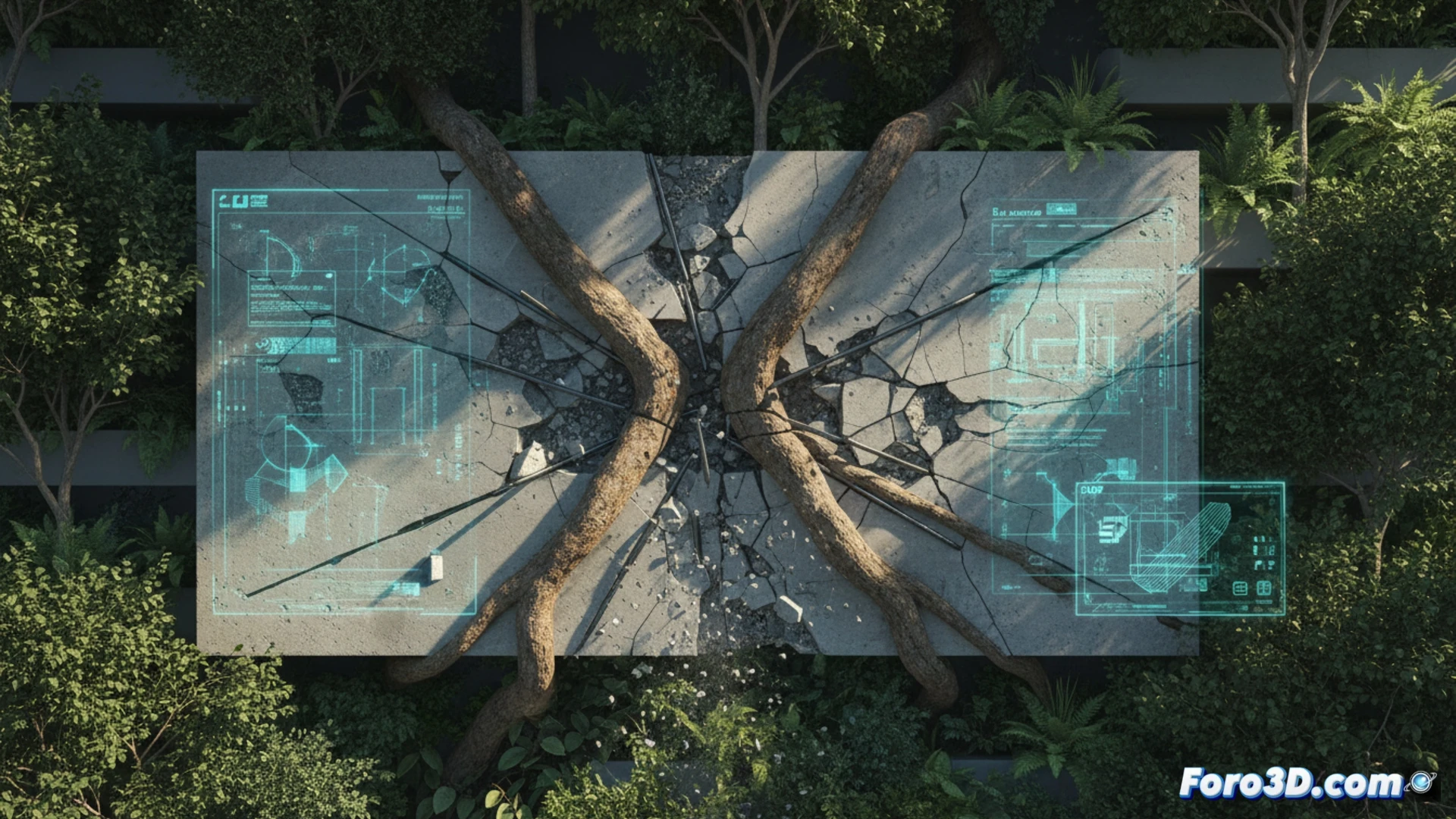
Mapping biomechanical stress with laser scanning and ground-penetrating radar 🌿
The inspection process began with high-precision 3D laser scanning using Leica Cyclone, capturing the exact geometry of the cracks and beam deformation. Simultaneously, ground-penetrating radar penetrated the concrete to locate cavities and points of high root pressure. This data was integrated into Autodesk Navisworks to generate a digital twin of the skyscraper. The overlay of both datasets allowed mapping the biomechanical pressure exerted by the roots, revealing cyclic load patterns that the original substrate container design did not anticipate. The submillimetric precision of the scan was key to quantifying the accumulated fatigue in the concrete.
Lessons on container design and structural reinforcement 🏗️
The structural analysis in SAP2000 simulated material fatigue under continuous root stress, demonstrating that the substrate container lacked adequate deflection barriers and drainage, concentrating pressure on critical points of the beams. Reinforcement solutions include installing steel jackets and redistributing the substrate to dissipate biomechanical stress. This case underscores the need to integrate plant fatigue models into the initial design of vertical forests, preventing nature from compromising the integrity of the concrete skeleton.
Which cyclic fatigue models in reinforced concrete can most accurately predict progressive microcracking induced by repetitive root pressure in vertical forests?
(PS: Material fatigue is like yours after 10 hours of simulation.)