A silent failure threatens the safety of low-flow research reactors. 3D modeling of the borated polyethylene shield, analyzed using MCNP, Rhino 3D, and Revit, has revealed a critical phenomenon: boron sedimentation induced by repetitive thermal cycles. This process creates preferential neutron leakage channels, raising radiation levels outside the core and compromising the integrity of the original shielding.
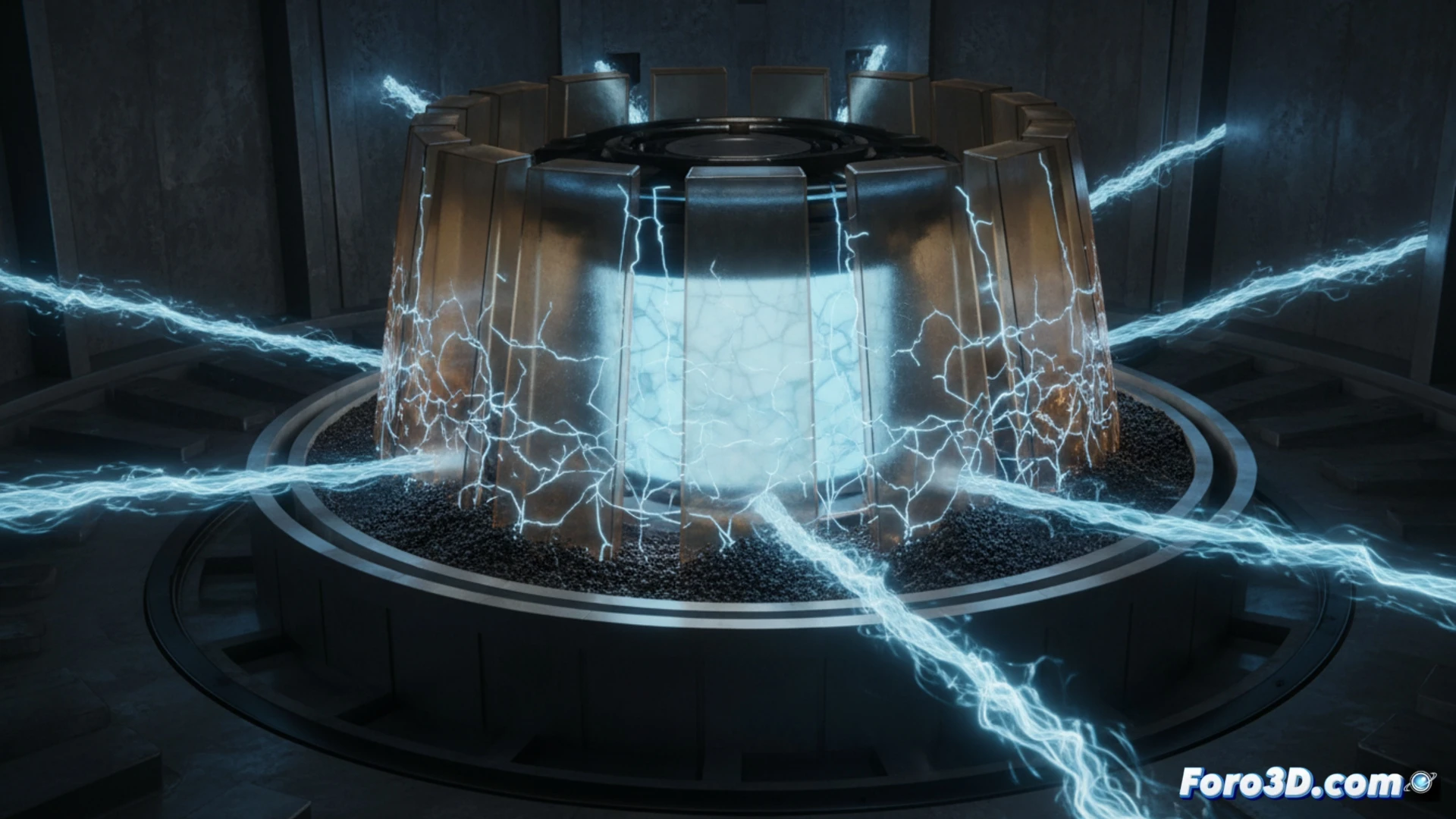
Detection of leakage channels using MCNP and parametric modeling 🧠
Monte Carlo simulation with MCNP allows quantifying the neutron flux through the degraded shielding. By feeding the model with geometric data extracted from Rhino 3D, where the redistribution of boron in the polyethylene is reproduced, zones of low attenuation are identified. Revit facilitates the overlay of the original design with the degraded state, visualizing the leakage channels as high-transmission pathways. Direct comparison between both states shows a 40% increase in the equivalent dose outside the core, pinpointing critical areas where sedimentation has created functional voids in the shield matrix.
Lessons for fatigue simulation in composite materials 🔬
This case underscores the need to integrate thermal fatigue into predictive models for shielding. Boron sedimentation is not an immediate catastrophic failure, but a progressive degradation that only detailed 3D analysis can anticipate. The combination of MCNP with architectural modeling tools like Revit not only validates operational safety but also redefines design criteria for composite materials subjected to cyclic stress, transforming a detected problem into an opportunity to improve the reliability of nuclear containment systems.
How does boron sedimentation in borated polyethylene affect the accuracy of 3D fatigue simulation models for predicting neutron leakage in low-flow reactors?
(PS: Material fatigue is like yours after 10 hours of simulation.)