A high-torque industrial electric motor began to abruptly lose power during a critical operation. The engineering team suspected a failure in the magnetic transmission. To confirm this, a detailed 3D analysis of the permanent magnets was performed, searching for evidence of micro-displacements in the poles caused by the degradation of the bonding resin.
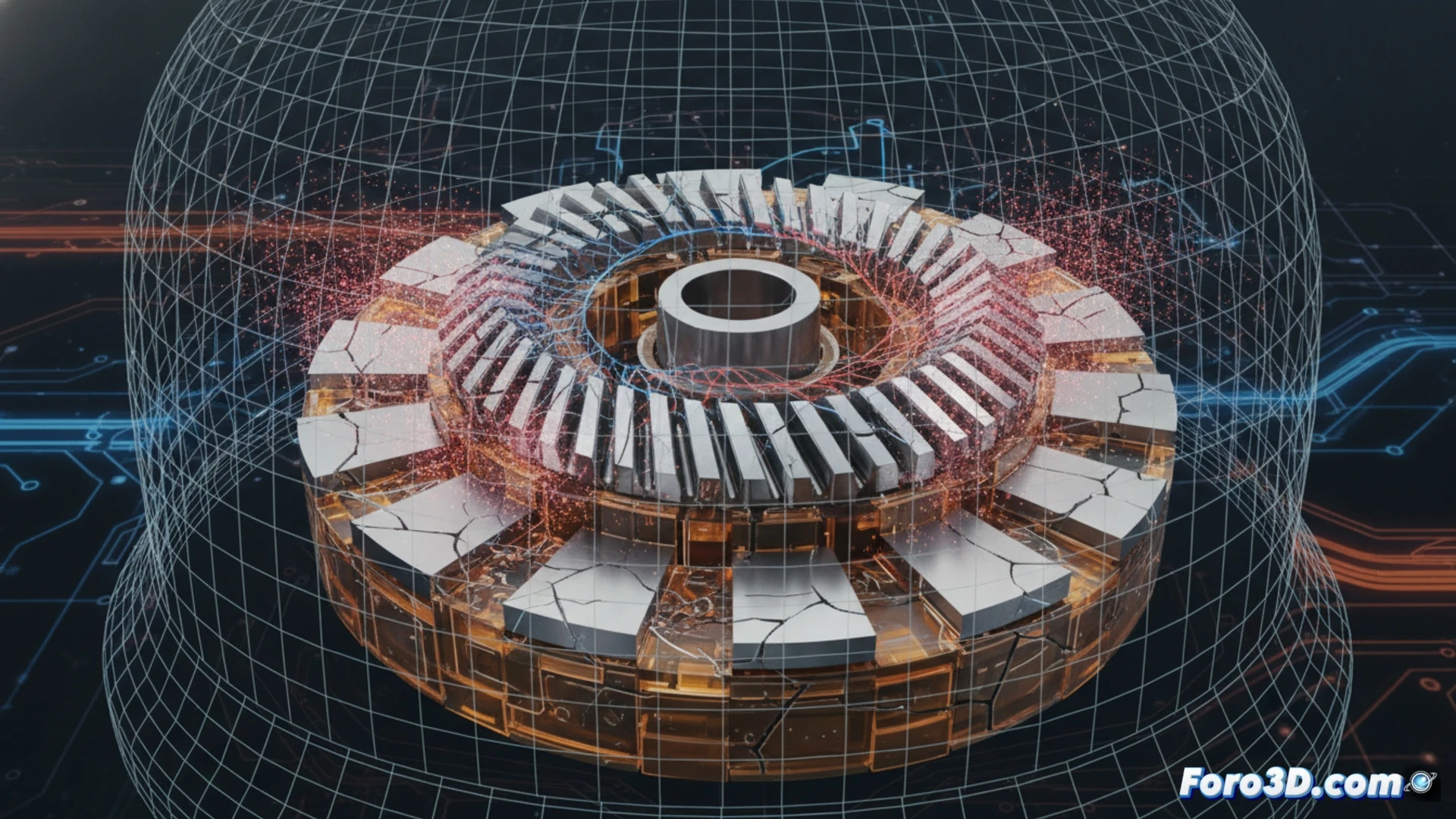
Electromagnetic and deformation analysis with CST and GOM 🧲
The process began with electromagnetic simulation in CST Studio Suite. The magnetic field of the rotor and stator was modeled under nominal load conditions. By introducing a 0.1 mm variation in the position of a magnetic pole, the simulation showed a 15% reduction in transmitted torque. In parallel, GOM Inspect was used to scan the actual geometry of the failed motor. The point cloud revealed that the resin had yielded due to cyclic fatigue, allowing a progressive rotation of the magnet. This displacement, although minimal, generated a magnetic slip that accumulated until total power loss.
Lessons for fatigue simulation in composite materials 🔧
This case demonstrates that fatigue in the bonding resin is a critical point in high-torque magnetic transmissions. The combination of CST to predict electromagnetic behavior and GOM Inspect to validate physical deformation allows for the detection of incipient failures. In future designs, adhesive fatigue simulation must include thermal cycles and vibration to anticipate slip before it compromises the system.
What 3D simulation methodology do you recommend to accurately model the effects of magnetic slip on creep fatigue of the resin in magnetic gears during torque peaks in industrial electric motors?
(PS: Material fatigue is like yours after 10 hours of simulation.)