The taxi driver's body behaves like a material subjected to cyclic stress. Forced postures, vehicle vibrations, and long hours of muscular inactivity generate microtraumas that, accumulated, lead to chronic musculoskeletal disorders. Applying material fatigue simulation principles to ergonomic analysis allows for precise visualization of where and how biological tissue degrades during the workday.
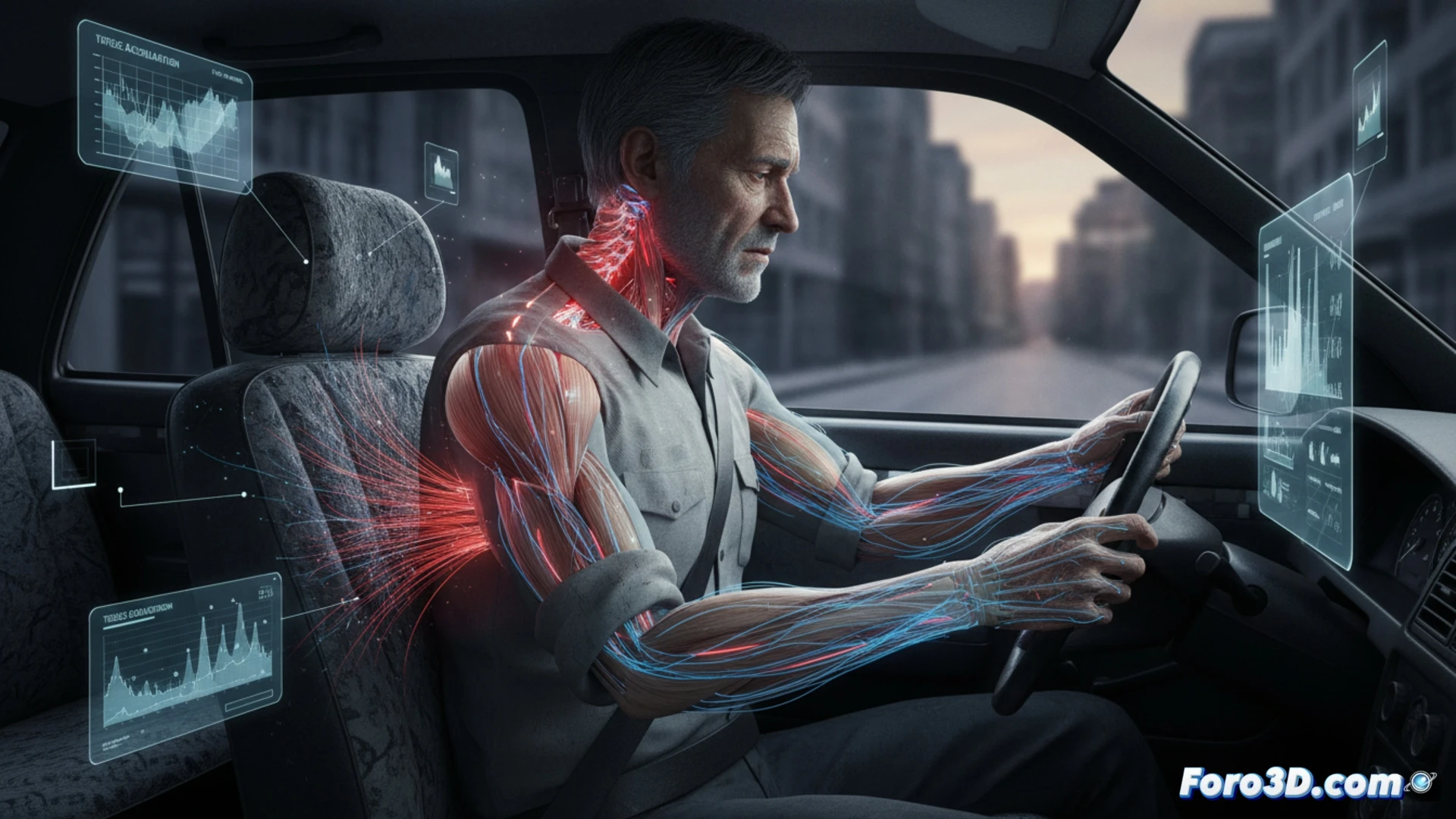
3D modeling of stresses in the spine and shoulders 🦴
Using finite element software and motion capture, a digital twin of the taxi driver in their driving position can be recreated. The simulation reveals critical stress points: the lumbar area supports constant compression due to a sedentary lifestyle, the neck accumulates fatigue from repetitive rotation towards the mirrors, and the shoulders register microvibrations from holding the steering wheel for hours. These models allow adjusting seat stiffness, backrest inclination, and distance to the steering wheel to distribute loads more evenly, delaying the mechanical failure of the musculoskeletal system.
Preventing injuries like preventing fractures in engineering 🔧
Just as an engineer analyzes the lifespan of a metal component under repeated load, the ergonomist can predict the taxi driver's joint wear before pain appears. Human material fatigue simulation offers a roadmap to redesign the workplace: from seat geometry to control layout. It is not just about comfort, but about preventing the body from exceeding its elastic limit and entering the zone of irreversible failure.
ANSYS or Abaqus for this analysis?