The job of a hotel receptionist, seemingly static, hides a high risk of physical and mental fatigue. We analyze this profession from the perspective of material fatigue simulation, treating the human body as a biomechanical system subjected to repetitive and postural loads. We identify three critical focuses: the lumbar spine due to prolonged standing, the circulatory system due to sedentary behavior, and visual fatigue from screen exposure, all of which can be modeled through 3D simulations to quantify cumulative damage.
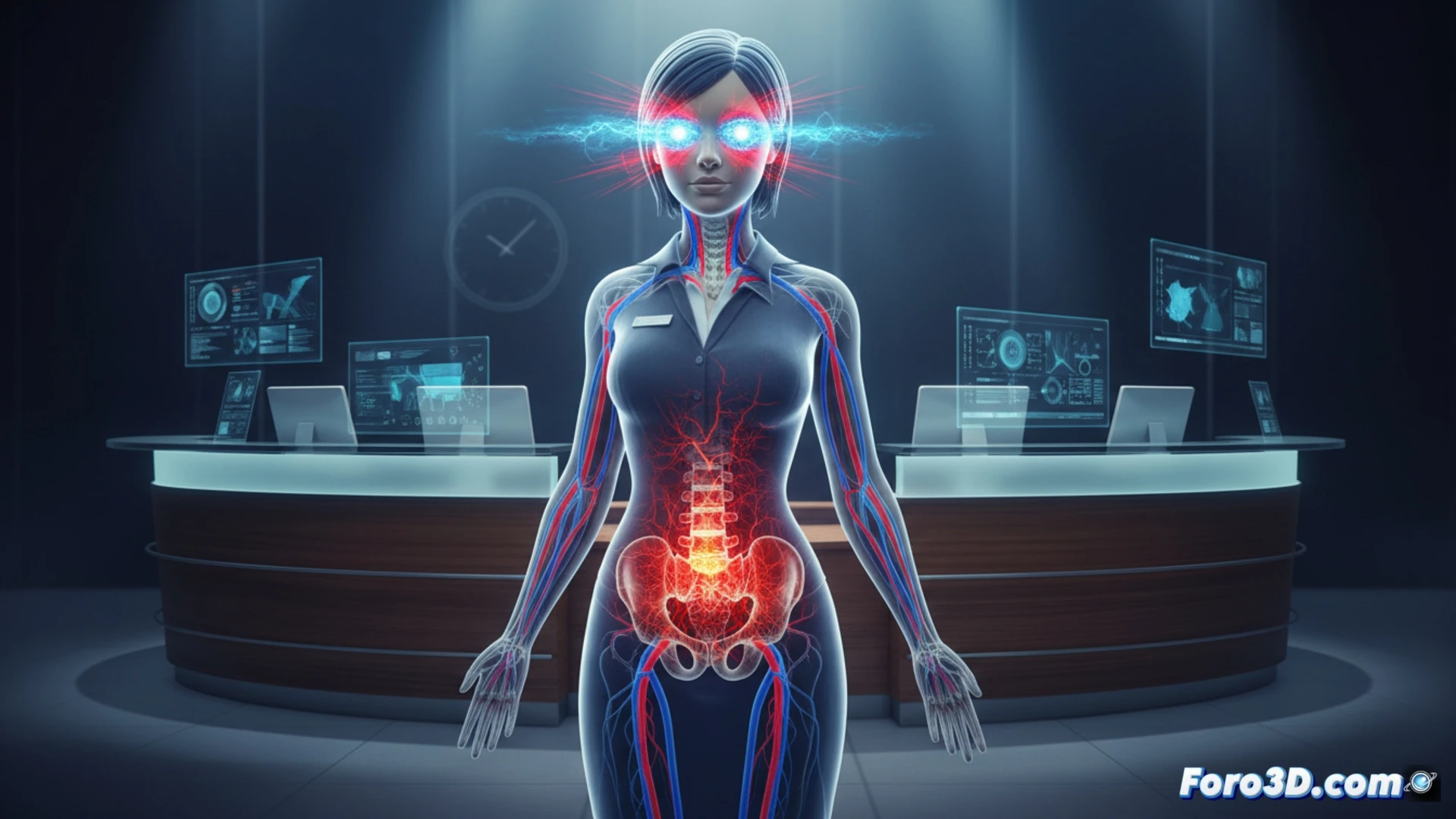
3D Simulation of Cumulative Load on the Spine and Lower Limbs 🦴
Applying material fatigue models, we simulate stress on intervertebral discs during 8 hours of standing. Pressure maps show peaks at L4-L5 that exceed the tissue's elastic limit, generating repetitive micro-injuries. In the legs, simulated blood flow reveals venous stasis due to a lack of muscle pumping, similar to cyclic fatigue in metals. Night shifts worsen tissue stiffness, reducing their recovery capacity. 3D visualization allows for adjusting active breaks and redesigning the workstation to distribute the load.
Data-Driven Prevention: Ergonomics as Materials Engineering ⚙️
Stress from public interaction and verbal aggression act as sudden impact loads that raise overall muscle tension, quantifiable as a stress concentration factor. As in material fatigue, prevention should focus on reducing the amplitude of loads, alternating postures every 30 minutes, and using footwear with impact absorption. 3D simulation not only diagnoses but also offers a visual tool to raise staff awareness about the progressive degradation of their bodies.
How can finite element simulation be applied to predict fatigue in the soft tissues and joints of a receptionist during an 8-hour workday in a static position?
(PS: Material fatigue is just like yours after 10 hours of simulation.)