A patient with chronic kidney failure suffered a uremic toxicity crisis due to the failure of their portable artificial kidney. The initial diagnosis pointed to an obstruction, but forensic analysis of the device revealed a deeper problem: material fatigue in the piezoelectric actuator of the micro-pump. The dialysate flow had decreased by 40% before total collapse, requiring emergency intervention.
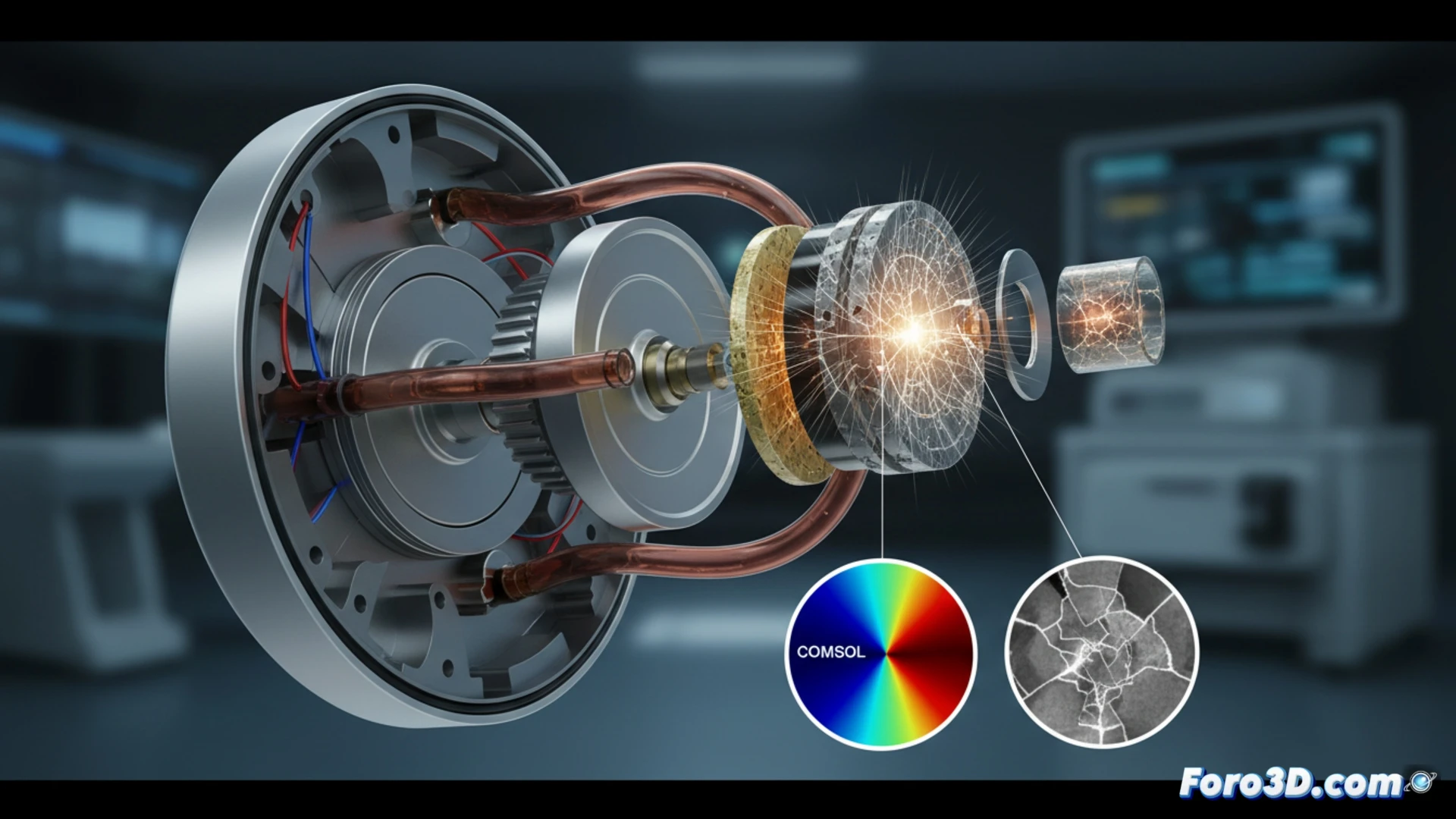
Analysis using micro-CT and multiphysics simulation in COMSOL 🔬
To validate the fatigue hypothesis, a high-resolution micro-CT scanner was used. The data volume was processed in VGSTUDIO MAX, where sub-surface microcracks were identified in the PZT-5H piezoelectric material. These cracks, less than 10 microns wide, were located at the anchor point of the pump diaphragm. Subsequently, the damaged geometry was imported into COMSOL Multiphysics for a coupled analysis. The simulation modeled the dialysate flow (non-Newtonian fluid) through the pump chamber, correlating the reduction in pumping volume (from 5 ml/min to 2.8 ml/min) with the loss of actuator stiffness. The Coffin-Manson fatigue model applied in COMSOL confirmed that the material had exceeded 10 million stress cycles, well below the expected service life of 50 million.
Alternative materials and resilient design ⚙️
This incident underscores the need to reassess materials in critical-use implantable or portable devices. A comparison in SolidWorks between PZT-5H and the lead magnesium niobate (PMN-PT) composite showed that the latter offers 30% more resistance to crack propagation from cyclic fatigue. Micro-CT thus consolidates itself as an indispensable tool in the prototype validation pipeline, allowing failures to be detected before they reach the patient. Simulation in COMSOL not only explains the failure but also guides the selection of more durable materials for the next generation of pumps.
Would you validate with destructive testing?