Artisanal and industrial blacksmithing exposes workers to multiple hazards: burns from molten metal, flying sparks, impacts from hammers and anvils, and exposure to toxic fumes. However, many of these accidents share a common origin: the structural failure of tools and equipment subjected to extreme conditions. Fatigue simulation of materials in 3D environments allows modeling the behavior of anvils, hammers, and forges under thermal and mechanical stress, offering accurate prediction of fractures and deformations.
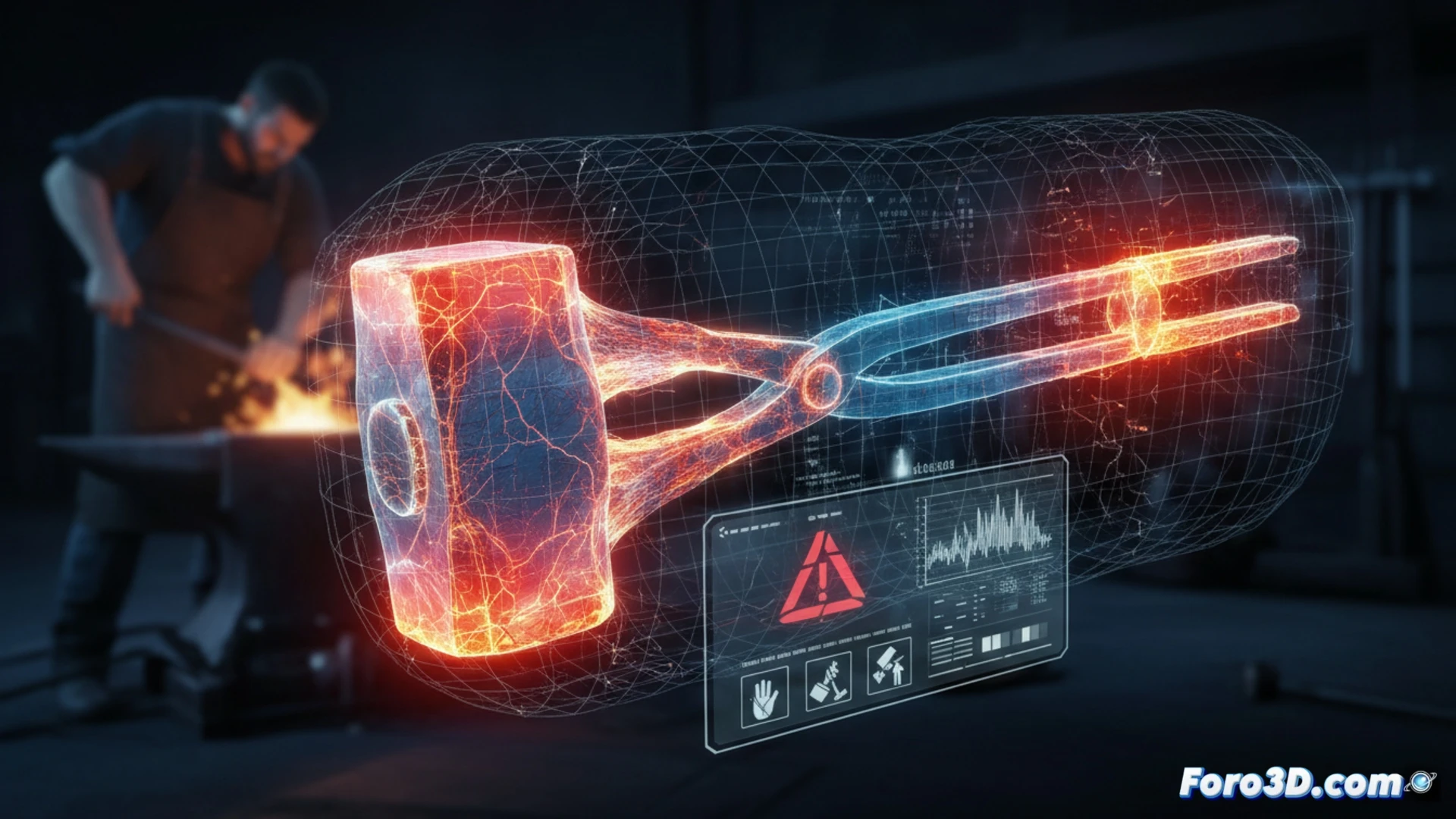
Modeling thermal and mechanical stresses in forging tools 🔥
Finite Element Analysis (FEA) applied to blacksmithing allows digitally recreating the heating and rapid cooling cycles that tools undergo. By simulating repetitive hammer impacts on anvils, critical stress concentration points where cracks initiate are identified. The projection of incandescent particles and sparks can also be modeled as dynamic loads that erode the metal surface. This approach enables optimizing part geometry, selecting alloys more resistant to thermal creep, and predicting equipment lifespan, thereby reducing the risk of catastrophic fractures that cause trauma or fires.
Preventing overexertion and falls from virtual design ⚙️
Beyond metal, 3D fatigue simulation also addresses the ergonomic risks of the blacksmith. By modeling the handling of heavy parts and forced postures, workstations can be redesigned to minimize the load on the spine and joints. Simulating structural fatigue in the floor and platforms around the forge helps prevent falls due to sinking or wear. Integrating these analyses into the virtual design phase not only protects the worker but also extends the life of forging tools and reduces costs from unplanned downtime.
ANSYS or Abaqus for this analysis?