The failure of a connector in a vaping device is not a simple mechanical accident, but a clear example of material fatigue. This component, responsible for holding and electrical contact, undergoes repeated cycles of heating and cooling. Over time, these thermal stresses generate microcracks that propagate until total collapse, a phenomenon we can accurately model and visualize using 3D simulations.
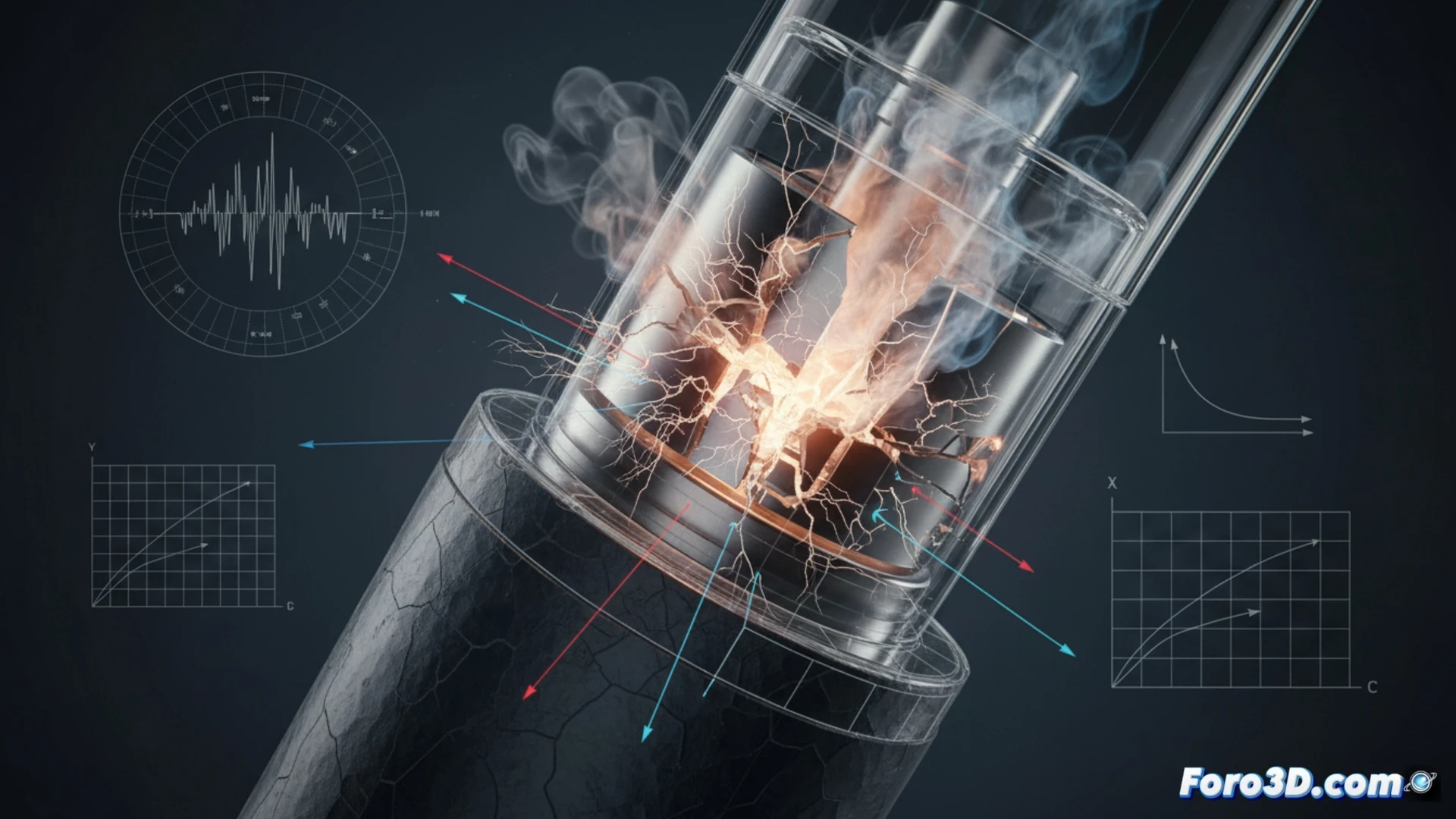
Technical Analysis: Thermal Cycles and Critical Breakage Points 🔥
To understand the failure, we model the connector as a bimetallic or polymer piece subjected to cyclic loads. In the simulation, we apply a thermal cycle from 25°C to 120°C, replicating intensive use. The results show that the critical point is located at the base of the clamping arm, where stress from expansion and mechanical bending converge. Here, the Von Mises stresses exceed the material's fatigue limit after approximately 500 cycles. The 3D visualization reveals a stress concentration in the form of a red gradient, indicating the exact zone where the crack will initiate. Finite element analysis confirms that propagation follows a path perpendicular to the axis of highest stress, a classic pattern of low-cycle fatigue.
Lessons from the Simulation for Component Design ⚙️
This simulation forces us to reflect on the importance of fillet radii and material selection in everyday devices. A design that ignores cyclic fatigue is doomed to premature failure. 3D simulation not only predicts collapse but also allows redesigning the connector to distribute stresses more evenly, extending its lifespan. Ultimately, every crack is an engineering lesson reminding us that durability is built from the first virtual model.
Is it possible to accurately predict the number of fatigue cycles the extraction mechanism of a vape will withstand before collapsing, considering variables such as vapor temperature and residue buildup?
(PS: Material fatigue is like yours after 10 hours of simulation.)