A recent incident in a high-voltage submarine interconnection cable, which failed at a depth of 200 meters, has brought focus to a critical phenomenon: helix twisting. The 3D reconstruction of the seabed using side-scan sonar and photogrammetry suggests that ocean currents induced excessive torsional stress, first compromising the steel armor and subsequently the dielectric insulation. This case demonstrates that material fatigue in dynamic environments requires precise modeling to avoid costly power supply interruptions. 🌊
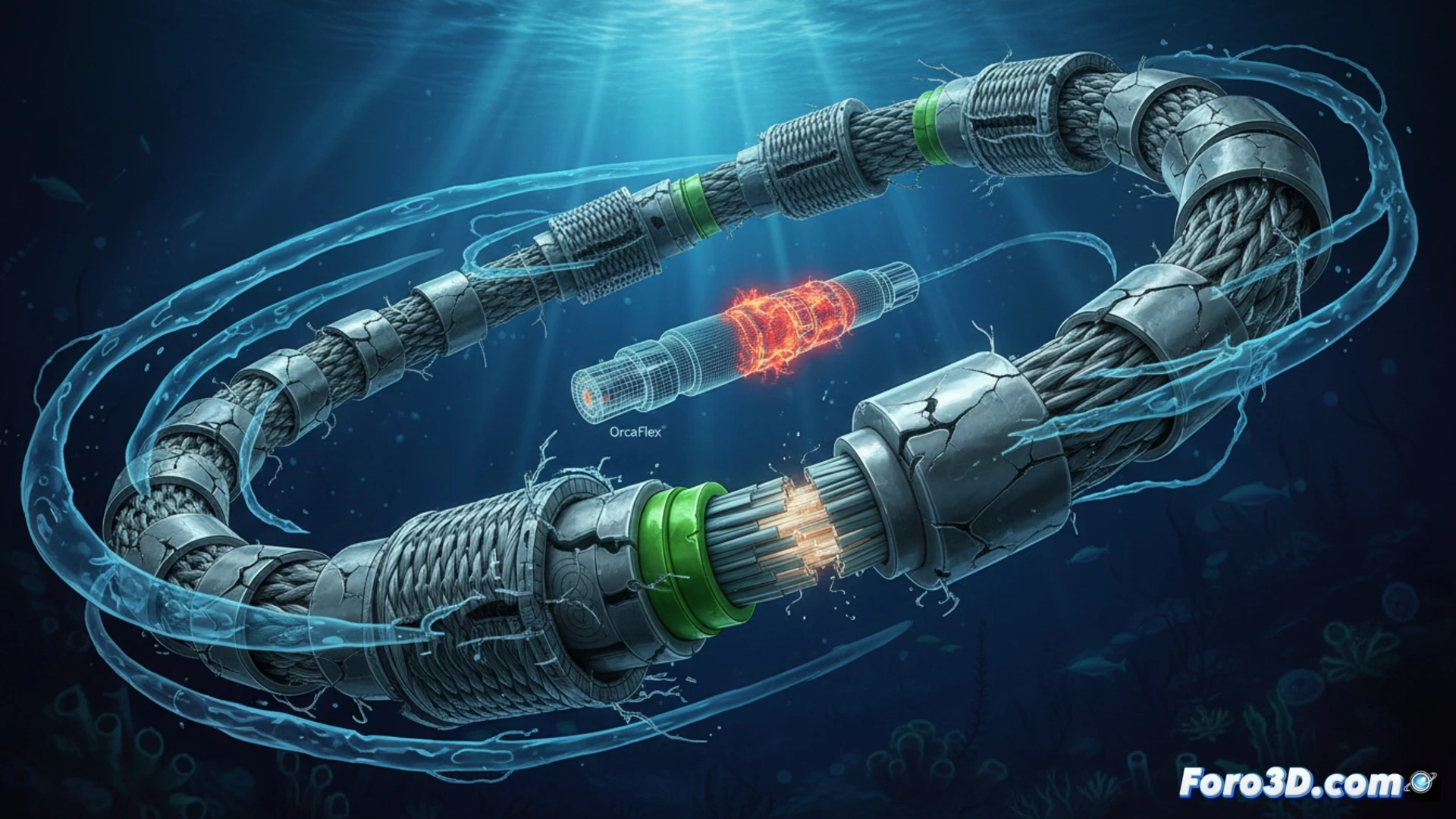
Computational modeling with OrcaFlex and RealityCapture 🛠️
To analyze the failure, engineers used OrcaFlex, a software specialized in flexible line dynamics. This program allows simulating the interaction between the cable and ocean currents, calculating the distribution of torsional stress along the structure. Combined with RealityCapture, which generates a digital twin of the damaged cable from sonar point clouds, the theoretical model could be contrasted with the actual deformation. The results indicated that cyclic fatigue, accelerated by current oscillation, exceeded the steel's yield strength at specific points, initiating cracks that propagated the insulation failure. Bentley OpenRoads was used to integrate this data into an infrastructure corridor model, assessing risk on alternative routes.
Lessons for critical infrastructure resilience ⚡
The case underscores that fatigue simulation should not be limited to static loads. In submarine cables, helix twisting is an emerging phenomenon that combines hydrodynamics and materials science. Ignoring the interaction between the current and the torsional stiffness of the armor can lead to underestimated designs. The integration of tools like OrcaFlex and RealityCapture offers a workflow from prediction to forensic verification, allowing engineers to adjust manufacturing parameters or install torsion dissipators. Preventing these failures not only saves millions in repairs but also ensures the stability of energy interconnection networks between countries.
Considering the limitations of current models for bending fatigue under tension, which parameters of the helix twisting history during laying and operation are the most critical and often omitted when predicting the service life of a high-voltage submarine cable?
(PS: Material fatigue is like yours after 10 hours of simulation.)