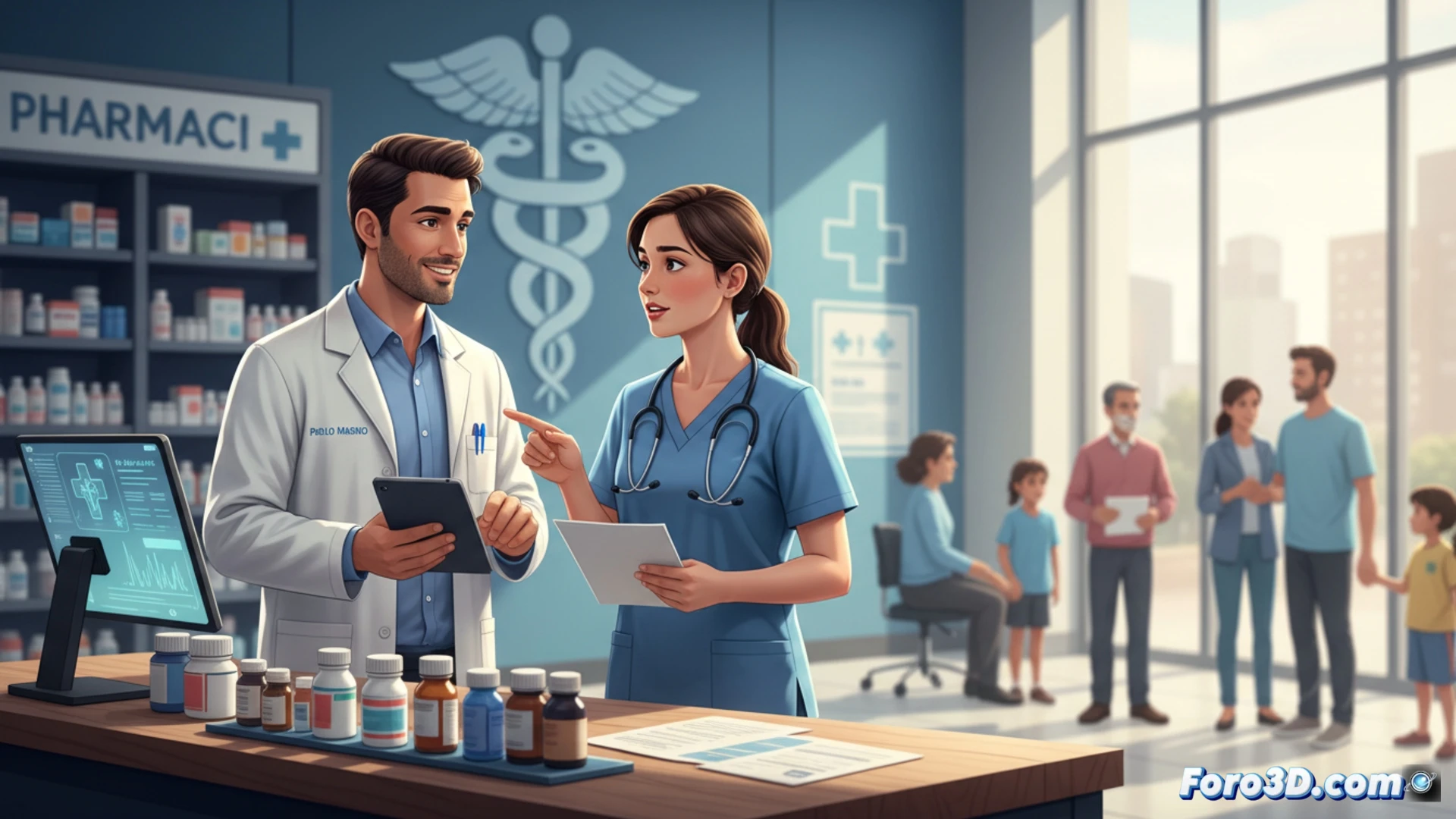
Pharmacists are a key piece in health communication, acting as the first filter between the patient and the system. Their direct contact allows them to educate about medications, prevention, and healthy habits. In Ciudad Real, pharmacist Pablo Madrid insists that a solid system needs support for nursing and collaboration between both groups to strengthen primary care and optimize resources.
Technology and data: the engine of pharmaceutical communication 💊
Digitalization allows pharmacists to offer personalized follow-up through health platforms and shared databases. Tools such as electronic prescriptions or interaction alert systems improve accuracy in dispensing. However, investment in data infrastructure and training in digital tools remains insufficient. Without these advances, collaboration with nursing in primary care becomes slower and less efficient.
The pharmacy: where the patient thinks they're a doctor after watching a video 📱
The pharmacist spends the day explaining why ibuprofen doesn't cure sadness and that paracetamol is not a candy. Meanwhile, the patient arrives convinced that a TikTok video has turned them into a pharmacology expert. The worst part is that sometimes the patient is right and the leaflet was keeping it quiet. So, between one prescription and another, the pharmacist acts as a translator between science and Dr. Google.