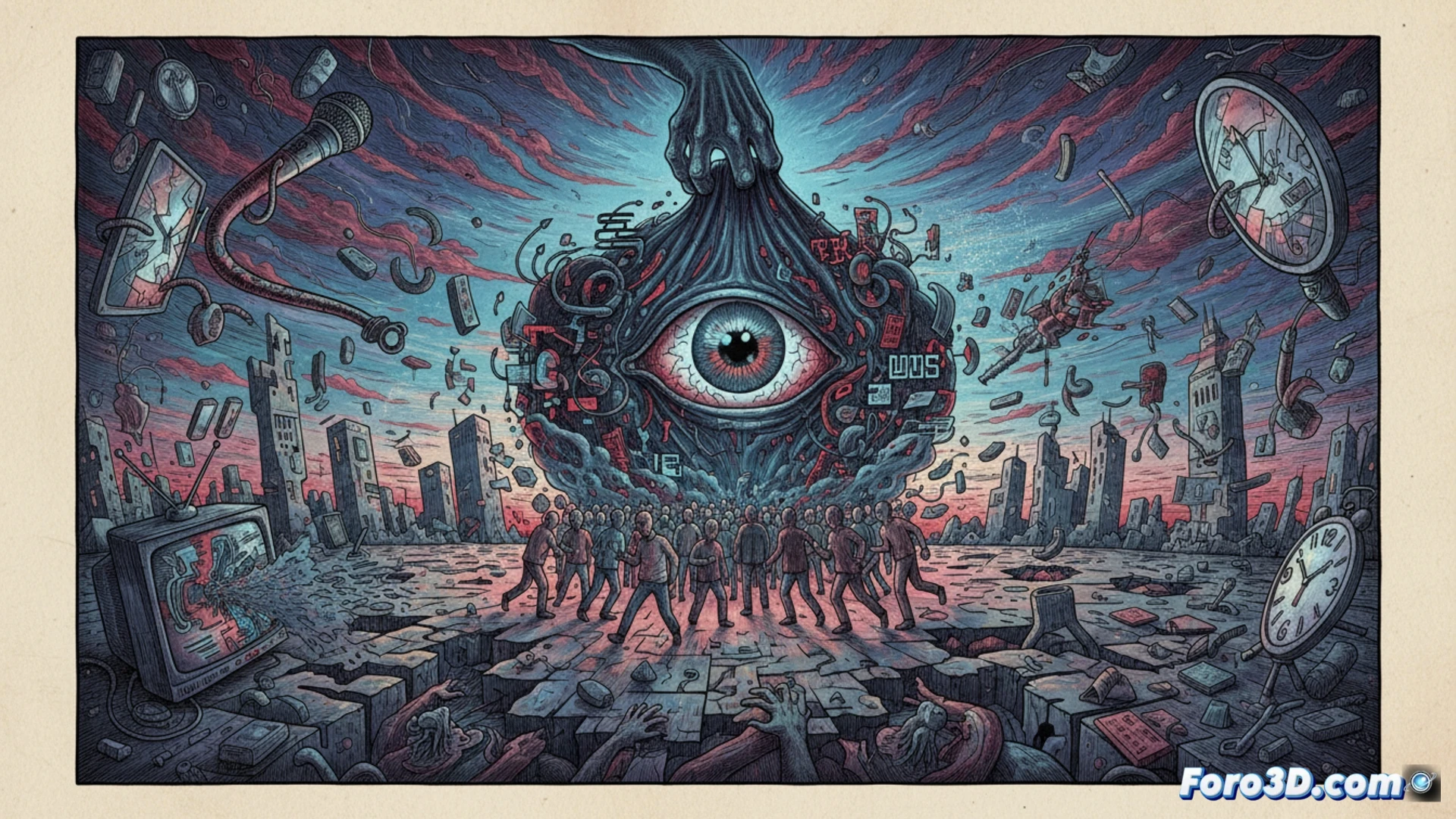
In times of political and economic uncertainty, distorted perceptions and collective fears become tools that shape social reality. The article Phantasmagorias analyzes how public discourse and media fuel these visions, generating anxiety and confusing the unreal with the factual, diverting attention from concrete problems toward abstract threats such as identity crises or conspiracies.
The algorithm of fear: technology that amplifies distortion 🤖
Recommendation systems and social networks act as catalysts for these phantasmagorias. By prioritizing emotional content over rational analysis, algorithms create bubbles where the extraordinary seems ordinary. Confirmation bias reinforces unfounded beliefs, while the lack of automated verification turns rumors into facts. To counteract this, media literacy tools and platforms that penalize disinformation, not just virality, are required.
Manual for the good phantasmagoric: how to scare yourself effortlessly 👻
Do you want to be a top-notch phantasmagoric? Follow these steps: first, ignore any data that contradicts your favorite conspiracy theory. Second, share everything that scares you, without reading it. Third, blame an abstract group for your real problems. It's easy, requires no thinking, and guarantees a good dose of anxiety. The best part: while you worry about ghosts, real problems pass you by. Handy, isn't it?