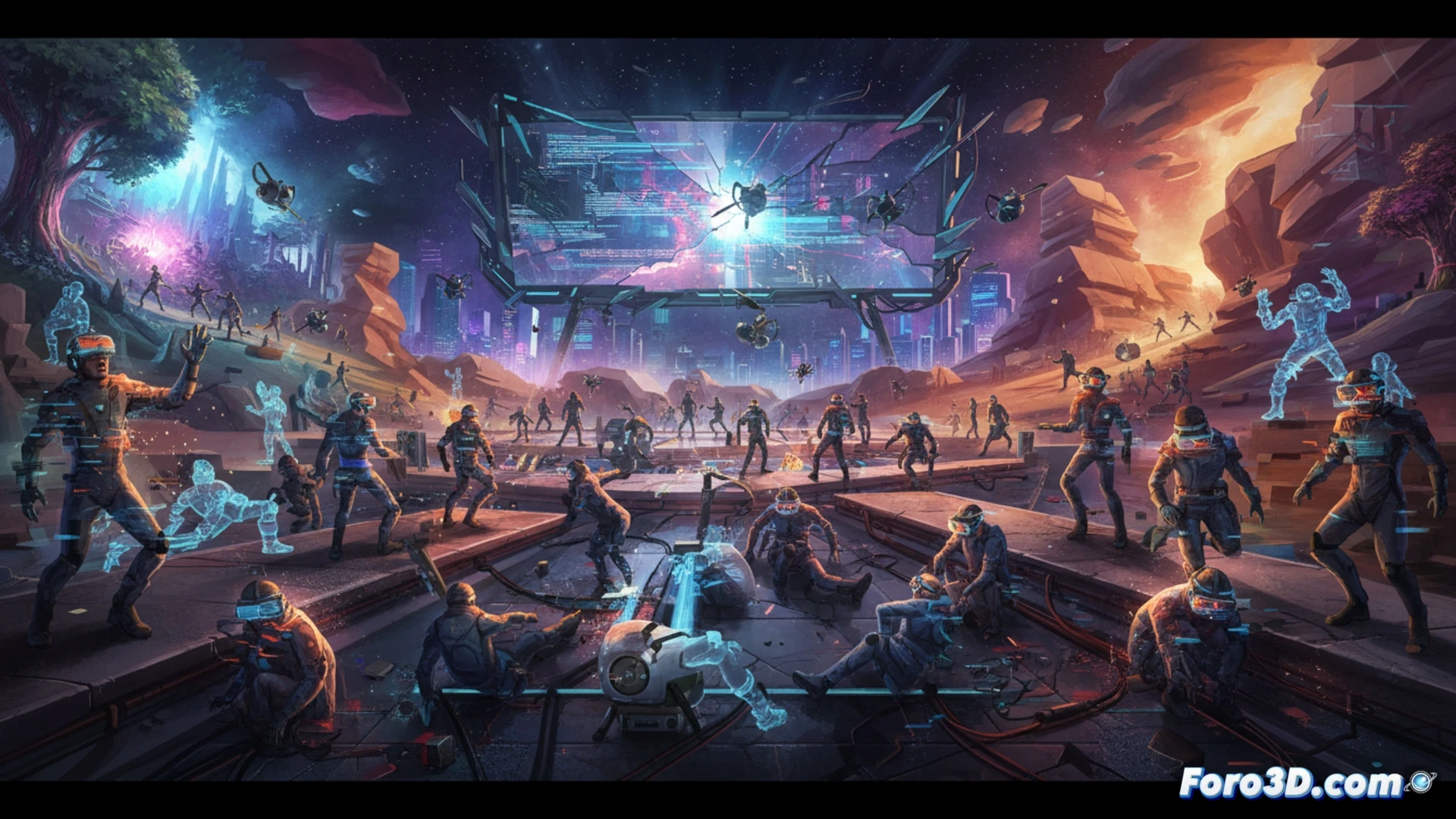
A recent incident in a virtual reality park has brought to light a little-explored risk: mass disorientation caused by a failure in hybrid physical-virtual systems. When the tracking engine lost calibration, hundreds of users became trapped in a perceptual limbo, triggering a collective panic dynamic that no safety protocol had anticipated. We analyze this case from the perspective of simulation engineering and immersive experience design.
Flow Simulation with MassMotion and RealityCapture 🎯
Preventing stampedes in VR environments requires modeling tools that integrate real-world data with the logic of virtual behavior. MassMotion allows simulating pedestrian flow under stress, calculating evacuation times and bottleneck points in physical spaces. Meanwhile, RealityCapture generates precise digital twins of the venue, capturing geometries and textures that are then imported into Unreal Engine. There, the graphics engine executes crowd simulations where each avatar reacts to virtual stimuli, such as error screens or sudden lighting changes, replicating the chaos observed in the real incident.
Lessons for Multi-User Designers and Developers 🧠
The main lesson is that safety in VR does not end with hardware; software must include fail-safe protocols that restore users' spatial reference. Designing multi-user experiences requires integrating physical anchor signals, such as floor markings or haptic guides, that act as beacons when the hybrid system desynchronizes. For theme parks, the recommendation is clear: every evacuation simulation must include a mass disorientation scenario, validated with tools like MassMotion and Unreal Engine, before opening to the public.
How can a virtual reality system cause a physical stampede when most users simultaneously experience a disconnection between their virtual perception and their real environment?
(PS: Virtual reality is great until you try to lean on a table that doesn't exist.)