A generative heat exchanger, designed using artificial intelligence and topology optimization, has catastrophically failed in a thermal power plant. The steel walls fractured due to fatigue. The 3D expert investigation examines whether the organic geometry of the internal channels caused critical turbulence and flow-induced vibration (FIV). Ansys Fluent and Siemens Star-CCM+ are used to recreate the phenomenon.
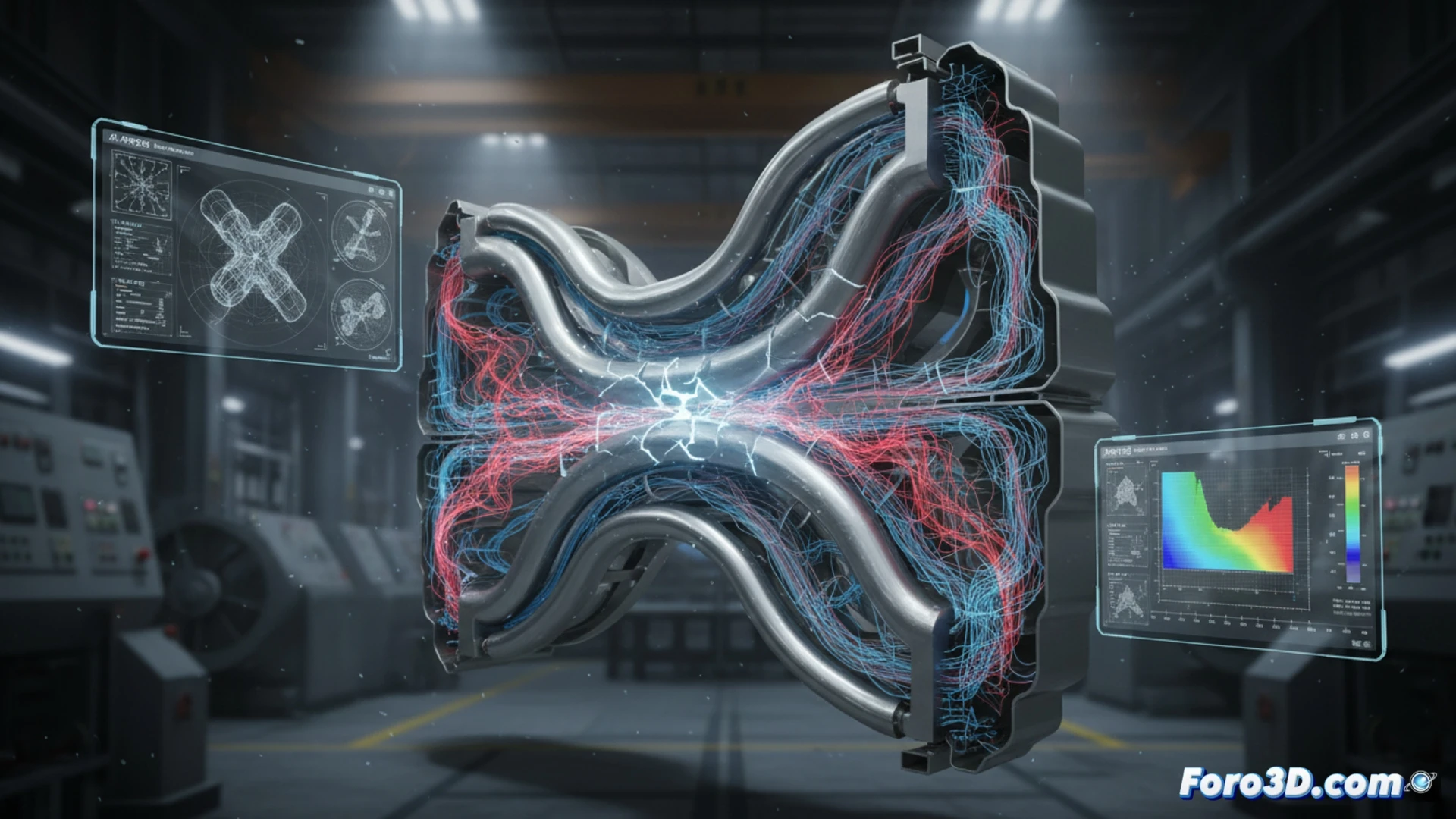
Simulation of turbulence and flow-induced vibration 🔥
The CFD analysis with Ansys Fluent focuses on fluid dynamics within the organic channels, identifying areas of vortex shedding and excitation frequencies. Star-CCM+ complements the study with fluid-structure interaction (FSI), simulating the vibratory response of the steel walls under the cyclic stress of turbulent flow. The results indicate that the geometry not optimized against FIV generated a resonance frequency that exceeded the material's fatigue limit. Volume Graphics scans the fractures to correlate the cracks with the simulated stress peaks.
Fatigue validation in generative designs ⚙️
This failure demonstrates that AI-driven topology optimization must not ignore vibration fatigue. Organic geometries, although thermally efficient, can create unpredictable FIV conditions. The expert investigation concludes that it is essential to validate any generative design with cyclic fatigue simulations and modal analysis. The lesson is clear: innovation without structural verification in fluid dynamics can lead to critical failures in industrial components.
If the AI and topology optimization design of the heat exchanger did not anticipate the flow-induced vibration frequencies in the CFD expert investigation, how can vibration fatigue simulation be integrated into the generative design algorithm itself to prevent catastrophic FIV failures?
(PS: Material fatigue is like yours after 10 hours of simulation.)