After a flawless landing, the navigation cameras of a lunar rover were completely blinded by a fine layer of dust. The electrostatic shield system, designed to repel particles, had failed unexpectedly. The engineering team turned to 3D analysis and multiphysics simulation to diagnose the origin of the problem, focusing the investigation on the unique mineralogical composition of the regolith in the landing zone.
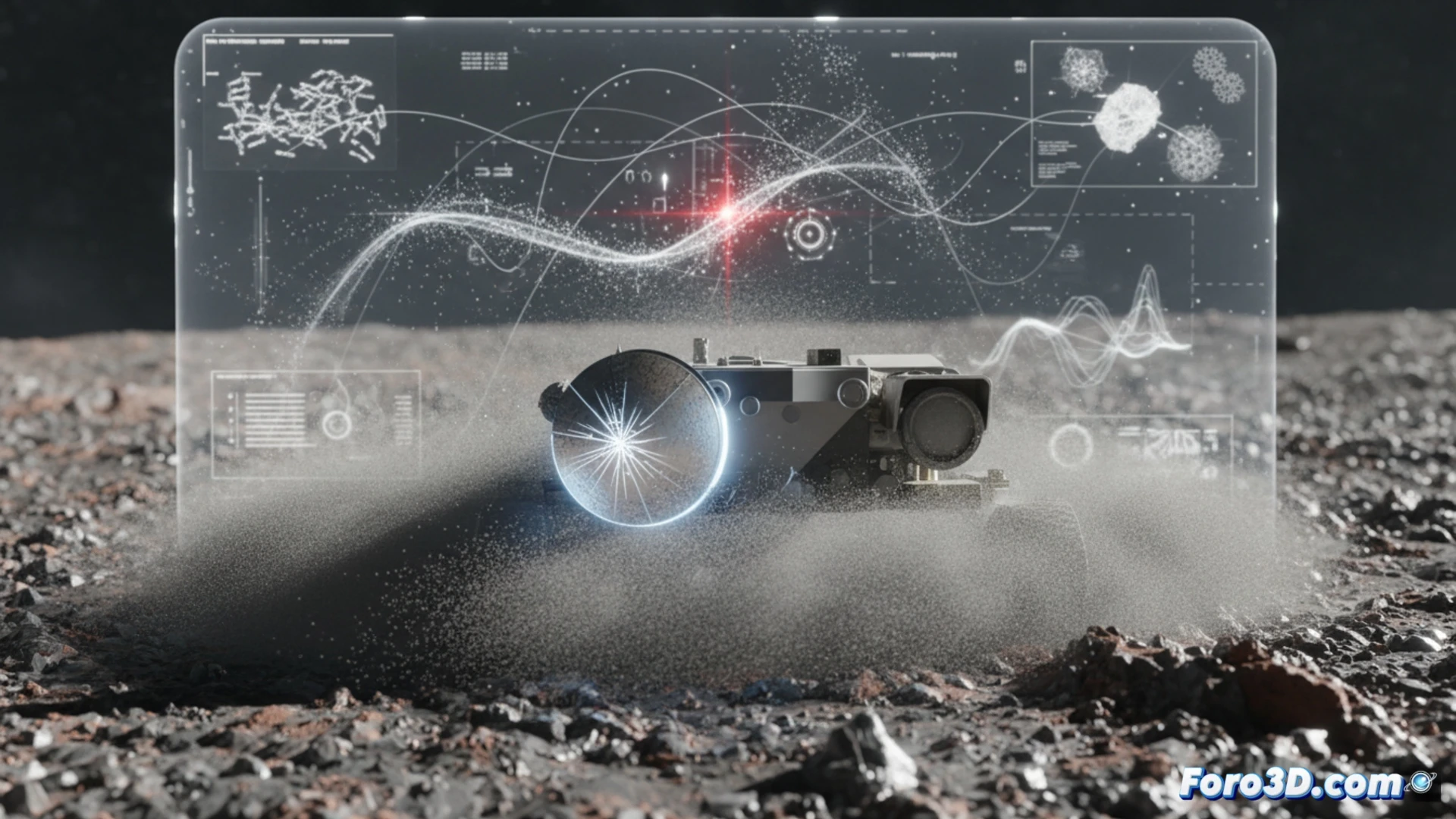
Technical diagnosis: Electrostatic modeling in COMSOL 🛸
Using COMSOL Multiphysics, engineers modeled the electric field generated by the shield and the interaction with high-resistivity regolith particles. The simulation revealed that certain minerals, rich in ilmenite and volcanic glass, not only were not repelled but acted as charge traps. By accumulating static charge in an unforeseen manner, these particles nullified the shield's potential gradient, adhering to the lens surface. The model allowed quantifying the critical deposition rate that led to total failure in less than 24 hours.
Lessons for future missions: Visualization and prevention 🔍
The analysis with VGSTUDIO MAX allowed correlating the simulation data with the actual physical damage, generating a 3D reconstruction of the obstruction pattern on the sensor. This case demonstrates that protection models must include the mineralogical variability of the destination terrain. Integrating electrostatic simulations in Catia for the design of future rovers will allow predicting these blind spots and redesigning shields with adaptive geometries and voltages, ensuring vision for the Artemis missions and beyond.
What low-gravity particle dynamics simulations can more accurately predict the electrostatic adhesion of lunar dust to navigation camera lenses during a rover's landing?
(PS: if your manta ray animation doesn't excite, you can always add documentary music from channel 2)