A recent incident in a residential building has brought a critical mechanical engineering problem to the table: the failure of an elevator bracket caused by chemical stress. At first glance, the metal seemed intact, but beneath the surface, corrosion and hydrogen embrittlement had created a network of microcracks that, after thousands of load cycles, collapsed without warning. This case forces us to review how we simulate fatigue in aggressive environments. ⚙️
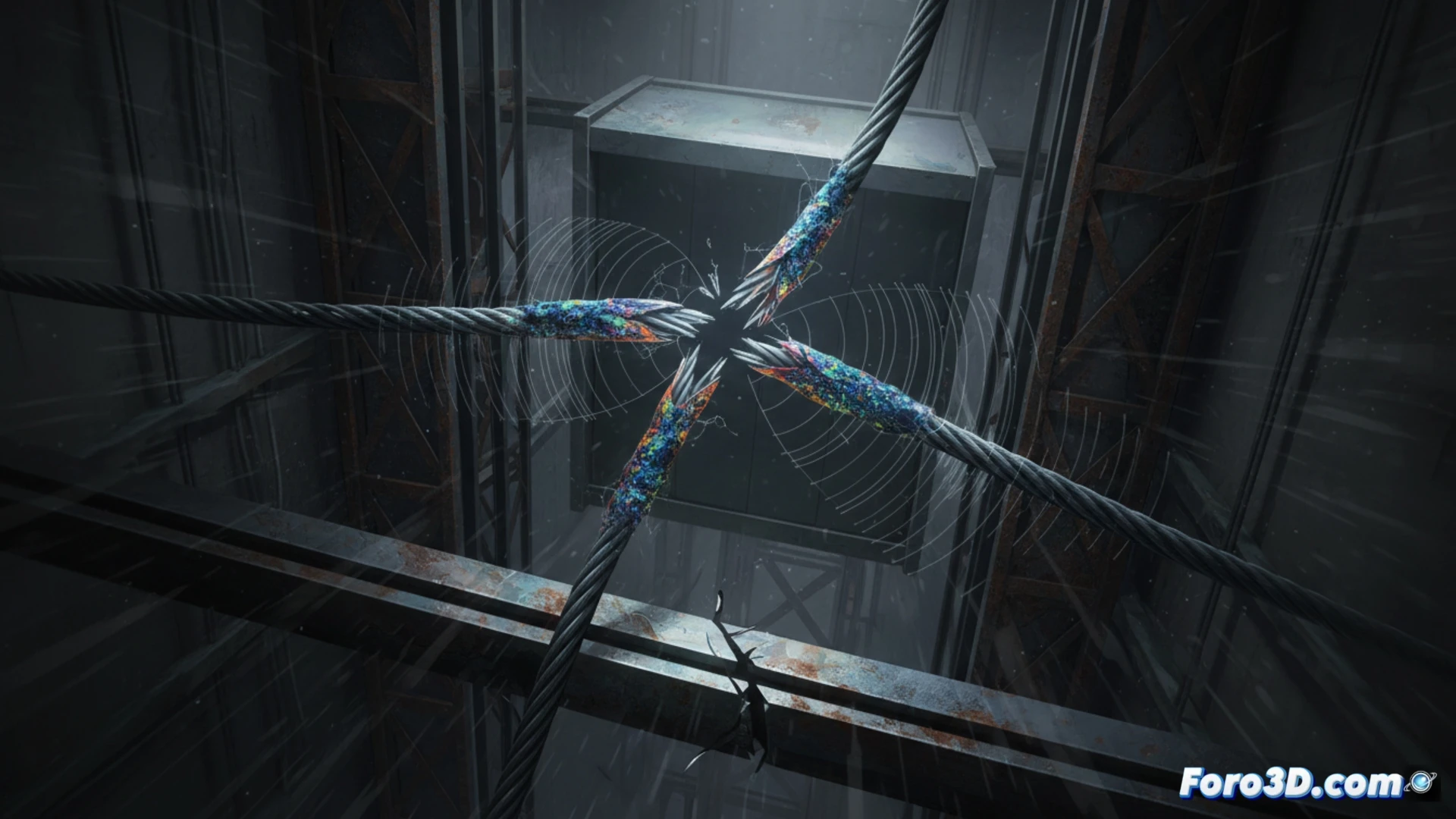
Degradation mechanism: stress corrosion cracking and embrittlement 🧪
In the post-failure analysis, two phenomena acting in synergy were identified. First, stress corrosion cracking (SCC) generated pits on the steel surface, concentrating stress at specific points. Second, hydrogen embrittlement, common in humid environments or with degraded lubricants, allowed hydrogen atoms to diffuse into the metal's crystal lattice, reducing its toughness. In a 3D fatigue simulation, we can observe how these pits act as stress concentrators, initiating cracks that grow intergranularly until reaching a critical size. The elevator's cyclic load data (approximately 200,000 cycles per year) accelerated this process, leading the bracket to a brittle fracture well below its nominal yield limit.
Predictive simulation: the key to preventing collapse 🔍
The true value of this incident lies not in the failure itself, but in the lesson it offers for design. Today, with finite element method (FEM) simulation tools, we can model crack propagation under chemical stress and cyclic loading. By introducing variables such as hydrogen concentration or ambient pH, the 3D simulation reveals the component's remaining useful life months in advance. For engineers, this means shifting from reactive to predictive maintenance, where a bracket is not replaced based on a calendar, but when the digital model indicates that the microcrack has reached 70% of its critical length. Elevator safety depends on understanding that the enemy is not always force, but time and chemistry working together.
In a context where stress corrosion cracking and chemical fatigue cracking are determining factors, what simulation methodologies allow for accurately predicting the service life of elevator components exposed to corrosive environments and cyclic loads?
(PS: Material fatigue is like yours after 10 hours of simulation.)