In an advanced electronics plant, a stainless steel pipe carrying a high-temperature gallium-indium alloy suffered a catastrophic explosion. Initial analysis pointed to intergranular corrosion failure, a phenomenon where liquid metal penetrates the steel's grain boundaries, structurally weakening it. The reconstruction of the incident through 3D simulation has allowed for an understanding of the exact pressure and temperature conditions that triggered the collapse.
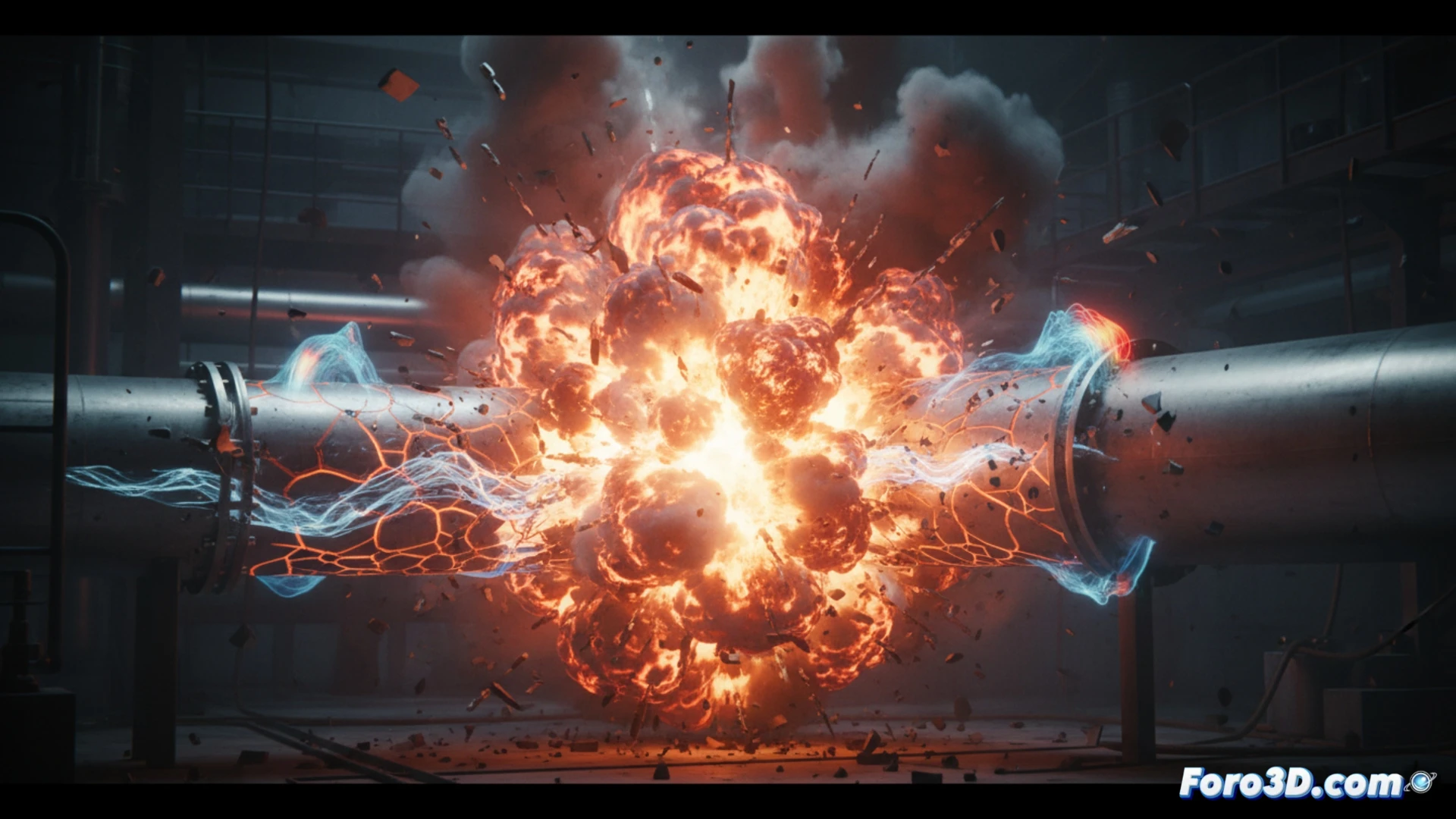
Modeling the phenomenon with ANSYS Fluent and nCode 🔧
To replicate the incident, ANSYS Fluent was used to model the fluid dynamics of liquid gallium-indium at 400 degrees Celsius. The software solved the heat transfer and surface tension equations at the metal-steel interface. The pressure and temperature results were exported to nCode, where a multiaxial fatigue analysis was performed. It was identified that thermal cycles generated microcracks at the grain boundaries, which then propagated due to the corrosive action of the liquid metal. The simulation predicted a service life of 18 months, coinciding with the operating history of the damaged pipe.
Validation with Geomagic Control X and lessons for design 🧠
The model validation was carried out by scanning the pipe remnants with Geomagic Control X. By comparing the 3D point cloud of the fractured area with the nCode simulation, it was confirmed that the cracks followed exactly the calculated stress pattern. The lesson is clear: liquid metal alloys require containment barriers made of refractory materials or ceramic coatings. For advanced electronics plants, it is recommended to implement vibration sensors and online thermography, feeding digital twins that update nCode fatigue models in real time.
Is it possible to accurately predict the nucleation of cracks induced by liquid metal embrittlement in a stainless steel pipe exposed to high-temperature gallium-indium alloys using multiphysics simulations that integrate thermodynamics and contact mechanics?
(PS: Material fatigue is like yours after 10 hours of simulation.)