On Monday, a methane gas explosion at the La Ciscuda coal mine in Sutatausa, Cundinamarca, claimed the lives of nine miners and left six injured. Despite operating with legal permits, an inspection by the National Mining Agency (ANM) on April 9 had already flagged critical risks. This incident becomes a case study for 3D disaster simulation, allowing visualization of the deflagration dynamics and understanding how safety protocols failed.
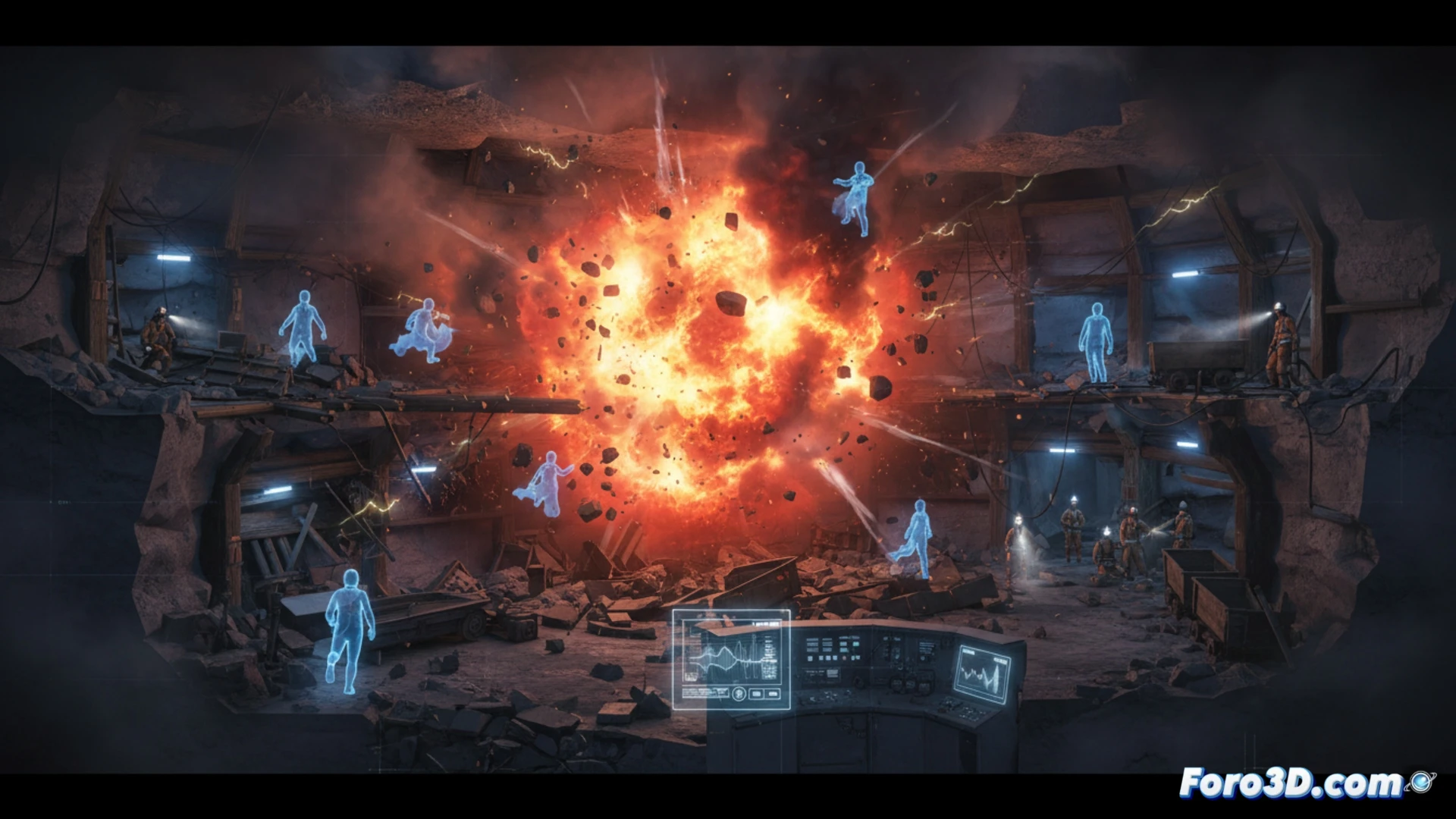
Modeling the shockwave and methane accumulation 💥
The technical simulation of the accident requires modeling the topography of the tunnel and the poor ventilation that allowed methane accumulation. Using ANM data, the ignition point and propagation of the shockwave through the tunnels can be recreated in 3D. The visualization shows how the gas, upon reaching a concentration between 5% and 15% in the air, generates a deflagration that travels at supersonic speeds within the confined space. 3D heat maps identify areas of highest pressure and temperature, pinpointing where gas detectors and ventilation seals—which the April inspection recommended reinforcing—failed.
Visual lessons for mining prevention ⛏️
The 3D reconstruction not only documents the tragedy but also exposes the gap between actual conditions and safety recommendations. By comparing the simulation of the existing scenario with a model applying the measures suggested by the ANM (forced ventilation and constant monitoring), it becomes evident how visualization can save lives. This approach allows engineers and regulators to anticipate blind spots of risk, transforming a disaster into a teaching tool to prevent methane from claiming more victims in the Colombian mining sector.
What variables would you consider for modeling this disaster?