On March 14, a carbonated beverage bottling line suffered a cascading explosion that destroyed twelve filling stations. Initial investigation pointed to widespread overpressure, but analysis with PC-Crash, Cinema 4D, and MeshLab revealed the true cause: a millimeter misalignment of the capping arm that generated microcracks in the bottle necks, causing a chain reaction of structural failures.
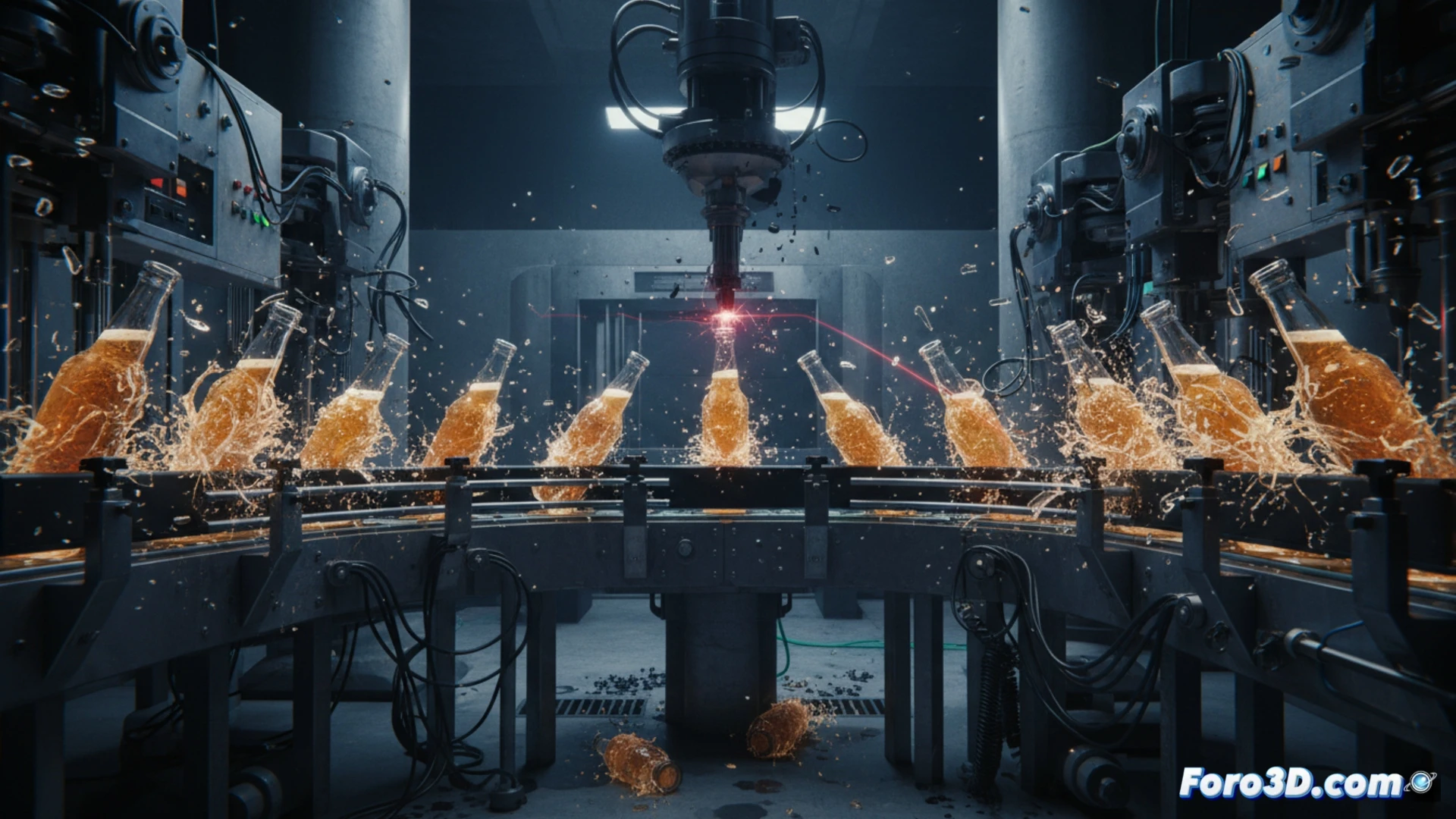
Simulation of failure cascade: from microcrack to explosion 💥
PC-Crash's impact module allowed us to model the dynamics of compressed fluids inside each container. First, we recreated the exact geometry of the bottle neck with MeshLab, identifying critical stress zones from the repetitive impact of the misaligned arm. Then, in PC-Crash, we input the internal pressure parameters (4.2 bar) and the glass fracture threshold (7.5 MPa). The simulation showed that a crack of just 0.3 mm reduces structural strength by 40%, triggering a chain reaction: the first bottle explodes, its fragments impact adjacent ones, and the sudden release of CO2 generates a pressure wave that accelerates the collapse of subsequent stations. Finally, in Cinema 4D, we rendered the temporal sequence with frame-by-frame precision to visualize the disaster's progression.
Forensic lessons for industrial safety 🔧
This reconstruction not only identified the root cause but also allowed for a redesign of the maintenance protocol. The 3D forensic simulation demonstrated that a vibration sensor on the capping arm would have detected the misalignment in time, preventing the catastrophe. At Foro3D.com, we believe that technical disaster analysis is not just a retrospective exercise but an essential preventive tool. Each rendered fracture is a warning that, properly interpreted, saves lives and protects critical infrastructure.
As a forensic engineer, what specific 3D modeling methodology would you recommend to simulate the propagation of a pressure wave in a bottling line to determine the exact point of origin of the March 14 cascading explosion?
(PS: Simulating catastrophes is fun until your computer melts down and you become the catastrophe.)