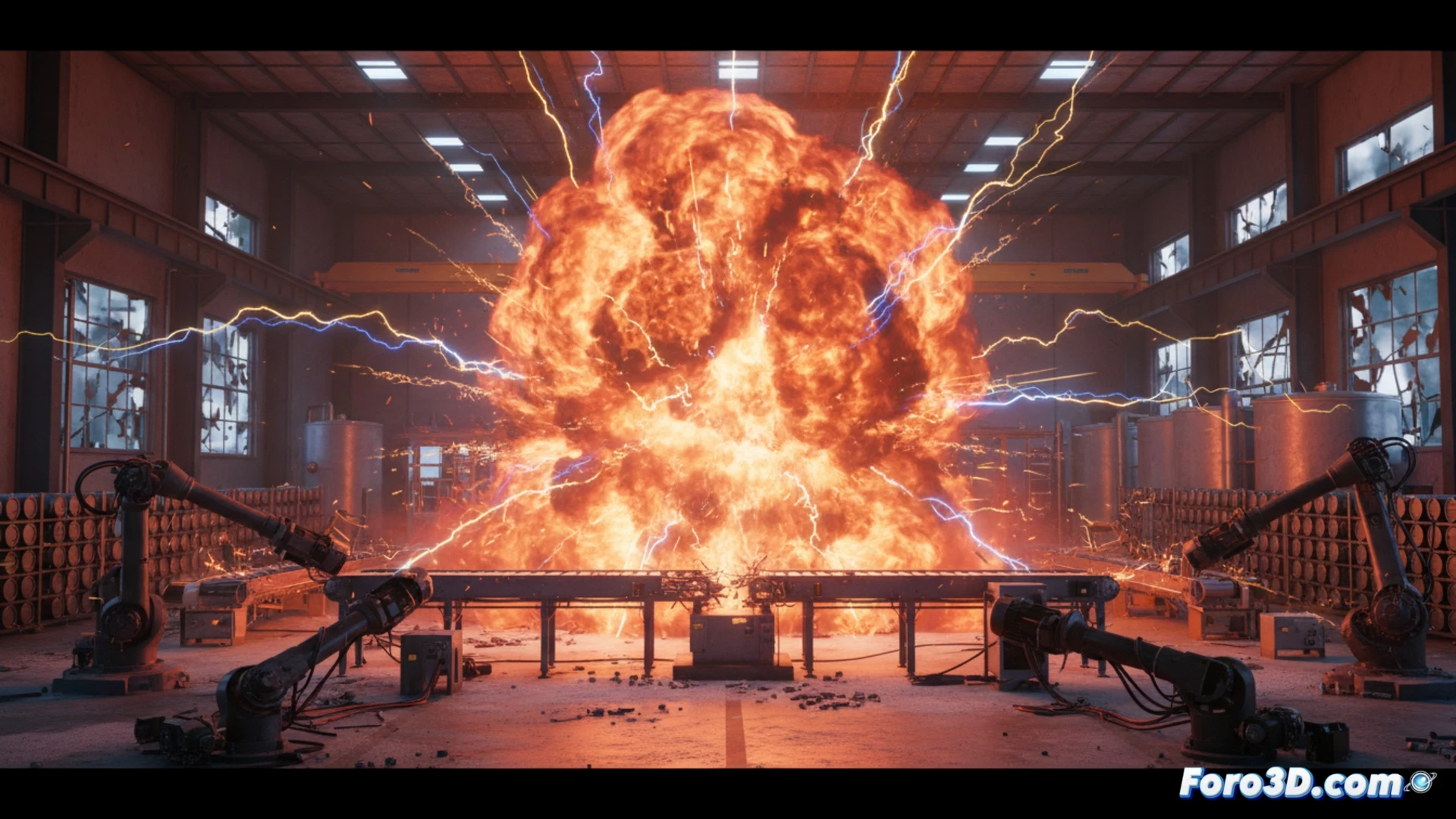
A devastating explosion shook a solid electrolyte production plant, leaving a scene of total destruction. Researchers have turned to 3D simulation to unravel the mystery. Using FLACS-CFD software, specialized in explosion dynamics, the propagation of the shock wave has been modeled. The main objective is to determine whether the static friction generated in the lithium dust transport system was the spark that triggered the catastrophe, a critical failure in industrial safety.
Forensic analysis with FLACS-CFD and residue scanning 🔍
The reconstruction process has been meticulous. First, the damaged infrastructure was digitized using Artec Studio, creating a precise digital twin of the factory in Revit. On this model, simulations were run in FLACS-CFD to recreate the explosion. The results show that the shock wave originated near the dust conveyor belt. Chemical analysis of the residues confirmed the presence of unburned lithium particles, typical of a friction ignition. This digital forensic approach allows engineers to validate hypotheses without relying solely on witnesses, setting a precedent in industrial accident investigation.
Lessons for the future of clean energy ⚡
This incident highlights a dangerous paradox: the same technology driving the energy transition can harbor lethal risks if not controlled. 3D simulation serves not only to determine culpability but also to redesign safety protocols. Compared to other incidents in the battery industry, this case stands out for the precision of the blast wave analysis. Prevention now involves implementing inerting systems and electrostatic charge control in the handling of metal powders, a direct lesson extracted from the computational model.
How can the 3D reconstruction of a lithium dust explosion in a battery factory help identify critical ignition points and prevent future similar catastrophes in the industry?
(PS: Simulating catastrophes is fun until the computer melts down and you are the catastrophe.)