On March 15, a spice processing plant suffered a violent cinnamon dust explosion. The flammable cloud, generated during packaging, detonated upon contact with a hot spot. The forensic investigation, supported by 3D simulations, has determined the exact cause: a poorly lubricated bearing that reached critical temperatures. This case demonstrates how CFD technology and photogrammetry can save lives.
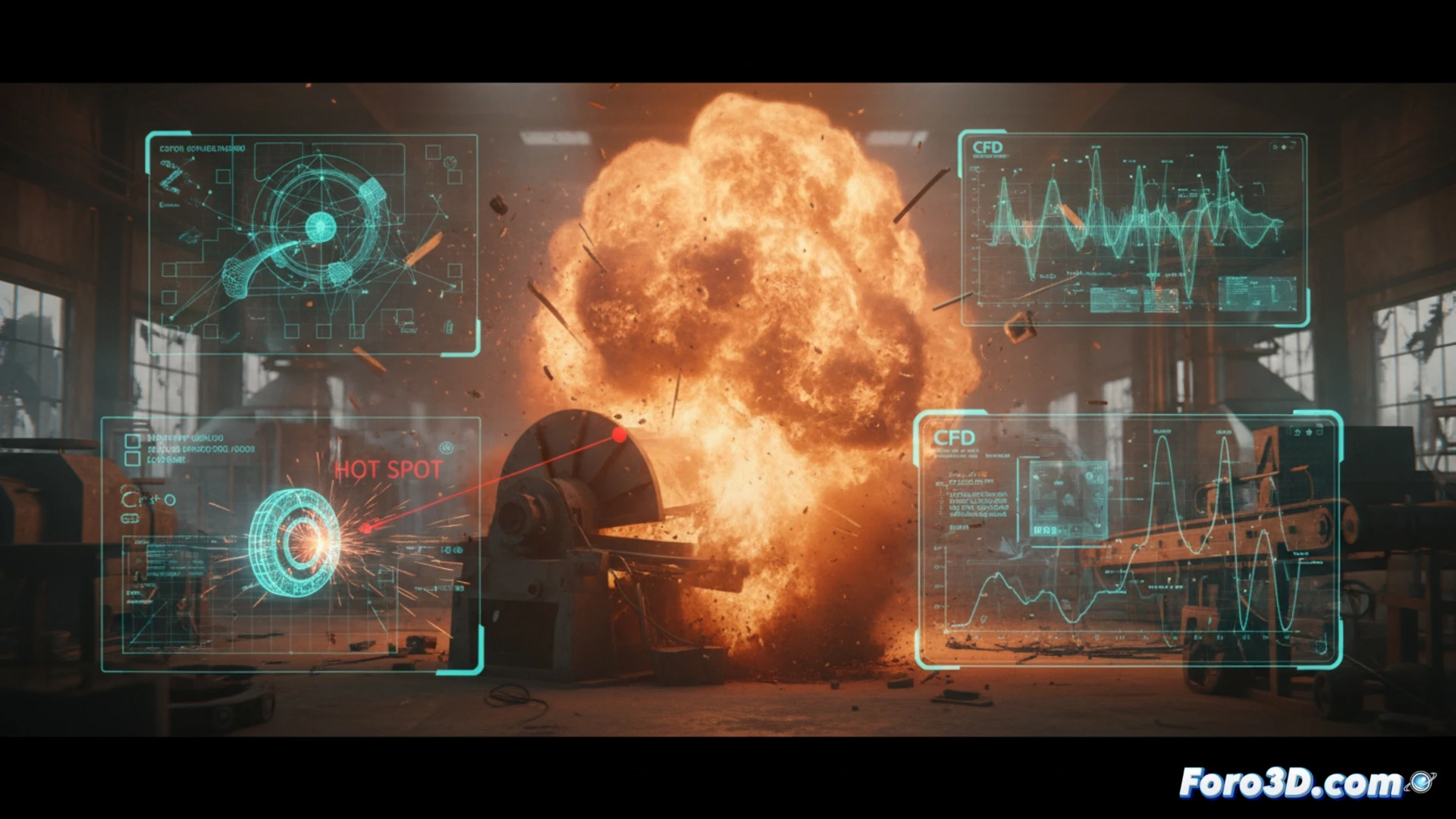
Technical workflow: PyroSim, CFD, and cloud modeling 🔥
The forensic team used RealityCapture to generate a digital twin of the packaging room from photographs of the incident. With this model, environmental conditions and cinnamon dust concentration (lower explosive limit: 0.035 kg/m3) were input into PyroSim. Autodesk CFD simulated the cloud dispersion from the filling hopper, revealing a critical volume of 12 m3. The thermal simulation located the ignition point on a conveyor bearing, where friction generated 320 degrees Celsius. The reconstruction showed that the cloud reached the bearing in 0.8 seconds, sufficient time for detonation.
Lessons for the industry: Preventing the invisible ⚠️
The most alarming aspect of this case is that cinnamon dust was considered a low-risk material. The 3D simulation showed that the existing ventilation was insufficient to dilute the cloud. The investigation recommends installing real-time dust concentration sensors and nitrogen inerting systems. The methodology used (PyroSim + CFD) is positioned as a standard for auditing any industry where powdered solids are handled. The next explosion can be prevented if modeled before it occurs.
What specific factors of the cinnamon dust cloud, such as its concentration, particle size, or humidity, were decisive in the ignition, and how could a 3D simulation model predict these critical thresholds to prevent future catastrophes in spice processing plants?
(PS: Simulating catastrophes is fun until the computer crashes and you are the catastrophe.)