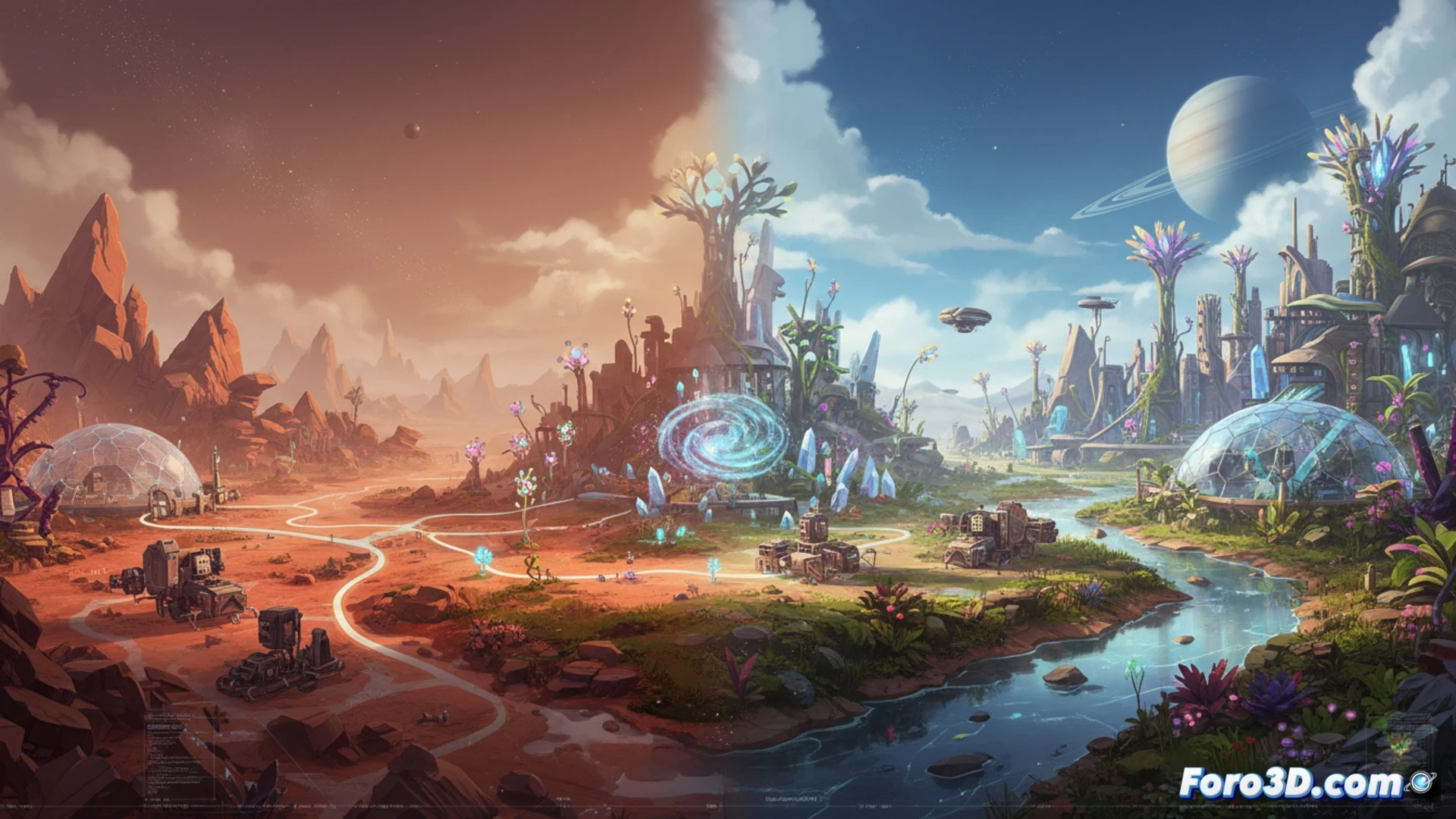
Independent studio Miju Games has released The Planet Crafter, a survival title that stands out for its real-time terraforming system. Developed in Unity, the game transforms an arid wasteland into a green and habitable ecosystem. This article analyzes the procedural generation techniques, dynamic skybox changes, and water systems that enable this visual evolution, offering practical tips for optimizing assets and scripting in similar projects.
Procedural generation and asset management in Unity 🌍
The technical foundation lies in using Maya to model base assets (rocks, trees, geological formations) that are then procedurally instantiated in Unity. As the player increases the terraforming index, a C# script evaluates parameters such as oxygen or atmospheric pressure to activate vegetation layers. To avoid visual pop-in, it is recommended to use LOD Groups (levels of detail) and occlusion culling. The skybox is not a static texture; it is a procedural material that modifies its color gradient and cloud density through custom shaders, directly linked to the game's variables. Real water appears when the heat and pressure level reaches a threshold; instead of a static plane, a 2D fluid system with wave displacement is implemented, activated by a script that controls the plane's height and the material's transparency.
Lessons for the indie developer 🎮
The Planet Crafter demonstrates that graphical evolution does not require an AAA engine. The key lies in modularity: each asset must be designed to scale in quantity without saturating the GPU. For indie projects, prioritize the use of coroutines in Unity to activate vegetation by zones, avoiding performance spikes. Additionally, the terraforming system is an example of game feel: each visual change (reddish sky to blue, crystal-clear water) acts as a direct reward for the player. If you work with Maya, export models with a single atlas material to reduce draw calls. Finally, remember that optimization is not the enemy of aesthetics; good procedural design can create living worlds without the need for overloaded assets.
What procedural generation techniques did Miju Games implement in The Planet Crafter to achieve a balance between terrain variety and gameplay without sacrificing performance on modest hardware?
(PS: game jams are like weddings: everyone is happy, no one sleeps, and you end up crying)