The history of the Channel Tunnel is a tale of geopolitical ambition and technical resilience. Napoleon dreamed of it in 1802, but British fear of an invasion stalled the project for nearly two centuries. Today, the Eurotunnel not only connects France and the United Kingdom but also generates over €1 billion in annual revenue, establishing itself as a critical axis in the European supply chain. Its 50.5 kilometers, 38 of which are under the sea, represent the only land route that avoids maritime and air transport between the two countries.
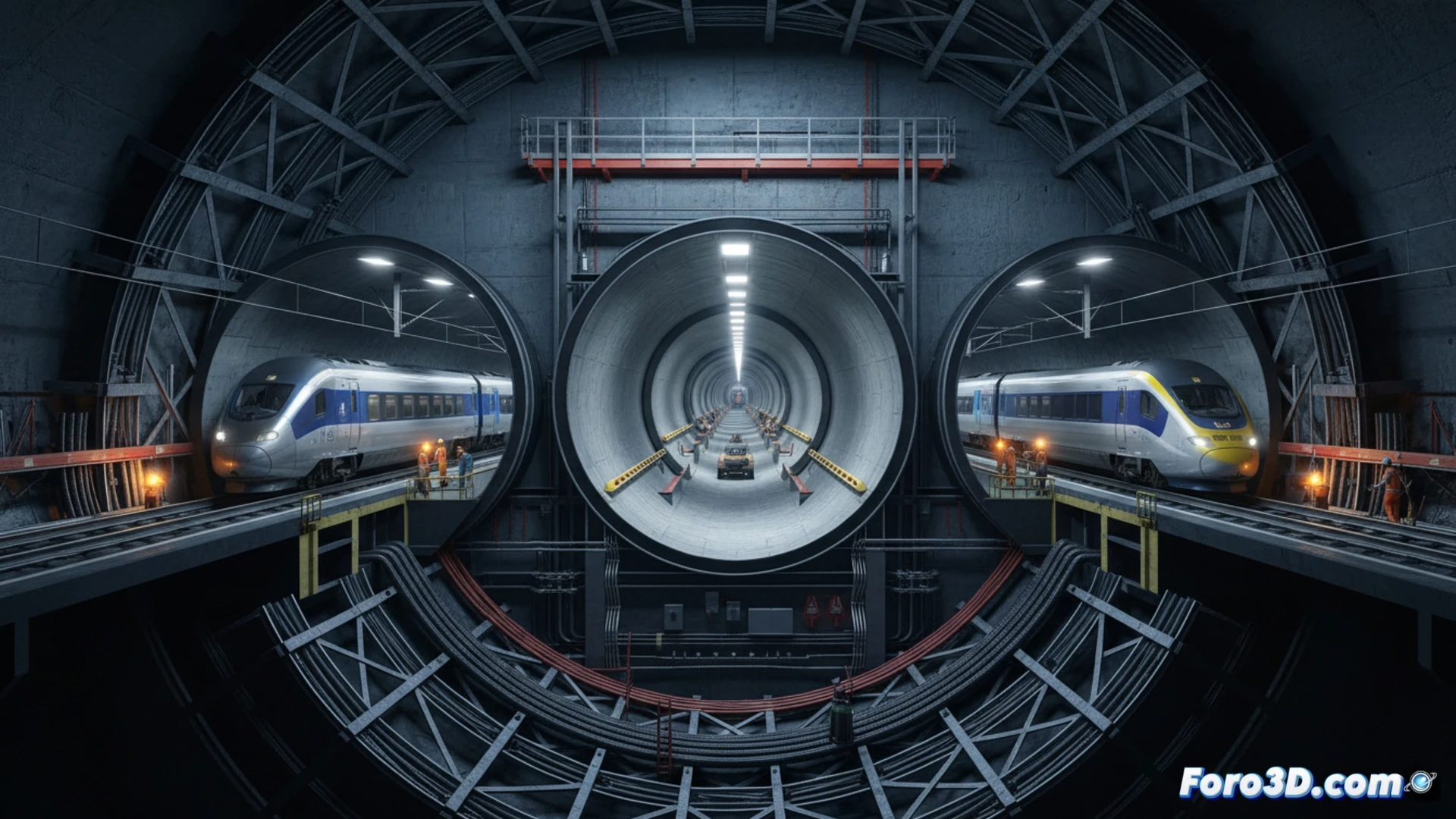
3D visualization of the route and border control points 🚇
To understand its logistical impact, the geological profile of the tunnel can be modeled in 3D, from Coquelles (France) to Folkestone (United Kingdom). The visualization should include the three parallel tunnels: two railway tunnels and one service tunnel. The key points are the border control terminals, where customs and security procedures are carried out. In a digital twin, goods flows can be simulated: every day, the Eurotunnel transports goods worth over €300 million, including perishable products and industrial components. Compared to the future Fehmarn Belt tunnel (Denmark-Germany), the Eurotunnel remains the standard in mixed transit capacity (passengers and freight).
The Achilles' heel of the island connection ⚠️
The Eurotunnel is a perfect example of critical dependency. A disruption due to a cyberattack, fire, or structural failure could paralyze 25% of trade between the United Kingdom and continental Europe. Simulating interruption scenarios in 3D allows for evaluating alternative routes: diversions by ferry (up to 6 additional hours) or air routes (with limited capacity). The lesson is clear: the infrastructure born from the fear of an invasion is today the weakest link in the Anglo-European supply chain.
How would you simulate the impact of a conflict in a region on global production?