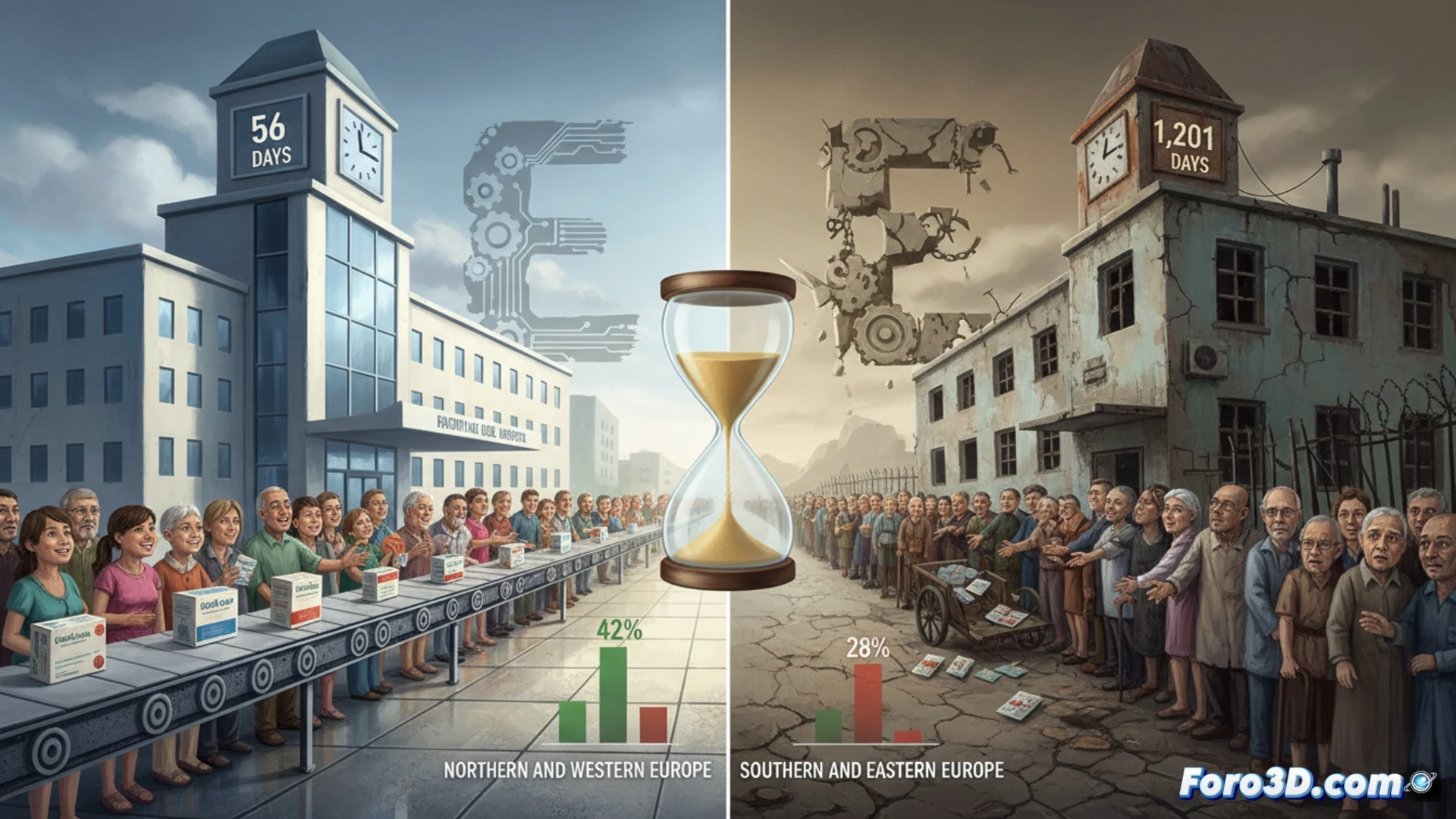
A report from EFPIA reveals that access to new drugs in Europe is a geographical lottery. While Germany offers them in 56 days, Romania requires 1,201 days of waiting. In 2025, only 28% of medicines have full public coverage, compared to 42% in 2019. Patients in the north access treatments up to seven times faster than those in the south and east.
The bottleneck of funding systems 🏥
The disparity is not technical but bureaucratic. Each country applies its own price and reimbursement assessments, a process that can take up to 37 months. Germany and Austria lead with agile benefit evaluation systems, while countries like Portugal or Lithuania drag along opaque and slow processes. The European median of 532 days hides opposing realities: 56 days versus 1,201. Regulatory fragmentation turns Europe into a mosaic of incompatible timelines.
The European pharmaceutical Russian roulette 🎲
If you live in Romania, you better not get sick. Or do, but with patience: 1,201 days of waiting is enough time to read the package leaflet several times. Meanwhile, in Germany, they prescribe the drug before you finish paying the first co-payment installment. The EU promises a single market, but your postal code decides whether you heal in two months or when your grandchildren finish college.