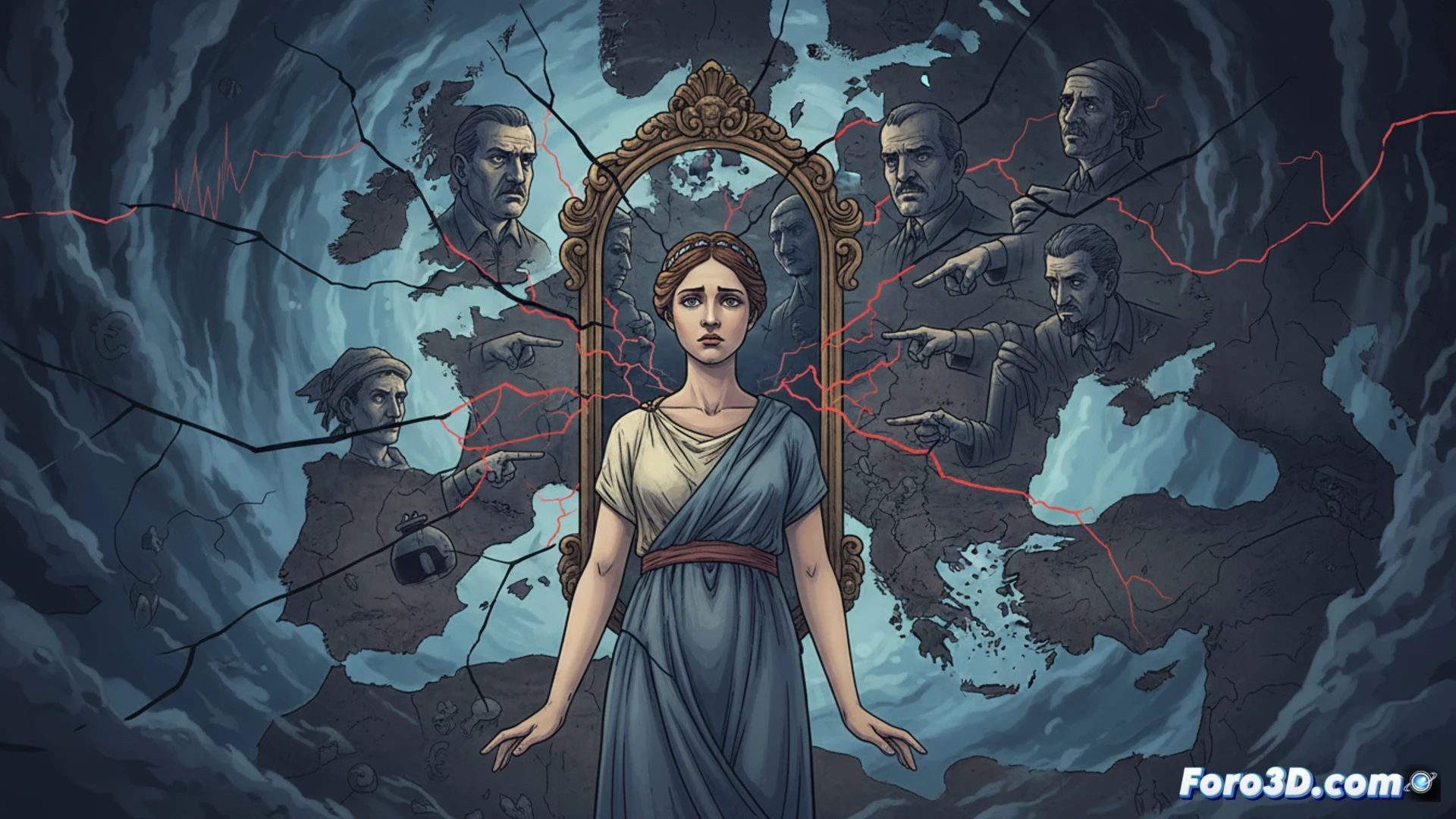
European history shows a clear pattern: in times of economic crisis, the search for an external culprit often replaces rational analysis. This mechanism, which pits countries and social sectors against each other, weakens cooperation and opens cracks in the continent's stability. Remembering these cycles is not nostalgia, but a warning about what can be repeated if polarization is not stopped.
Technology to build bridges, not walls 🛠️
Digital platforms and recommendation algorithms play a central role in this dynamic. Their design, based on maximizing interaction, tends to prioritize divisive content that generates more clicks than consensus. Instead of fostering dialogue, they reinforce echo chambers where each community only hears its own grievances. To avoid an escalation of mistrust, it would be necessary to redirect these systems towards exposure to diverse points of view, something few companies prioritize without regulatory pressure.
The culprit of the crisis (spoiler: it's not your neighbor) 🕵️
It is curious that, every time the economy falters, a suspect appears ready to take all the blame: the neighboring country, the immigrant, the banker, or the algorithm. We apply the logic of the scapegoat with the same faith as a child looking for the cookie thief in an empty kitchen. Meanwhile, structural problems remain, laughing in the boardroom. Perhaps we should look less at the person next to us and more at those who design the game.