Traditional sculpture, with its hammer and chisel, doesn't have to clash with the digital world. 3D technology allows the sculptor to visualize, correct, and replicate complex forms before touching the material. A clear example is the creation of a bust: it is modeled in software, a prototype is printed in resin, and it is used as an exact reference for the final carving. This saves time and material.
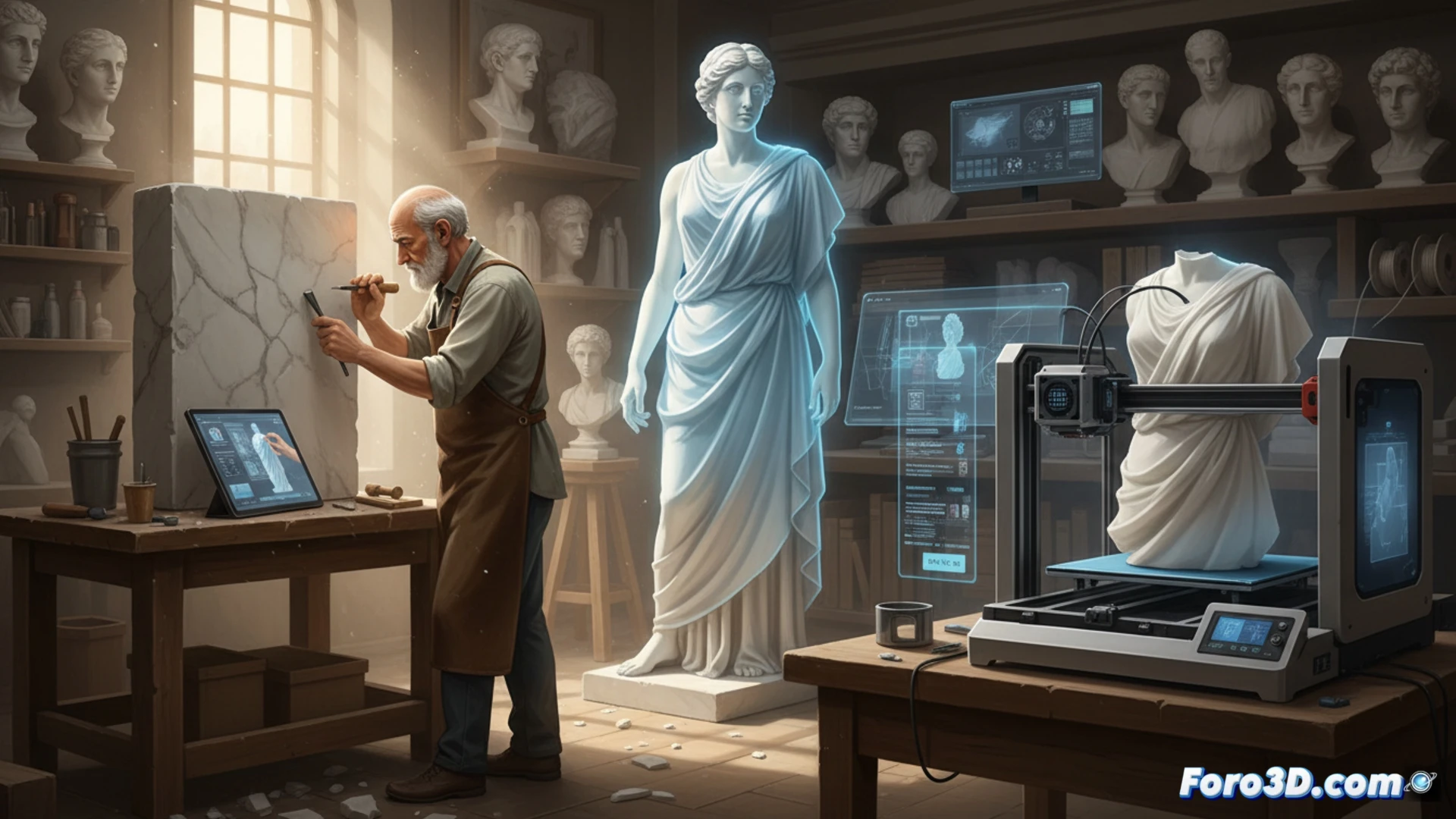
From virtual model to chisel: the workflow 🛠️
To start, a sculptor needs modeling programs like Blender (free and powerful) or ZBrush to sculpt organic details. Then, slicing software like Rhino or Fusion 360 helps generate section plans. If an exact copy is desired, a 3D scanner (like the Einscan) captures the original piece and transfers it to a CNC router or a 3D printer. The process allows for iteration without wearing down stone or clay, and the result is transferred to the physical block with precise guides.
Goodbye to broken fingers (and dust up the nose) 😅
The best part is that now you can make mistakes a thousand times without your wife yelling at you for filling the garage with marble chips. If your digital thumb gets twisted, Ctrl+Z fixes it; in real life, you'd have to call the orthopedist. And although the computer doesn't smell like linseed oil, at least you won't have to sweep up debris for an hour. Art is still art, but with fewer trips to the hardware store.