March 17 will not only decide the future of Andalusia; it will test the accuracy of predictive models of emotional participation. Juanma Moreno's absolute majority hangs by a thread in six provinces, where the left-wing vote and the flight of votes to Vox will define the outcome. To understand this uncertainty, we propose a 3D visualization tool that allows simulating the vote count in real time, adjusting key variables such as emotional mobilization and voter loyalty.
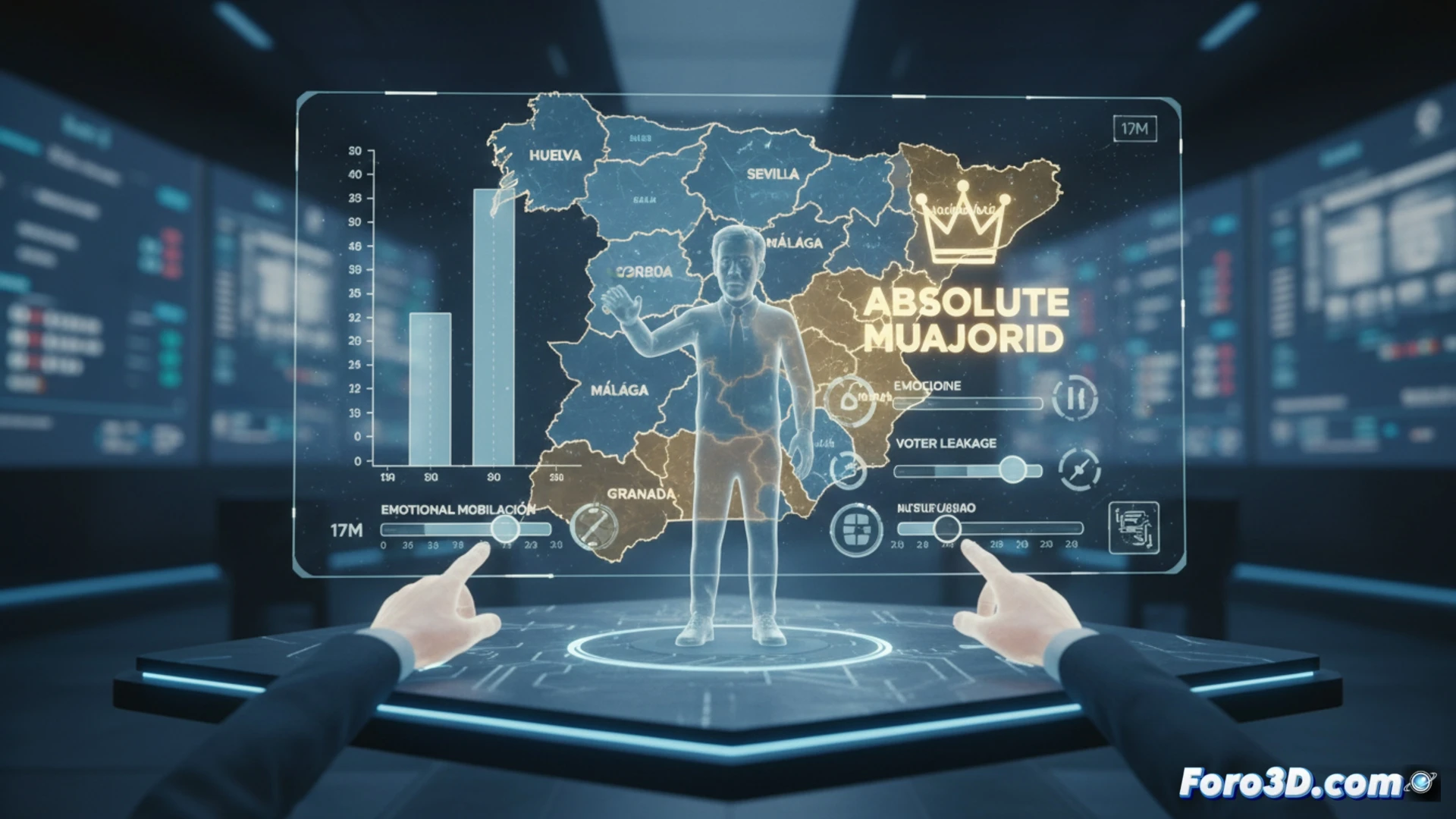
3D Predictive Model: Data Architecture and Scenario Simulation 🧊
The interactive infographic is structured on a logistic regression model that integrates historical data from the 2022 elections and recent polls. The user will be able to manipulate two main variables: the left-wing emotional mobilization index (ranging from -2% to +2%) and the Vox loyalty rate (currently at 70%, compared to the historical 80%). By modifying these parameters, the 3D engine recalculates the distribution of seats in the six most contested provinces: Seville, Malaga, Cadiz, Granada, Jaen, and Almeria. Each seat is represented as a cube that changes color (blue for PP, green for Vox, purple for left-wing) according to the simulated result, allowing one to see how a 1% increase in left-wing participation can snatch the absolute majority away from Moreno.
The Emotional Key: Visualizing the 1% Frontier in Digital Democracy 🔍
Popular Party deputy José Ramón Carmona made it clear: they need to slightly increase their vote percentage to avoid depending on Vox. This tool not only shows numbers; it reveals the fragility of the system. By simulating a 1% drop in Vox loyalty (from 70% to 69%), the user observes how their seats shift towards the PP and SALF, unlocking the absolute majority for Moreno. The 3D visualization turns statistical abstraction into a tangible experience, demonstrating that in democracy, the difference between governing or not can be as small as a handful of unmobilized votes.
Can a 3D scrutiny model accurately anticipate the absolute majority in the Andalusian elections, or does digital participation distort the real results?
(PS: 3D electoral panels are like promises: they look very nice but you have to see them in action)