3D technology is transforming the railway inspector's trade, enabling the detection of wear on wheels and tracks with millimeter precision. A clear example is the use of portable laser scanners to capture a rail's profile in minutes, generating a point cloud that is compared to the original design to identify deformations. Programs like GOM Inspect or PolyWorks are essential for analyzing this data.
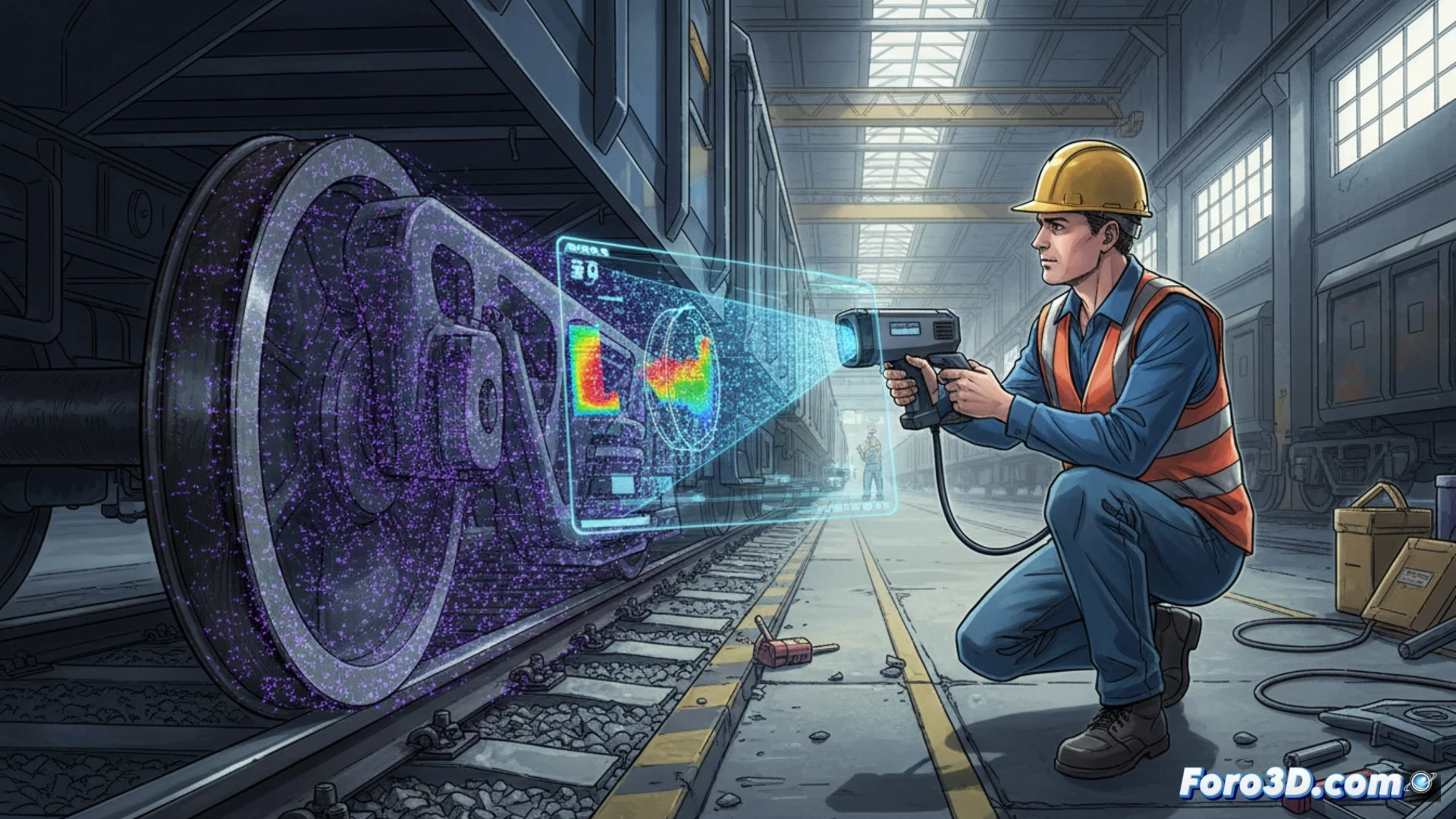
Profile digitization and predictive maintenance 🚆
The workflow begins with a handheld 3D scanner, such as the FARO Focus or the Leica BLK360, which captures the geometry of the rail or wheel. Then, software like SolidWorks or Geomagic Control X processes the point cloud to generate deviation reports. This allows repairs to be scheduled before damage becomes critical, reducing unplanned downtime. The advantage is clear: moving from subjective visual inspections to objective, comparable data.
Goodbye to the little hammer and carbide lantern 🔧
Before, the railway inspector was an artist of the sharp tap: a hammer blow here, another there, and if it sounded hollow, it was time to change the sleeper. Now, with a 3D scanner, the job feels more like playing video games than working. The only downside is that the station's coffee shop no longer smells of grease and carbide, but of burnt plastic from the scanner's battery. Progress, they say.