Art restoration no longer depends solely on a steady hand and the patience of a copyist monk. 3D technology allows restorers to analyze invisible cracks, plan interventions without touching the artwork, and reproduce missing pieces with millimeter precision. A clear example is the restoration of a headless marble sculpture: the original fragment is scanned and the missing part is modeled to be printed in resin, creating a perfect mold without damaging the ancient material.
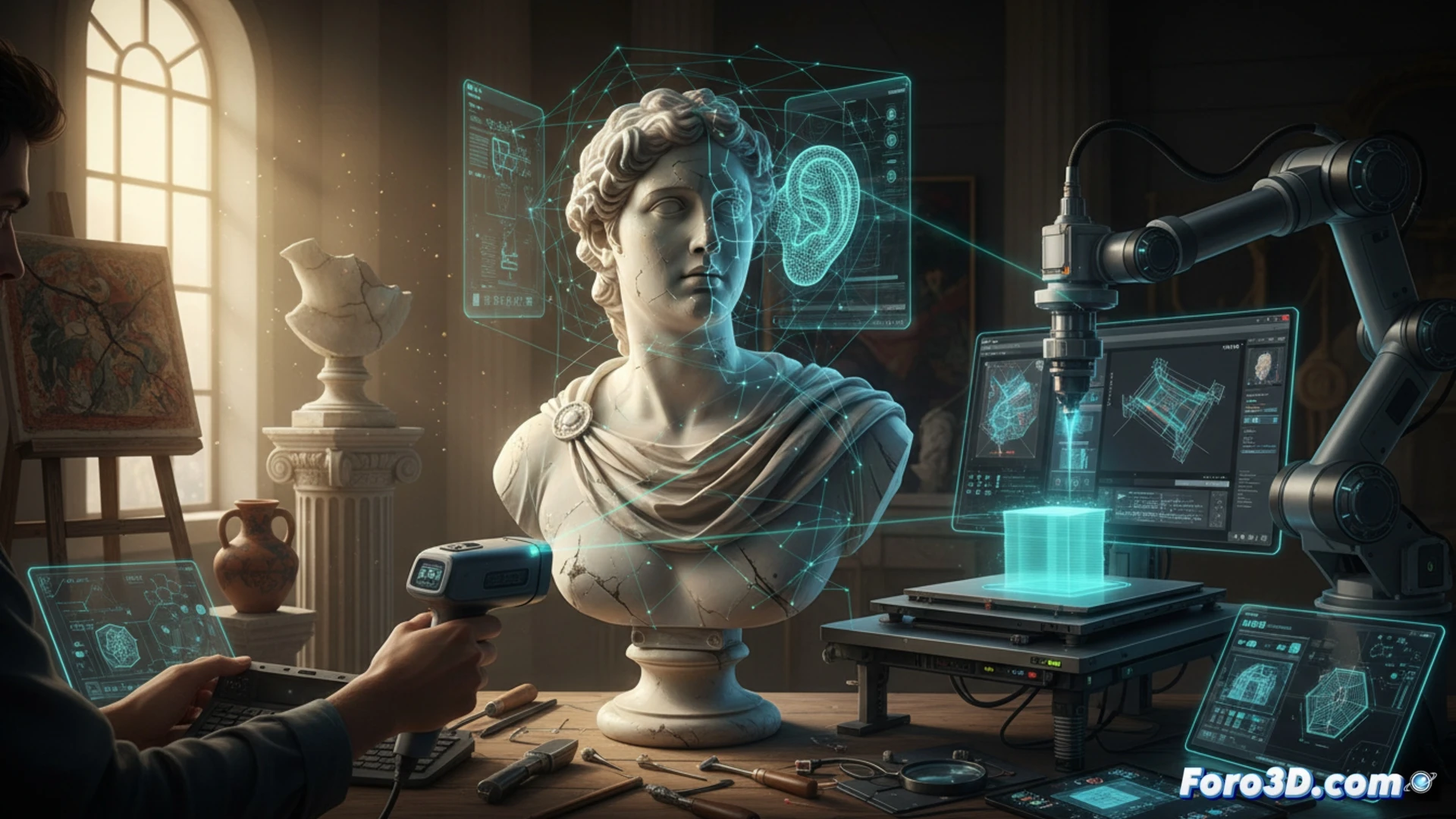
The digital workflow of the modern restorer 🖥️
The process begins with a structured light scanner like the Artec Eva or Einscan Pro, which captures geometry with a precision of up to 0.1 mm. This data is processed in software such as Geomagic Wrap or Blender to clean noise and reconstruct meshes. For the final print, a photopolymer resin is used in an SLA printer like the Formlabs Form 3, which offers fine layers and a matte finish ideal for replicating stone textures. Then, the restorer applies natural pigments to integrate the new piece with the original.
When software corrects what the human eye can no longer see 😅
Of course, nothing like going from using a scalpel and patience to relying on the computer not deciding to do an update just when you're scanning a 17th-century carving. Because yes, the modern restorer now curses computer viruses as much as woodworm. And if the modeling software crashes, the replacement part ends up looking more like a brick than an angel's hand. Sure, the coffee to wait for it is still the same one the old masters used.