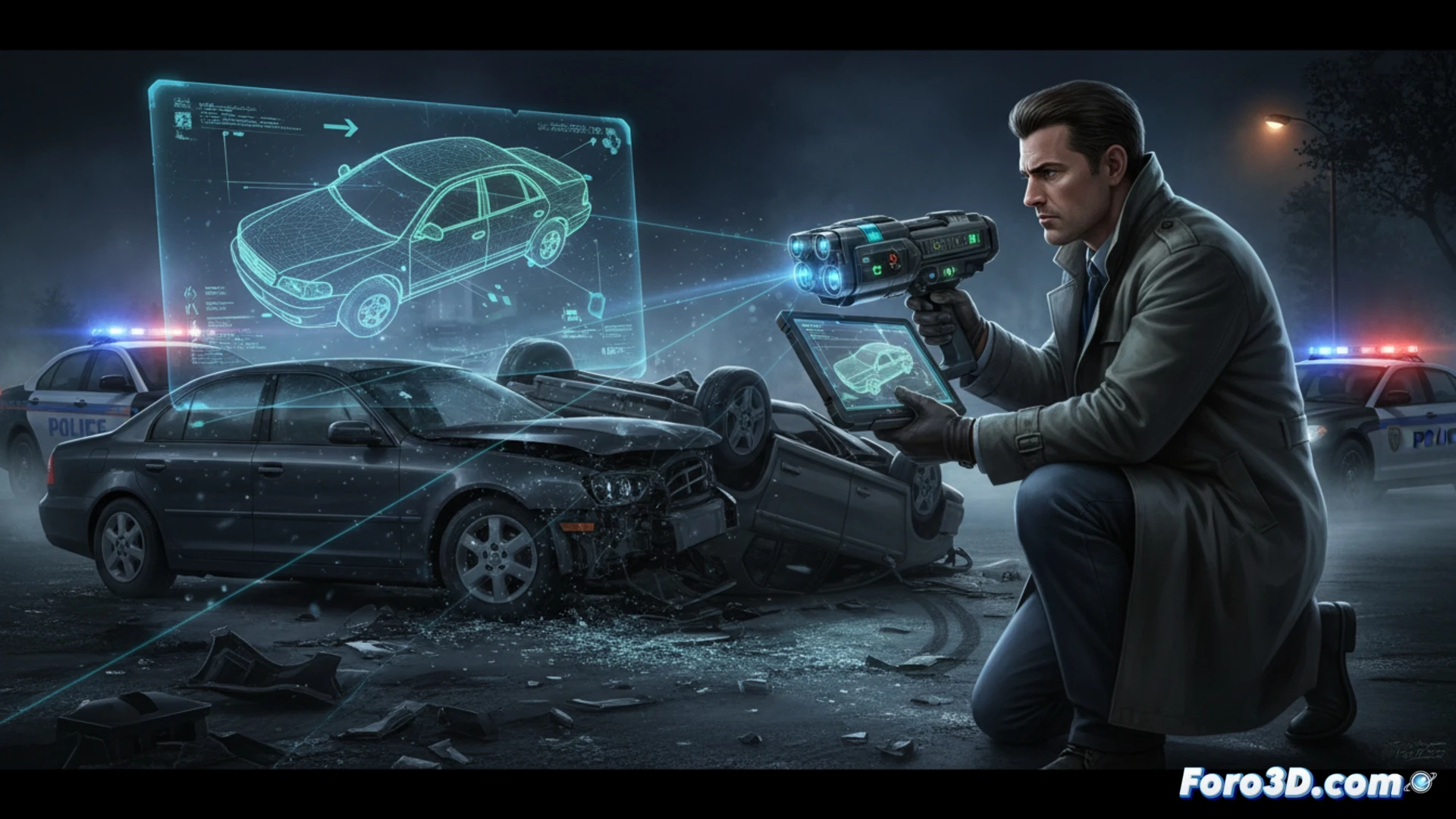
3D technology allows private detectives to recreate scenes accurately without relying solely on flat photos. For example: when investigating a traffic accident, a 3D scanner captures the exact position of vehicles and objects, generating a virtual model to analyze trajectories and speeds from any angle, without having to return to the scene.
Key programs for forensic modeling 🛠️
To work with this data, programs like RealityCapture or Agisoft Metashape are used, which convert photos or point clouds into detailed 3D meshes. Then, Blender or MeshLab allow measuring distances and simulating movements. A portable scanner like the EinScan SE is also useful for capturing small objects, such as a forced lock. These programs are not expensive compared to the time they save in reports.
When 3D catches you off guard 😅
Of course, all this is fine until you tell the client you have a 3D reconstruction of the case and he asks to see it on his phone. Then you realize the file weighs 2 GB and your laptop is overheating. Or worse: you spend three hours modeling a robbery scene and discover the thief was the client's son, who left the keys in the lock. Technology doesn't fix clumsiness, but at least the model looks nice.