3D technology provides tax inspectors with tools to verify the real dimensions of properties or industrial warehouses from their computers. A clear example: checking whether the built volume of a premises matches what was declared for the IBI (property tax), avoiding travel and error-prone manual measurements.
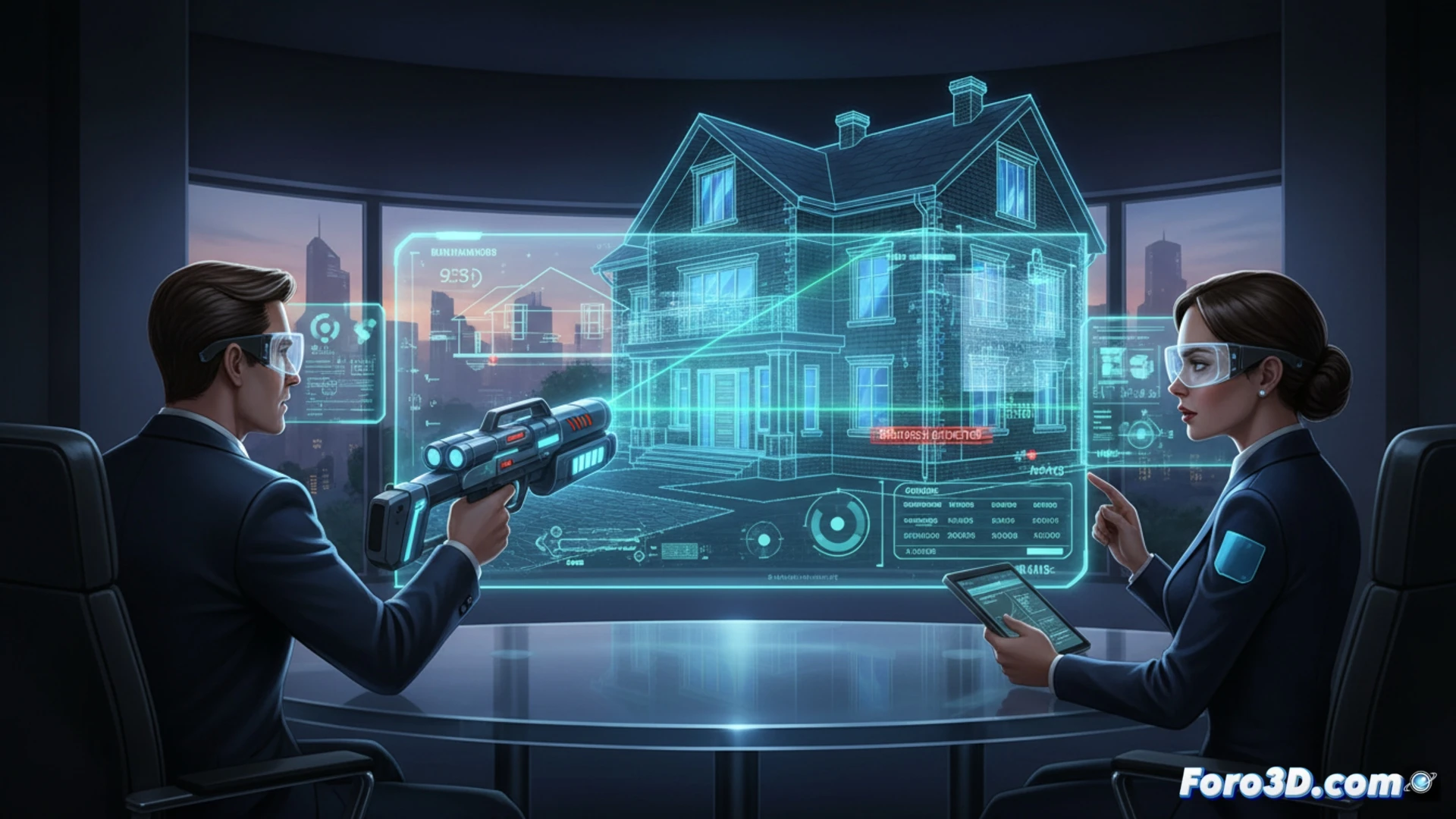
Digital reconstruction for tax audits 🏗️
Programs like Autodesk ReCap or Agisoft Metashape allow processing point clouds obtained with laser scanners or drones. The inspector can compare the resulting 3D model with registered cadastral plans. If the actual height of a warehouse exceeds what was declared, a possible concealment of cubic meters is detected, forming the basis for recalculating pending taxes.
The drone that uncovers the undeclared swimming pool 🚁
The inspector no longer needs to climb onto the roof with binoculars. Now a drone with a 3D camera flies over the plot and generates a model where the clandestine pool appears as a huge blue hole in the garden. The taxpayer will explain it is an ornamental pond, but the volumetric measurement software has already calculated the liters of water and the consequent surcharge.