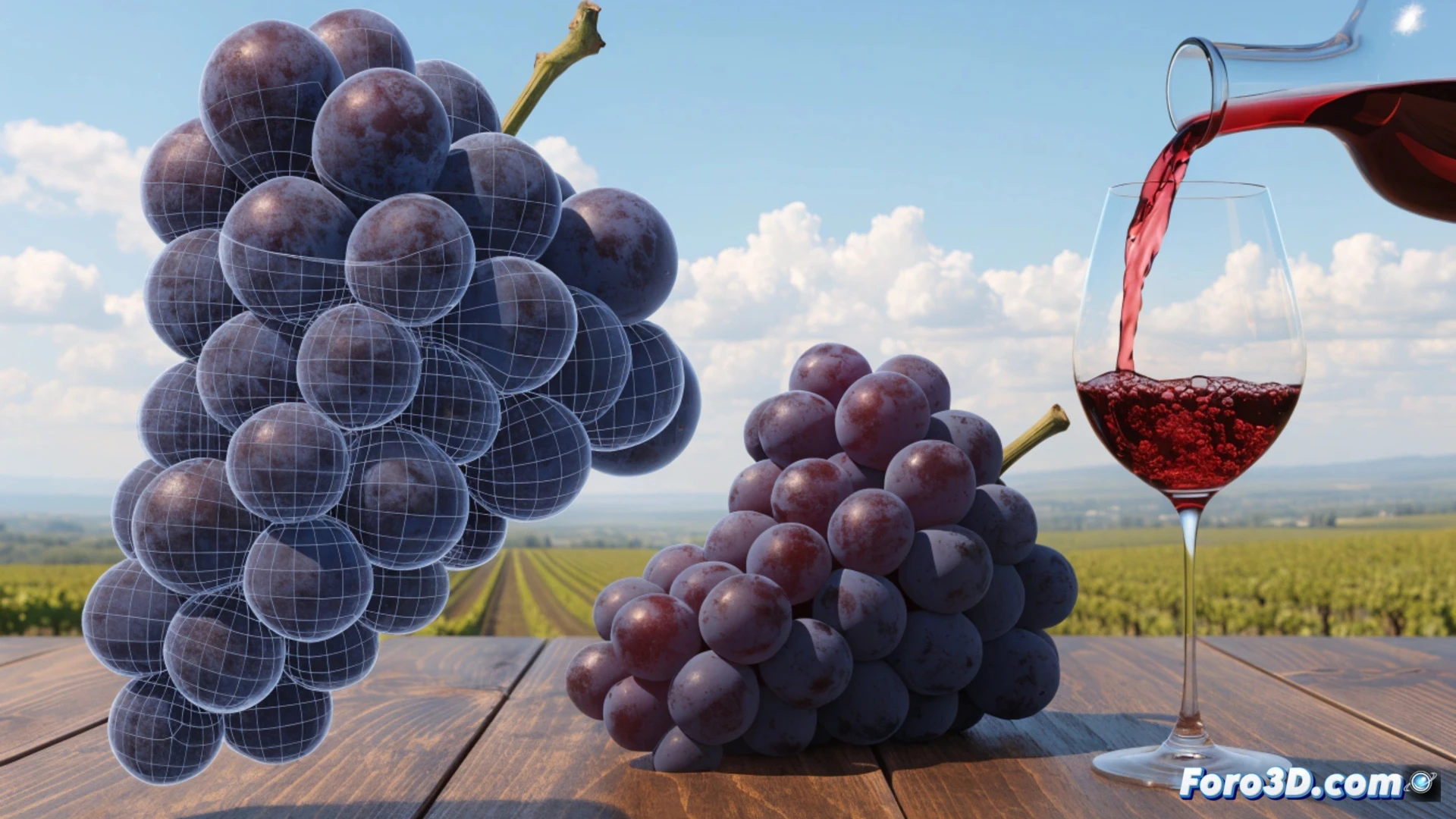
Oenology seeks precision at every stage, from harvest to aging. 3D technology allows analyzing the morphology of clusters and berries with millimeter detail. A clear example is the use of 3D scanners to evaluate the volume and compaction of the grape, data that helps predict the potential extraction of tannins and sugars without the need for destructive analysis.
3D Modeling for Fermentation and Barrel Control 🍇
Programs like Agisoft Metashape or MeshLab allow creating three-dimensional models of the grape from photographs. During fermentation, 3D thermography monitors temperature distribution in tanks. In the winery, barrel scanning detects deformations or volume losses. Tools like Autodesk ReCap or 3DF Zephyr facilitate the digitization of harvests to correlate shape, weight, and chemical composition.
The Oenologist Who Scans the Grape Instead of Tasting It 🍷
Now it turns out that to know if a grape is ripe, instead of biting it, you do a 3D scan. The modern oenologist spends more time looking at a point cloud on the screen than smelling barrels. Soon we will see a sommelier with virtual reality glasses tasting a wine without opening the bottle. Of course, the computer still can't tell if the wine has body or is just a heavy file.