The role of a camera operator in audiovisual productions exposes professionals to severe ergonomic risks: overexertion from heavy equipment, sustained forced postures, and visual fatigue. 3D body scanning and digital anthropometry offer a precise solution to analyze these factors, allowing for the simulation of loads on the shoulder and spine, and the redesign of both equipment and filming techniques to mitigate chronic musculoskeletal disorders.
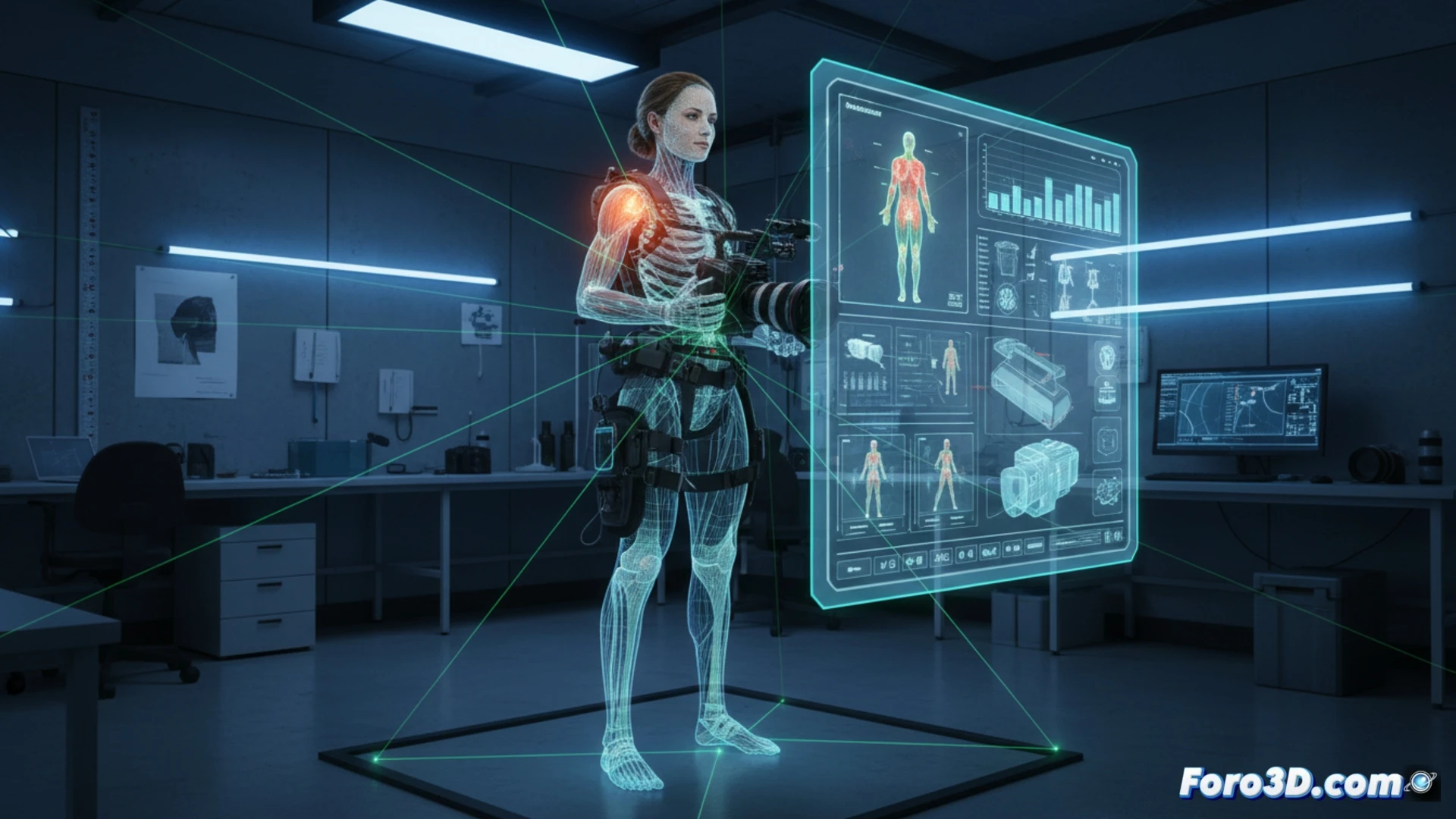
Digital anthropometry applied to the analysis of forced postures 🎥
Digital anthropometry allows for the creation of a virtual twin of the camera operator from a high-resolution 3D body scan. This model is integrated into ergonomic simulation software to evaluate joint angles and load distribution during prolonged camera holding or handling of a heavy tripod. The data obtained identifies critical tension points in the lumbar spine and the dominant shoulder, facilitating the design of lightweight exoskeletal supports or the customization of tripod height for each worker, thereby reducing the risk of repetitive stress injuries and falls due to fatigue.
Towards a healthier audiovisual production 💪
The implementation of these tools not only prevents injuries but also optimizes performance during long or live shoots. By adjusting equipment to the operator's exact morphology, forced postures and visual fatigue are minimized, allowing the professional to focus on the quality of the shot. The future of the sector involves integrating body scanning as a standard in occupational safety protocols, transforming ergonomics from a passive requirement into a competitive advantage.
Can a 3D body scan and digital anthropometry accurately predict muscle fatigue points in a camera operator to redesign their ergonomic support and prevent chronic injuries?
(PS: Scanning your body for an avatar is like taking a 3D selfie, but without a selfie stick.)