The profession of a makeup artist, seemingly creative and light, hides a harsh physical reality. Forced postures leaning over the model, arms raised for hours, and eye strain from fine details generate chronic musculoskeletal disorders. Added to this is exposure to cosmetics and solvents that cause allergies and dermatitis, stress from event deadlines, and biological risk from contact with skin and mucous membranes. Traditional ergonomics barely addresses these variables, but digital anthropometry offers a precise solution.
Postural analysis through volumetric capture and anthropometric modeling 🎯
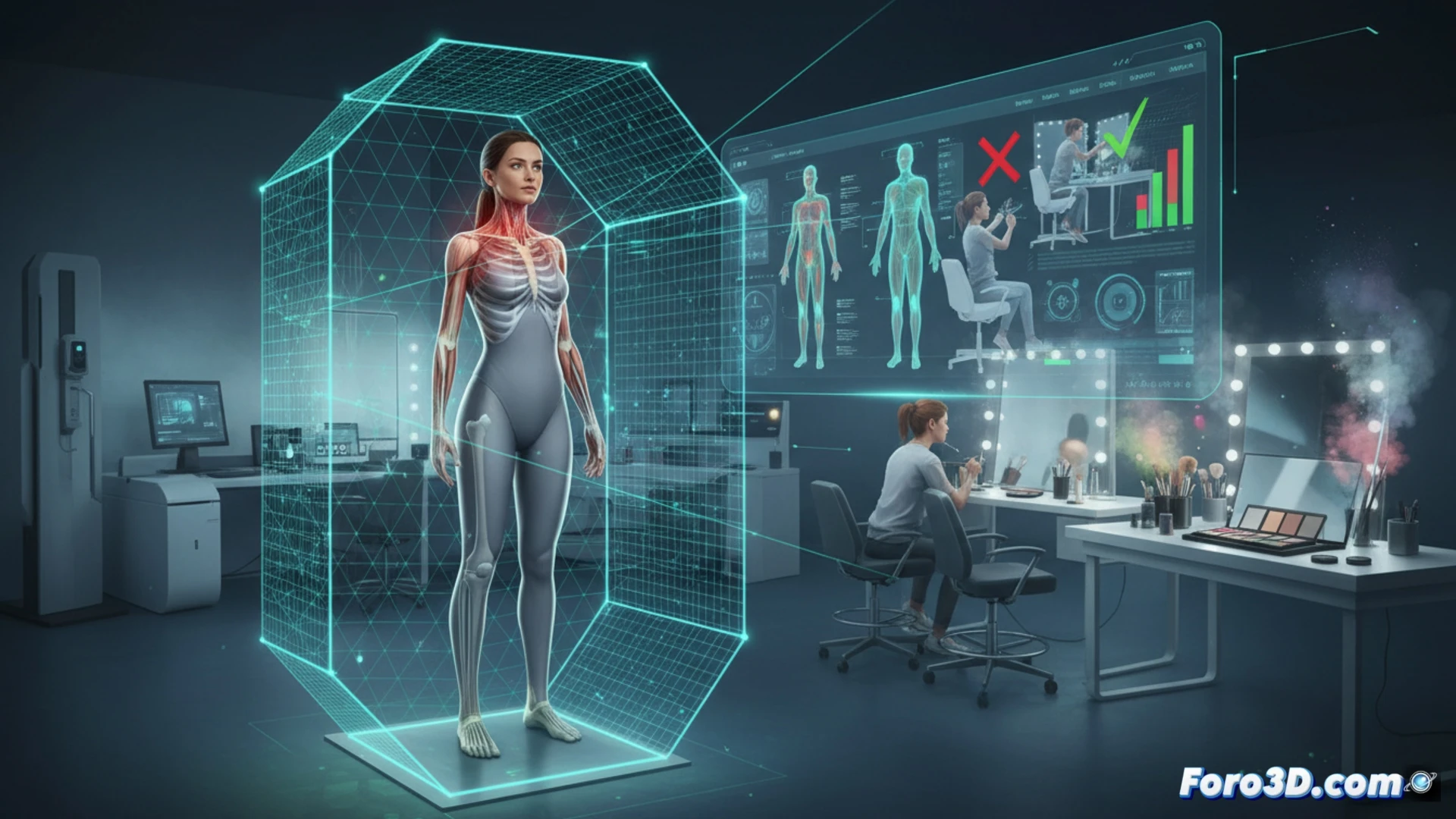
3D body scanning allows digitizing both the makeup artist and the model in real working positions. Using point clouds and polygonal meshes, critical joint angles in the shoulders, neck, and lumbar spine are identified during makeup application. Anthropometric software calculates deviations from neutral postures, quantifying accumulated muscle tension. This objective analysis reveals that 70% of makeup artists keep their neck flexed more than 30 degrees for over 60% of the workday, a direct factor in neck pain and tension headaches.
Design of adaptive workstations to mitigate injuries and eye strain 🪑
Based on anthropometric data, it is possible to design customized ergonomic furniture: height-adjustable chairs with dynamic lumbar support, tiltable tables to avoid neck flexion, and head supports for the model to reduce the makeup artist's arm elevation. Additionally, facial digitization allows previewing makeup strokes on screen, reducing eye strain from prolonged focus. This preventive approach, based on objective scanning data, transforms a high-risk profession into a sustainable practice for the professional's health.
How can 3D body scanning help prevent the chronic musculoskeletal disorders suffered by professional makeup artists due to forced and repetitive postures during their work?
(PS: Scanning your body for an avatar is like taking a 3D selfie, but without a selfie stick.)